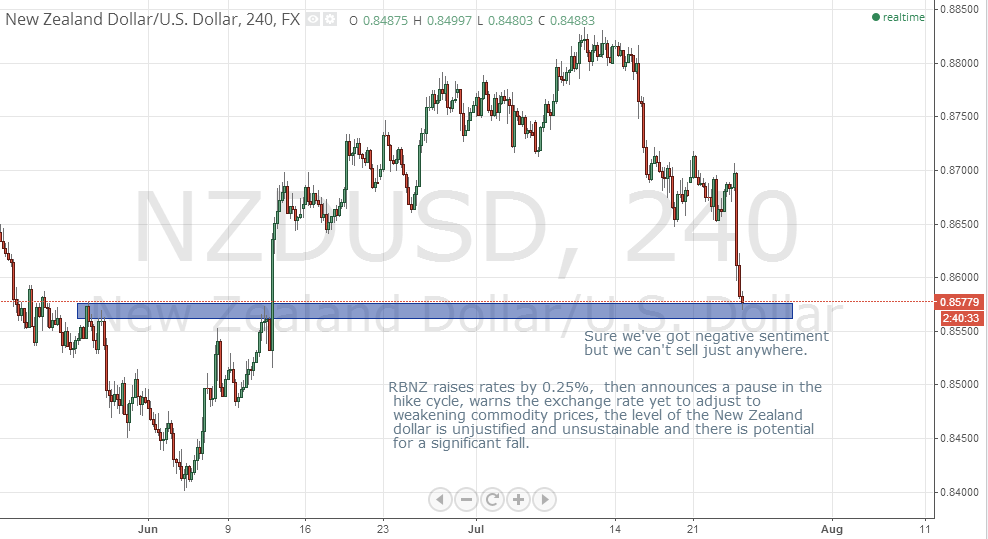
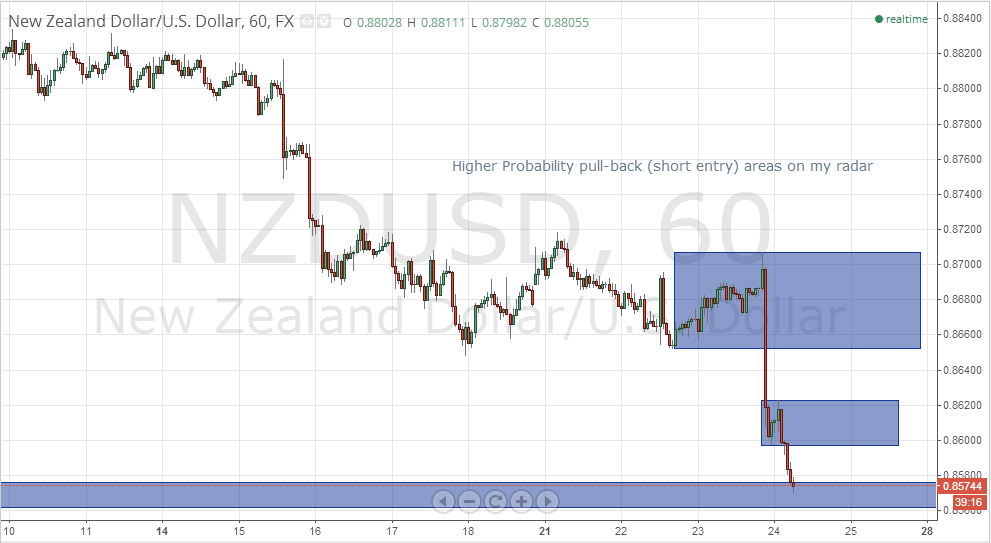
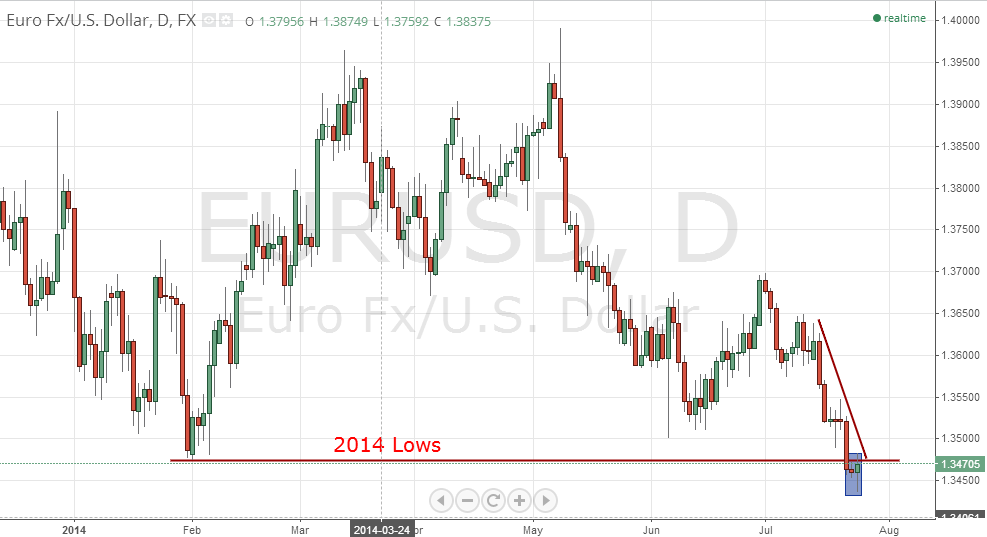
After studying different approaches to day trading, the one that convinced me more of it's efficiency is ''orderflow'' trading, as you are watching the market participants' actions closely so you can decide the most likely direction of price in the day.
But i'm having some problems watching the price/order book on key price levels and really ''deciding'' wheter it will break or just run stops and then reverse, so it's difficult for me to initiate a trade with confidence.
Could you point to me some things you watch for in these spots to decide the probable direction of the market?
I understand there's no concrete approach in orderflow trading, no ''system'' as people like to call it, and it's more of a discretionary method and getting a feeling of the flow, but as a more experienced trader, i would really appreciate if you could try and describe some characteristics of price that you look for in these situations.
Thank you very much.
JC
Hey JC,
i don't have an answer to the question "which zones will hold"...because in trading we're dealing with odds (like in poker) and not certainties. So there will always be exceptions to any partcular rule you might attempt to create. So you don't need to "decide" anything before hand! Just let the market react and tell you where the higher odds are.
The way I work around this is twofold:
1. I try to make sure I'm looking to enter in line with the dominant flows (evidenced via higher highs/higher lows or lower highs/lower lows on my primary chart reference, which is usually the 4H chart.
2. I use the price action areas that are formed in line with the dominant trend to compound the position; i use price action areas formed against the dominant trend to manage the position (take some off the table, close everything, watch & wait, etc.).
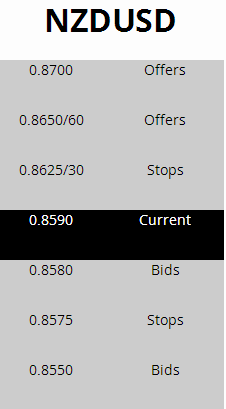
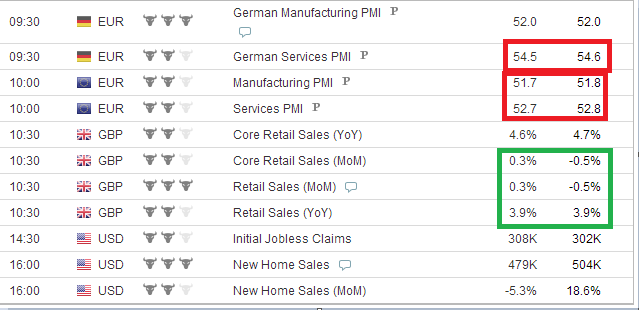
3. Day-to-day I use headline news + chatter doing the rounds in the twitterverse (which has become a good substitute imo to some of the more professional news services if you know who to follow) to get a feel for what's doing the rounds. I'll also use the orderflow information (bids/offers/stops) as you've seen in the past posts, to help me.
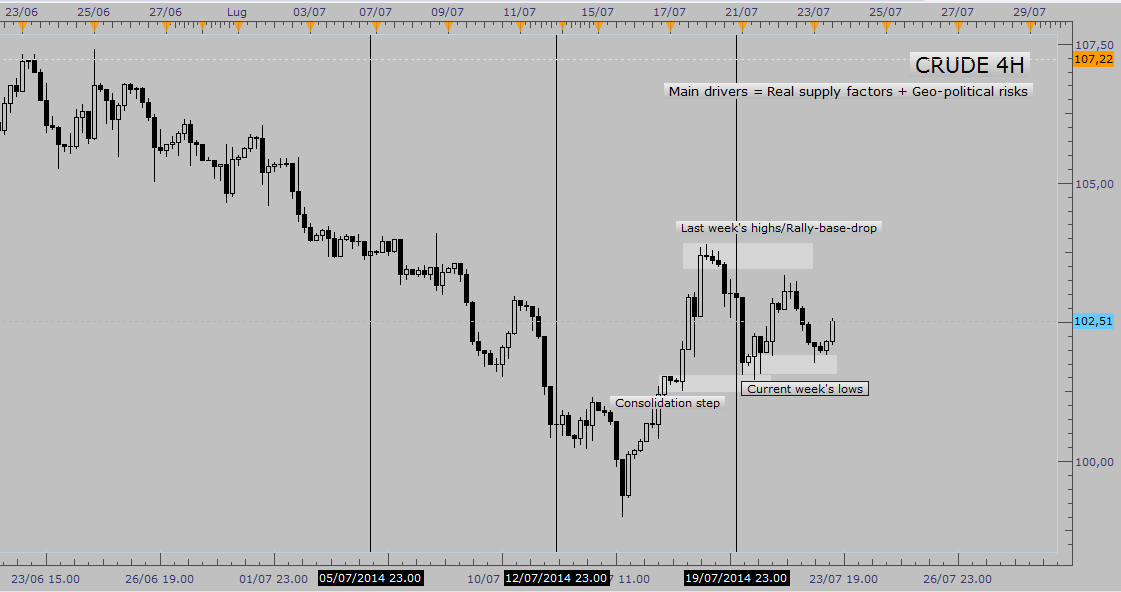
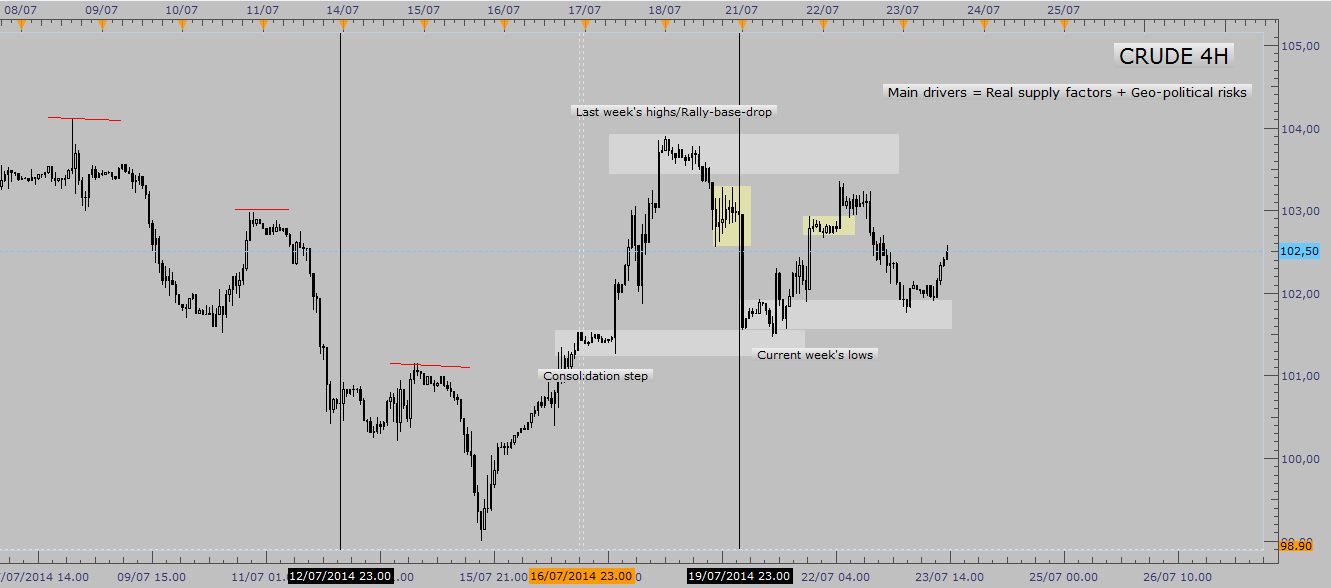
Here's an example: my primary template on Crude, showing how las week we broke the lower high/lower low cycle on renewed Russian/Ukraine tensions (bad for Crude) and this week looking for pullback longs still makes sense as long as there are no new negative developments on the horizon.
So a good place to look was the consolidation step from last week, which "should" be stronger than the conolidation step on the way down from friday (in yellow). And the consolidation area on the way up this week (yellow) held a little even though price had reached last week's rally-base-drop formation (which comes from a higher time frame and hence carries more weight).
Price has reacted today off the current week's lows as expected...but it's becomming a little boring now...so more range-bound than trendy...and I like my odds more when there's a clear trending move.
Regarding confidence: you need to specialize. The most successful traders I've met are the ones that have developed a tight set of rules with which to engage the market. They know their angle, their edge. They know if they'll have a trade or if they won't. They are extremely disciplined and keep their stuff simple. The process goes more or less like this:
1. Rules for bias identification
2. Rules for sentiment identification
3. Rules for reactive level/zone identification
4. Rules for timing
5. Rules for trade management
And yes...even the best laid out plans fail...sometimes more than others. But as long as you are following a structure time & time again, you'll develop an expertise that noone can take away from you. At least, that's my experience!


 FX is more difficult to deal with because you're essentially dealing with spreads all day long.