On day trading being a "scam": should we evaluate trader's or trading strategies' performances?

Illegitimate question. If your Sim makes money does it send over a virtual 'marginal' to rob you?:D:D:D

Hahahahaahahahahaha not yet, but I wouldn't be surprised if it did. :D:D

A legitimate question. Do you automate 100% of your exits or do you allow for discretion? Btw. Your English is excellent for a Brazilian.

Right now, I'd actually say nearly 100% of my exits are discretionary, which annoys me quite a bit but it's a matter of necessity as of right now. I recently quit doing my PhD in Linguistics (University of Campinas, Latin America's best) because, well, the government is basically waging war against science and I there are zero prospects of landing a job in academia in the medium-to-long term.

That being the case, I don't really have a lot of capital to (day) trade from and am currently living in my father's home (my mother passed away about an year ago in a car crash; I was in the passenger seat). So as a matter of precaution, for the time being, I usually take profits as soon as possible (I have a relatively low target for the day, and once I get there I get out). As I build up confidence and capital, tough, then I intend to make things a bit less discretionary -- I say that because I really don't like mechanical systems, so I prefer to stick to real-time market analysis, based on fixed set of variables based on volume tools.

Also, thank you! I've been speaking-reading English since I was very young, and it truly changed my life with regards to the information I can access -- it is truly today's universal language. :)
 
Andre.
I am sorry to hear that. It is a subject for which I never have had, or will have words to appropriately express my sympathies.

You clearly have an excellent head on your shoulders, and I enjoy reading the logical train you apply to your processes. Humorously, and rare for me, I neither agree nor disagree with you, but float between the two.

The reason I asked you that specific question is, as you state, 90%+ of people that attempt to trade fail. (although I'd go 95%, and add, of the 5% that survive, it is 5% of those that obtain significant success). Were I to assign one reason for that. I'd pick getting out of trades and taking losses. That is why I can not agree with you entirely about the benefit of sims. This is where the emotional part dictates our actions, and where losing money dictates our emotions. One cannot separate one from the other and one cannot assume they will perform in the same manner with real money on the line. It is rare they will.


"it truly changed my life with regards to the information I can access"

Yes, particularly since the internet, that is the greatest benefit of learning English.


"the government is basically waging war against"

Your gov't appears to be waging war against everything a decent human being would stand for. It is a tragedy to see what is occurring down there. Right now it really appears to be an organized crime syndicate masking itself as a country. If the people had any self respect, they would burn down Brasilia using the STF as the kindling. - but they won't.

I wish you tremendous luck and success in your endeavor, and once again I am terribly sorry to hear about your loss.
 
Last edited:
Andre.
I am sorry to hear that. It is a subject for which I never have had, or will have words to appropriately express my sympathies.

You clearly have an excellent head on your shoulders, and I enjoy reading the logical train you apply to your processes. Humorously, and rare for me, I neither agree nor disagree with you, but float between the two.

Thank you for your sympathy, it has been hard but, as I tell my brother, our mother truly prepared us for this moment, showing us how to be independent and acknowledging that she, as all of us, wouldn't be here forever. I find solace in the fact that she did not suffer at all, which is something she always wanted.

The reason I asked you that specific question is, as you state, 90%+ of people that attempt to trade fail. (although I'd go 95%, and add, of the 5% that survive, it is 5% of those that obtain significant success). Were I to assign one reason for that. I'd pick getting out of trades and taking losses. That is why I can not agree with you entirely about the benefit of sims. This is where the emotional part dictates our actions, and where losing money dictates our emotions. One cannot separate one from the other and one cannot assume they will perform in the same manner with real money on the line. It is rare they will.

I absolutely agree with you. My take on sims is that they serve the purpose of preparing you to deal with the technical aspects of trading, which include executing/developing trading strategies, gain some market experience and develop your analytical ability. But that is pretty much it and once you get into the actual trading, you'll see that it seems like it's nothing like the simulator. However, the difference -- and no doubt, it is a big difference -- is that you now have to learn to control your own emotions in order to execute what you have already trained in the live simulator. The things you have to do are still the same - your analysis, your strategy, etc. -- and these are the same as you trained before.

It is my opinion that this is a safer path for beginners because you tackle things one at a time. Although overcoming the psychological pitfalls of trading is perhaps the hardest part, knowing that you actually do have a working system and that you did properly trained your skills - and that means taking the sim seriously, as a relevant part of your learning -- you will be in a better state to actually tackle the psychological issues. This is also a way in which you can protect yourself from your own inexperience. New traders, in particular, are the most prone let themselves get into "gambler mode".

This is why I believe that the sim is crucial for new traders. Not because I think they'll come off of it totally ready to deal with a live market, but because it will increase their chances of survival, since they'll have been exposed to a "controlled" environment on which they can learn the basics for a while. The sim is a step towards small trading, which is a step towards increasing in size, which is step towards whatever comes next in a trader's journey.

I did a couple of years of judo before my accident (I can't wait to go back, but there are some pesky 13 pins on my arm and I'm waiting for the surgeon to give the green light ahahahaha), but it's much like evolving in a martial art. First you learn some moves and practice by yourself, then you practice with a partner, multiple partners, while moving and then "randori", or simulated combat. Only then you are allowed to compete, with people on your level (white and blue belts; yellow and green belts; all the way up to black belts. All that takes a long time and I think that starting with live markets, even if you have a tiny account and are aware of the risks, sends the message that you're "too good" to start with a simulator or white belt. :)


"the government is basically waging war against"

Your gov't appears to be waging war against everything a decent human being would stand for. It is a tragedy to see what is occurring down there. Right now it really appears to be an organized crime syndicate masking itself as a country. If the people had any self respect, they would burn down Brasilia using the STF as the kindling. - but they won't.

Although I very much feel the same, I honestly wouldn't stand the chance of Brazil getting into yet another dictatorship after barely making 30 years as a democracy. Ironically, since the president is a very very vocal advocate for the Brazilian Military Dictatorship, not to mention torture, human rights violations, violence, etc.

 
"I honestly wouldn't stand the chance of Brazil getting into yet another dictatorship after barely making 30 years as a democracy."

I'm afraid you appear to have already headed into a judiciary dictatorship. I think your President is an ignorant, low-level, dishonest piece of trash, along with his entire family, but his relationship with the military, at the moment, appears quite hostile to one another. I'd place the threat of a Military takeover at near zero. I think your bigger problem is with names like Toffoli, Mendes, Lewandowski, and Moraes who appear to be disregarding your Constitution on a daily basis. When you thrown in Maia and Alcolumbre, what I see going on down there is just surreal.
 
those reports seem to be scam.
Have you seen any reports that say
investing in stocks, or doing swing or position trading are much easier to earn tons of money rather than day trading?

Investing , day trading , swing trading .... is not for everyone.
It doesn't mean we can't earn tons of money doing day trading.

similarly to be surgeon changing hearts, kidneys .... is not for everyone.
To be able to participate in Olympics games is not for everyone.

so we need to know our passion, our competencies, our capabilities ... and go with it.
 
Last edited:
Day trading does provide a great deal of opportunities if your good at risk/trade mgmt. It is considered to have more psychological intensity since you are more engaged with the markets & have a lot more decisions to make. Creating a rules based trading plan (don't forget risk/trade mgmt!) will help if you follow it.

Newer traders should learn all they can on the common pitfalls of day trading & outline in your trade plan how you plan to avoid the common pitfalls.

Like other advanced skills - your barely intermediate a few years into it. Few have the drive it takes to stick to trading long enough to get any pay back for the long & expensive learning curve.

Many traders and firms these days are hybrids, combining trading across a shorter & longer time frame(s) to smooth out the equity curve. This is what I do.


Check out this article on Brazil traders - interesting.
https://news.ycombinator.com/item?id=20939903
 
Last edited:
I was just wondering, after going through extensive articles on how day trading is anything but a sure-fire way to lose money: are we looking into the right data? Let me explain.

The overwhelming majority of academic research that deems day trading a moot enterprise, as well as news articles and whatnot, is based on the simple fact that most people who give a go at day trading end up losing all their money. Although that paints a clear-cut picture for those looking to get into this activity -- that is, the odds are definetely against you -- , what I'd really like to know is if the average day trader's performance is really what we, as finance professionals, should be looking at? Shouldn't we, instead, be looking into day trading strategies' performances?

As any decent trader will tell you, the decisive factor in making it or breaking it in this field is not merely technical knowledge but, rather, psychological resilience. What this means is basically that notwithstanding the quality of a trading strategy or set of strategies, most people will promptly fail at executing them properly. Worst than that, they won't even subject themselves to training on a simulated market until they are actually profitable. That means that by the time they eventually master a strategy, they'll already be many many dollars behind where they started or, just as likely, will blow up their account before ever really getting there.

This means that, when it comes to day trading, the overwhelming majority of people will fail but not because the enterprise itself is moot, but perhaps because of the way people approach it (which is also true for swing trading and longer-term trading strategies). So, if we know that the main issue with any trading strategy is improper execution, what makes day trading specifically easier to fail? Well, I argue here that it has to do with the increased psychological pressures and pitfalls: you'll be making decisions much much faster than you would if you were, say, swing trading; by that very same token, chances of you over-exposing yourself (improper position sizing, revenge trading, over-trading, etc.) is also much higher.

However, let's put the human aspect aside for a second. Let's say we are able to define a trading strategy which focuses on a single instrument (e.g. future indexes or FX pairs) and which was designed for the specific purpose of day trading; furthermore, one which was backtested and statistically yields positive outcomes over a medium-term period. If this strategy was to be executed correctly, it'd mean that it would tend to generate consistent results in a day trading context, or would it not? If that is the case, we can once again argue that the reason day trading has such an astronomical rate of failure is due to human, namely psychological, factors. Furthermore, this would explain the fact that some people still do succeed in this field as independent day traders.

What I would like to know, and which I think would be quite helpful for aspiring day traders to escape the endless stream of scams while also giving a concrete assessment of failure-success rate of day trading, is actually evaluating how profitable (or not) any given strategy (automated or manual) is over the short, medium and long term. That, while also making it crystal clear that such results are contingent on the actual ability to execute the strategy to the letter, which is in turn a matter of psychological resilience. Such information would contrast and enrich the data we have from individual day traders and the reasons why they are likely to fail.

What are your thoughts on this issue? Hope to hear from you all. Cheers!
In fact, intraday trading is only effective in one case.
You can evaluate the upcoming trend, conclude a deal and, based on the results of your entry, increase your open position exactly in accordance with the current trend, without taking into account kickbacks and flat situations during this trend.

PS When you start to rush, buy and sell, you will definitely lose all your money.

If you have enough experience and knowledge, and you can calculate the volatility of the daily candle, then yes, it is possible to trade the maximum and minimum of this candle
 
Last edited:
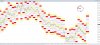
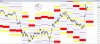
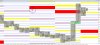
a simple example, you create an intraday volatility indicator, determine the average daily volatility of a particular instrument, study everything thoroughly, mark the key moments of intraday volatility and then yes! -Your trading will become more efficient inside the day

PS for greater clarity, you can put hourly candles in a frame - a daily candle

thus, you have the opportunity to evaluate how exactly the price behaves in the key moments of intraday trading
 

Attachments

  • Screenshot_12.jpg
    Screenshot_12.jpg
    260.3 KB · Views: 28
  • Screenshot_13.jpg
    Screenshot_13.jpg
    240.7 KB · Views: 25
  • Screenshot_14.jpg
    Screenshot_14.jpg
    208.1 KB · Views: 23
Last edited:
it is very strange that similar topics arise here, this branch is called technical analysis of the market and it is located on the Elite Traders Forum - and this elite has questions for children!
 
Back
Top