
On 10-case geometry and beyond

The basic aesthetic is to increase clarity with annotations and not have any unnecessary lines that aren't relevant to present price action. (They might become relevant in the future as it comes into now)

Thank you for posting your work.

I miscommunicated, more like this:

View attachment 175141

Ok, I'm happy to share and learn. Coming up with hypothesis and ideas is easy, not so validating them generally.

Here's my next attempt, hoping I get the colour right (from volume bar, close-open?):
dk_pndora_eod_doji_bias2_volume_peaks-debrief2.jpg

This next piece is difficult for many to grasp - that this next possibility exists.

We are identifying trend segments that are profit opportunities. This is the standard we are building our minds to allow us to perceive in realtime. We are creating a space in our minds to perceive what comes before a two-bar combo and what comes after. Trends migrate with each successive bar as recycling two bar combos and in the case of laterals, multi-bar combos.


We are cruising through a bunch of concepts, super great! We are taking a high-altitude view, what is unsaid, is that to embody these concepts into the unconscious requires the drills to be done by hand. Hand drawn is better than programming for now.

For all programming is limited by the consciousness of the programmer's own understanding of concepts.

We want to build a sense of muscle memory, so in real time with money on the line, one doesn't stop breathing and get stupidified by the jiggle jiggle of PA.
Like a high-performance athlete, repetition is key. The drills (if done over and over) will get stored into one's LTM and served up at the right moment as "Knowing that you know."

A milestone is to annotate 50 charts in the manner we have described so far as well as keeping a log of questions that naturally arise as one applies the concepts to particular situations.

That can happen simultaneously as we progress the conversation but know that is where the real work lies waiting.

Yes, you can't program anything unless you know what to program, so first you need to program your mind.

Not sure what to find before and after two-bar combos. If it is XB/XR, there's usually some peak or trough associated with it. Maybe easier to read with these lines and should they be adjusted according to volume somehow?
 
Ok, I'm happy to share and learn. Coming up with hypothesis and ideas is easy, not so validating them generally.

If..., then... properly constructed gives a boolean algebra result. It's either true or false.

Here's my next attempt, hoping I get the colour right (from volume bar, close-open?):
View attachment 175148

There are some inaccuracies, in the following chart look for the thick pencil lines that show a corrected non-Dominant line. Then draw the corrected Dominant Traverse of the parallelogram.

Next, you'll notice some confusing points, mainly at the turning points where there is an inside bar. One notices the nD line can be drawn both ways. This is an unseen shift in sentiment that one group of traders are capitalizing upon and another group of traders are waiting for confirmation. The difference will become clearer when we shift to looking at volume. Sometimes the sentiment is shifting other times it's not. A PA trader looks at that like a 50/50 proposition because they have not built their mind. In reality, it becomes 100/0 or 0/100. If one exists than the other cannot. We are drilling to begin to see these moments clearly.


Yes, you can't program anything unless you know what to program, so first you need to program your mind.

Not sure what to find before and after two-bar combos. If it is XB/XR, there's usually some peak or trough associated with it. Maybe easier to read with these lines and should they be adjusted according to volume somehow?

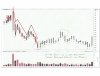
You are correct, logging volume will begin to clear this up.

But before we go there, we need to annotate laterals as the third trend on your charts.

Comments within quoted text
 

Attachments

  • trend segments - nD-D - debrief.jpg
    trend segments - nD-D - debrief.jpg
    1.3 MB · Views: 129
Comments within quoted text

I've put on laterals here without the yellow (NB. 7th Jun seems not to be inside bar):

dk_pndora_eod_w_laterals.png


For below chart:

Thanks for the correction. I believe I'm confused exactly what is meant by "long" and "short" in the text below, and how to interpret Non-Dominant Traverse bar for bar. Where/how to look to discern which direction is Non-Dominant (aka anti-Dominance), bar for bar, with certainty in order to draw Non-Dominant Traverse objectively? Can bar #2 in relation with bar #1, ie. using 10-case model be used, except for SYM, Hitch and OB?

This next drill supports the doji distinction. Take a PV bar chart. The annotation exercise is to draw a line from the H of the first bar to the L of the next bar if long. If short then draw a line from the L of the first bar to the H of the next bar. The resulting chart should look like a zigzag with no gaps between bars.

Inverted D/nD analysis 20-21 Jun below (dominant traverse is short), is this correct?
Is it correct that colour of Dominant Traversal always be black when long, and red when short?

dk_pndora_eod_w_laterals_rblines.png
 
Last edited:
I've put on laterals here without the yellow (NB. 7th Jun seems not to be inside bar):

View attachment 175160


For below chart:

Thanks for the correction. I believe I'm confused exactly what is meant by "long" and "short" in the text below, and how to interpret Non-Dominant Traverse bar for bar. Where/how to look to discern which direction is Non-Dominant (aka anti-Dominance), bar for bar, with certainty in order to draw Non-Dominant Traverse objectively? Can bar #2 in relation with bar #1, ie. using 10-case model be used?


Inverted D/nD analysis 20-21 Jun below (dominant traverse is short), is this correct?
Is it correct that colour of Dominant Traversal always be black when long, and red when short?

Yes and yes. We are using traverse in this context as the fastest fractal created by a 2 bar parallelogram. This is the most money that can be made, the mythical picking a top and bottom. We are taking our ego out of the equation. Via annotating and logging the idea of carving turns will come into view.

View attachment 175163

Comment with quote.


You've got it. So in any two bar comparison, let's use XR and XB - these two bars define a directional 2 bar trend. We connect the extremes of these two bar points. This is the Dominant Price direction. The smaller traverse of this 2 bar trend is the non-Dominant Price direction.

As you can see, multi-bar sequences form a trend segment. A trend segment connects larger trends. For example from the 9 to the 17 would be a either one trade on the larger fractal or 3 trades on the faster fractals of three trend segments. PA traders use large stops to accommodate this operation of the market.


Every trend regardless of fractal size from intra-bar legs to multi-day bars is defined by three moves.

Dominant -> non-Dominant -> return to Dominant

Just before the first move of the current trend is the 3rd move of the prior trend. Since trends interlock and oscillate. This might not be seen right away. It's ok. We look for Dominance.


We are always on the lookout for Dominance.
We know that what comes before is non-Dominance.


Now with the Laterals, notice when the laterals end with a BO as well as the price form for the FBO of the lateral boundaries. We are focusing on the close of bar now. The close can either happen within a pre-defined and annotated lateral boundary, on the line, or crosses over the line.

Each gives us an indication of what must next, dependent of what volume is presenting.

A Lateral comes into existence when the H's and L's of Bar.0 AND Bar.1 is within or equal to the H and L of Bar.2
This is the third bar of the lateral. Each successive bar gets a label of it's bar count. For example the next bar on the example above is 4, then 5, 6,7, etc.

The BO of the lateral occurs on the bar that closes outside the lateral boundary. However this break could and frequently fails. When two successive bars close outside the lateral boundary, the lateral has served it's purpose.

Laterals can contain laterals.

The zigzag exercise is not an annotation one would do for trading. It's more to create a mental space and image in one's mind of where the greatest and lowest risk profit making opportunities exist.


It also leads us to start looking at volume to distinguish Dominance in real time.
 
Laterals can contain laterals.

The zigzag exercise is not an annotation one would do for trading. It's more to create a mental space and image in one's mind of where the greatest and lowest risk profit making opportunities exist.

It also leads us to start looking at volume to distinguish Dominance in real time.

Ah, I see. Yes, Laterals / SYM are non-dominant moves, so mark as "breathers" between dominance.

Completing and fixing up chart below:

dk_pndora_eod_w_laterals_rblines2.png
 
Thank you for correcting and filling in the chart.

Now we are focusing in on the turns. We can know we have a turn by three visual cues.

One is geometrically easy to identify such a a single bar spike and change of direction.

Another is in the grid of 5x5 where as one builds each bar by following the legs in the mind's eye where a Dominant shift occurred by the sequence of legs, leg direction and/or absence of 1st/3rd leg.

The third has more to do with space than form. The space being an FTT within the parallelogram.

Each will signal at different moments as a bar is built or by the resulting form (and comparison) of the bar thereafter.

First let's define an A turn. This is one where the Dominance is shifting to non-Dominance. B turn is the shift from non-Dom to Dom. C turn is where the previous Dominance is no longer and the Dominance has shifted into a new dominant direction.
Dominance to Dominance.
Rapid change of sentiment.

How we know this is that we have Increasing Volume. Whenever there is increasing volume we have Dominance.

How we contextualize it makes all the difference.

To see this clearer, we have to intentionally make a mistake.
With all the increasing volume bars, annotate the associate price bar with an arrow and the text
C
D-D.

This is a Dominant Turn. Not all these turns will be C turns, some will be B turns.
Which ones?
Why?
 
Last edited:
To see this clearer, we have to intentionally make a mistake.
With all the increasing volume bars, annotate the associate price bar with an arrow and the text
C
D-D.

This is a Dominant Turn. Not all these turns will be C turns, some will be B turns.
Which ones?
Why?

So is every increasing volume bar either a B or C-turn?

I'm guessing B are bars that are more "choppy" in relation to previous bar, rather than a clean turn.
Ie. 16 Mar below is more of a continuation after a lower fractal flag (faster "chop") on 15 Mar was broken the day after.

You can get an idea by following price movement from previous bar to the current bar and see how the two bars relate regarding chop -> movement or movement -> reverse-movement

Though it would be good to have clear guidelines what is what, ie. in relation with 5x5 grid and/or 10-cases, which should be doable (but need more clarity on this concept first).

I need to do this annotation simple like so (with C-mistakes):

dk_pndora_eod_w_DnD_C_Mistake2.png
 
Last edited:
The turn that comes after the C turn is the

A
D-nD

It's always has decr Volume.

Then the turn that is a return to Dominance which has incr V. (If it's still in the trend started by the C before the A.)

B
nD-D
(You'll have to relabel some of the C's.)

It's useful to have the text descriptor below the turn ID. That's why to use a line or arrow for spacing.

If you do this on the previous zigzag chart, some things will start to become clearer(although messy).
 
The turn that comes after the C turn is the

A
D-nD

It's always has decr Volume.

Then the turn that is a return to Dominance which has incr V. (If it's still in the trend started by the C before the A.)

B
nD-D
(You'll have to relabel some of the C's.)

It's useful to have the text descriptor below the turn ID. That's why to use a line or arrow for spacing.

If you do this on the previous zigzag chart, some things will start to become clearer(although messy).

Ok, let me see if I got the sequence right.
  • A D-nD is always on decreasing volume
  • B nD-D comes after A, always on increasing volume
  • C D-D comes after B or C, always on increasing volume

Ignoring the first 2 bars since 1st bar volume delta is unknown, can this categorization below be correct?

dk_pndora_eod_w_DnD_C_Mistake.png


If so, it seems A marks non-DOM periods, B marks start of return to dominance and C marks dominance. You can then easily identify the volume sequence in relationship with price-chart and annotations. I've colour-coded this above to make it even easier to read.
 
Bars 19, 24, 30, 13, 15, 20, 26
Require revisiting for correct ID.

Once you have turn ID, it's like a price lateral - it defines the following bar's until change. In other words drop any repeating letters after it first makes it's presence known.

30 is a special case, an exception to the rule. We get insight on this via the 2-legged bar on our 5x5. Unseen dominance within the shadow of the prior bar.

C can arrive at any time. It is change. Whether that change lasts a bar or several it matters not. We now know a signal of change via the work done to build the mind.
There is more for we are working to build a system based on a complete dataset.

Distinguishing this one adds another block in our foundation of understanding the market's system of operation.
 
Last edited:
Back
Top