

Baron
ET Founder
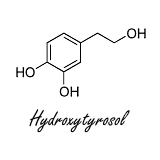
Olives and olive oil contain body recompositioning compounds, the most common of which is oleuropein. But another substance found in olive oil called hydroxytyrosol has interesting biological effects as well. In a human study, which Italian researchers published in Oxidative Medicine and Cellular Longevity, daily supplementation with 15 milligrams of hydroxytyrosol reduces body fat percentage.
Study
The researchers gave 28 healthy and non-obese subjects aged 18-65 years two capsules every day with the DSM-produced olive extract elaVida. In each capsule was 7.5 milligrams of hydroxytyrosol, so the subjects consumed 15 milligrams of hydroxytyrosol per day. On another occasion, the subjects took a placebo for 3 weeks.
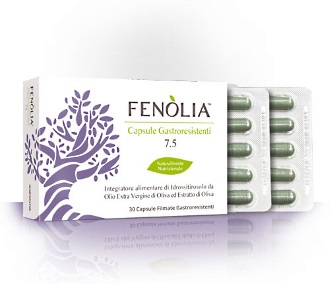
The supplements that the researchers used were from Italian Fenolia. And no, Fenolia and DSM did not fund the research. The researchers got their money from the Italian government.
The supplement group combined the hydroxytyrosol with 40 grams of protein in the form of a shake, 2 grams of phytosterols, 2 grams of EPA-rich fish oil, probiotics and 1 gram of berberine. All supplements were produced by Nature's Sunshine.
Results
The researchers had expected that supplementation with hydroytyrosol would reduce the concentration of oxidized LDL. The European agency EFSA approved this claim [EFSA Journal 2011;9(4):2033.] and expressed a positive opinion about the safety of hydroytyrosol extracts. [EFSA Journal 2017;15(3):4728.]However, the researchers in this study did not see a reduction in the amount of oxidised LDL by supplementation.
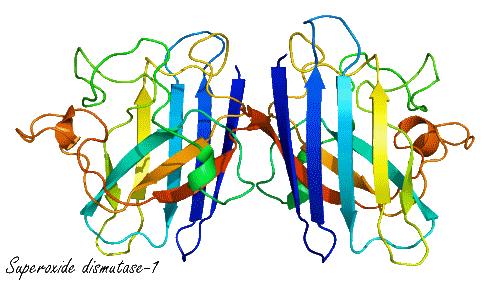
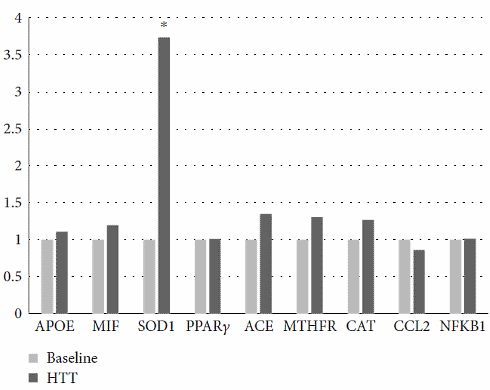
Supplementation increased the production of the antioxidant enzyme superoxide dismutase-1 [SOD1] by the cells. SOD-1 neutralizes up free radicals. Genetically altered mice that can't make this enyzme age faster and are more susceptible from age-related muscle decay. [Free Radic Biol Med. 2006 Jun 1;40(11):1993-2004.]
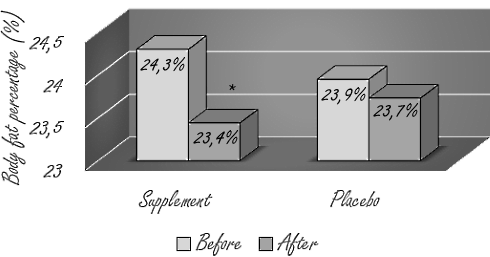
At the same time, the supplement reduced the body fat percentage of the test subjects, although they had not changed their lifestyle.
Conclusion
"In this work, we observed how 15 mg/day of hydroxytyrosol consumption could exert positive effects on human health reducing oxidative stress and cardiovascular risk, [...], although this daily amount of hydroxytyrosol does not seem to produce any positive effects on oxidized LDL-C", write the researchers.
"However, further clinical trials are needed on a larger population over a longer period to increase knowledge about therapeutic mechanisms and ensure its efficacy and safety."
Source:
Oxid Med Cell Longev. 2017;2017:2473495.
Study
The researchers gave 28 healthy and non-obese subjects aged 18-65 years two capsules every day with the DSM-produced olive extract elaVida. In each capsule was 7.5 milligrams of hydroxytyrosol, so the subjects consumed 15 milligrams of hydroxytyrosol per day. On another occasion, the subjects took a placebo for 3 weeks.
The supplements that the researchers used were from Italian Fenolia. And no, Fenolia and DSM did not fund the research. The researchers got their money from the Italian government.
The supplement group combined the hydroxytyrosol with 40 grams of protein in the form of a shake, 2 grams of phytosterols, 2 grams of EPA-rich fish oil, probiotics and 1 gram of berberine. All supplements were produced by Nature's Sunshine.
Results
The researchers had expected that supplementation with hydroytyrosol would reduce the concentration of oxidized LDL. The European agency EFSA approved this claim [EFSA Journal 2011;9(4):2033.] and expressed a positive opinion about the safety of hydroytyrosol extracts. [EFSA Journal 2017;15(3):4728.]However, the researchers in this study did not see a reduction in the amount of oxidised LDL by supplementation.
Supplementation increased the production of the antioxidant enzyme superoxide dismutase-1 [SOD1] by the cells. SOD-1 neutralizes up free radicals. Genetically altered mice that can't make this enyzme age faster and are more susceptible from age-related muscle decay. [Free Radic Biol Med. 2006 Jun 1;40(11):1993-2004.]
At the same time, the supplement reduced the body fat percentage of the test subjects, although they had not changed their lifestyle.
Conclusion
"In this work, we observed how 15 mg/day of hydroxytyrosol consumption could exert positive effects on human health reducing oxidative stress and cardiovascular risk, [...], although this daily amount of hydroxytyrosol does not seem to produce any positive effects on oxidized LDL-C", write the researchers.
"However, further clinical trials are needed on a larger population over a longer period to increase knowledge about therapeutic mechanisms and ensure its efficacy and safety."
Source:
Oxid Med Cell Longev. 2017;2017:2473495.
Last edited: