
You are using an out of date browser. It may not display this or other websites correctly.
You should upgrade or use an alternative browser.
You should upgrade or use an alternative browser.
NQ - Supply & Demand
- Thread starter eminiman414
- Start date

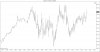
Positives for the day is knowing when to stand aside. Losses overall have gotten progressively smaller and since i've started back up in mid December I am still positive overall.
Good choice.

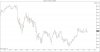
Tiny bit of frustration today. Had an order placed to short at 3605.5 but for whatever reason (don't know why) I canceled it. The second frustration was not giving my fourth trade the third short I took at 3597 more room. Everything else although not spectacular I am ok with. The last short never happens "if" i gave the short at 3597 more room to work. Still working and getting better everyday.
Attachments
Have been back in observation mode for a week or two with all the new found info I have absorbed. Even observing how the days go has been much improved. Goal is to have a defined trading plan within one to two weeks time after observing then begin sim trading again.
Just an update.
Just an update.
So beginning the process the first step is deciding what kind of trader I want to be and my goals.
1. for the time being I want to be a day trader and then eventually add EOD trading in addition to my day trades.
2. Be able to quit my job and and trade for a living.
3. Obtain a sense of freedom that trading would allow for as opposed to spending days, weeks, months, and years confined to the four walls of my office.
4. To have learned enough and be successful enough to one day help other traders as well, much like Db has been doing.
Second step is deciding what I'm going to trade and when I am going to trade it.
1. obviously the NQ
2. Trading from 9:30-11:00 or 11:30 (depending on what's going on)
3. I will be trading using range bars set at an interval that seems reasonable. For right now that would be making entries off a 6tick range bar chart and using a 30 tick range bar chart for context. Deciding on whether to use a daily chart or a 150 tick range bar chart for a longer term view. Prob will keep it consistent and use the 150tick range bar chart.
Third step is to develop my system (this is where the magic happens)
* In observation mode right now to begin developing this system
1. System will be based off of supply and demand and trader behavior
2. Continuously ask myself two questions those being where and what.
*Where are we/where is price?
*What's going on right now?
there will be subquestions or subcategories under these questions.
For example: where (support, resistance, swing point, midpoint of a range, top or bottom of a range etc)
what (price retracing, sl or dl break, rejection of price x, price blows thru support, waves becoming equidistant, price ticker picking up speed, price makes a lower high etc etc)
3. Thinking these types of questions will help me to develop a sense of the balance or imbalance between supply and demand.
4. Determine what types of behaviors and where these behaviors happen that lead to the most advantageous opportunities.
Some "tools" to help with the development: supply and demand lines, support/resistance, AMT, failures at particular price levels, failures to make higher highs or lower lows, waves (speed, duration, extent, comparisons btw the waves, using 50% of the wave or move as a general guide as to strength and weakness).
This is what i have for now and i will add more as the observation process continues.
1. for the time being I want to be a day trader and then eventually add EOD trading in addition to my day trades.
2. Be able to quit my job and and trade for a living.
3. Obtain a sense of freedom that trading would allow for as opposed to spending days, weeks, months, and years confined to the four walls of my office.
4. To have learned enough and be successful enough to one day help other traders as well, much like Db has been doing.
Second step is deciding what I'm going to trade and when I am going to trade it.
1. obviously the NQ
2. Trading from 9:30-11:00 or 11:30 (depending on what's going on)
3. I will be trading using range bars set at an interval that seems reasonable. For right now that would be making entries off a 6tick range bar chart and using a 30 tick range bar chart for context. Deciding on whether to use a daily chart or a 150 tick range bar chart for a longer term view. Prob will keep it consistent and use the 150tick range bar chart.
Third step is to develop my system (this is where the magic happens)
* In observation mode right now to begin developing this system
1. System will be based off of supply and demand and trader behavior
2. Continuously ask myself two questions those being where and what.
*Where are we/where is price?
*What's going on right now?
there will be subquestions or subcategories under these questions.
For example: where (support, resistance, swing point, midpoint of a range, top or bottom of a range etc)
what (price retracing, sl or dl break, rejection of price x, price blows thru support, waves becoming equidistant, price ticker picking up speed, price makes a lower high etc etc)
3. Thinking these types of questions will help me to develop a sense of the balance or imbalance between supply and demand.
4. Determine what types of behaviors and where these behaviors happen that lead to the most advantageous opportunities.
Some "tools" to help with the development: supply and demand lines, support/resistance, AMT, failures at particular price levels, failures to make higher highs or lower lows, waves (speed, duration, extent, comparisons btw the waves, using 50% of the wave or move as a general guide as to strength and weakness).
This is what i have for now and i will add more as the observation process continues.

So beginning the process the first step is deciding what kind of trader I want to be and my goals.
. . .
This is what i have for now and i will add more as the observation process continues.
An excellent beginning, but I suggest one addition: why? Why are traders doing what they're doing? At what level and at what point can I expect them to begin doing something else (which is the key to successfully trading reversals)? This will help answer at least some questions and clear up at least some confusions you may have about support and resistance and supply and demand.
Thanks for the reply. Would you be able to give me an example of a "why" answer. I can answer the where and the what but why I am a little unsure of. Could the why be something like Resistance is tested (where), price breaks demand line (what), price retraces making a lower high...the why being supply has or is overcoming demand or demand for higher prices has lessened or is in someway less then supply. Something like that????
Thanks for the reply. Would you be able to give me an example of a "why" answer. I can answer the where and the what but why I am a little unsure of. Could the why be something like Resistance is tested (where), price breaks demand line (what), price retraces making a lower high...the why being supply has or is overcoming demand or demand for higher prices has lessened or is in someway less then supply. Something like that????
For now, yes, something like that. Failures are also an interesting source, though I suggest you do this in replay and not in live trading. You may become so intrigued that you stop trading.
The behavioral aspects have always interested me because of my educational background. But AMT in particular has been a rich source of answers to questions that might seem otherwise unanswerable. Today was a prime example. I was disappointed that everything got put on hold for so long while everyone waited for the Fed, but I found it interesting that the hold took place dead on the mean of the range. And a little faith in AMT made it possible for me to take the reversal off 60 after the Fed meeting was over (which I posted ahead of time in either the Ghost or Bride thread; I forget which). That was a quick and easy 20pts which I doubt I would ever have had the guts to take had it not been for my experience with AMT.
Yes. I have stopped trading or trying to trade. I am doing replays until i have something concrete. I don't care how long it takes anymore. I am very goal oriented and tend to want to accomplish things as quickly as possible and usually i do pretty well accomplishing my goals rather quickly. This however has been a very different task for me. So for now I am embracing the journey and simply becoming a sponge.