Quote from jem:
.
Nasa says Carbon dioxide cools.
"For the three day period, March 8th through 10th, the thermosphere absorbed 26 billion kWh of energy. Infrared radiation from CO2 and NO, the two most efficient coolants in the thermosphere, re-radiated 95% of that total back into space."
http://science.nasa.gov/science-news/science-at-nasa/2012/22mar_saber/
aerosols...
http://wattsupwiththat.com/2011/05/...ation-via-solar-magnetic-activity-modulation/
With the new results just published in the recognised journal Geophysical Research Letters, scientists have succeeded for the first time in directly observing that the electrically charged particles coming from space and hitting the atmosphere at high speed contribute to creating the aerosols that are the prerequisites for cloud formation.
Clouds, which are drops of water, occur more easily when water vapour in the atmosphere can condense around particles â dust or large clusters of molecules. Researchers have now shown that electrons caused by cosmic radiation can create small particles that can grow in the atmosphere into such cloud condensation nuclei. This is interesting in the light of the controversial theory proposed by Henrik Svensmark, DTU Space, who postulates a correlation between solar activity and the Earthâs temperature: when the Sunâs activity increases â and thereby magnetic fields (seen as more sunspots) â more of the cosmic particles deflect and fewer therefore reach the Earthâs atmosphere, whereupon there is less cloud formation and the temperature rises on the Earthâs surface. And conversely: when the magnetic field is weakened, the temperature drops. (Graphics: DTU Space)
The more cloud cover occurring around the world, the lower the global temperature â and vice versa when there are fewer clouds. The number of particles from space vary from year to year â partly controlled by solar activity. An understanding of the impact of cosmic particles â consisting of electrons, protons and other charged particles â on cloud formation and thereby the number of clouds, is therefore very important as regards climate models.
With the researchersâ new knowledge, it is now clear that here is a correlation between the Sunâs varying activity and the formation of aerosols in the Earthâs atmosphere. Initially, the researchers have demonstrated that there is a correlation, and they will therefore now carry out systematic measurements and modellings to determine how important it is to the climate

You are using an out of date browser. It may not display this or other websites correctly.
You should upgrade or use an alternative browser.
You should upgrade or use an alternative browser.
Not 97% but .3% of Climatologists agree.
- Thread starter jem
- Start date
[/B][/QUOTE]Quote from jem:
Science is still investigating what happens when ghcs are added.
the theory had been / is more co2 produces more clouds.
http://climatekids.nasa.gov/greenhouse-effect/
Don't clouds keep Earth cooler?
Water in the atmosphere also acts as a greenhouse gas. The atmosphere contains a lot of water. This water can be in the form of a gasâwater vaporâor in the form of a liquidâclouds. Clouds are water vapor that has cooled and condensed back into tiny droplets of liquid water.
Clouds as seen from space.
Earth's clouds as seen from space.
Water in the clouds holds in some of the heat from Earth's surface. But the bright white tops of clouds also reflect some of the sunlight back to space. So with clouds, some energy from the Sun never even reaches Earth's surface.
How much the clouds affect the warming or cooling of Earth's surface is one of those tricky questions that several NASA missions are aiming to answer.
NASA says CO2 is a greenhouse gas. It heats the lower atmosphere. That's what NASA says. NASA and NOAA say the hockey stick temp chart is real. They say man has increased CO2 by 40%.
The rest of the irrelevant BS you posted is just noise.
The rest of the irrelevant BS you posted is just noise.

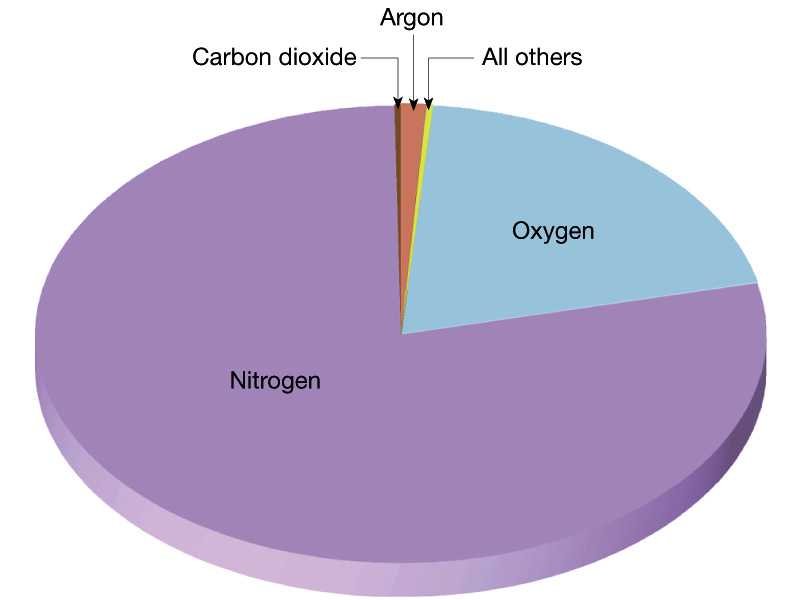

as stated before... the science from nasa....
Nasa says Carbon dioxide cool by blocking warming energy from reach the earth.
" ... CO2 and NO, the two most efficient coolants in the thermosphere, re-radiated 95% of that total back into space."
http://science.nasa.gov/science-new...12/22mar_saber/
Nasa says Carbon dioxide cool by blocking warming energy from reach the earth.
" ... CO2 and NO, the two most efficient coolants in the thermosphere, re-radiated 95% of that total back into space."
http://science.nasa.gov/science-new...12/22mar_saber/
Quote from futurecurrents:
NASA says CO2 is a greenhouse gas. It heats the lower atmosphere. That's what NASA says. NASA and NOAA say the hockey stick temp chart is real. They say man has increased CO2 by 40%.
The rest of the irrelevant BS you posted is just noise.
Don't drink the Global Warming Kool-Aid


Quote from jem:
as stated before... the science from nasa....
Nasa says Carbon dioxide cool by blocking warming energy from reach the earth.
" ... CO2 and NO, the two most efficient coolants in the thermosphere, re-radiated 95% of that total back into space."
http://science.nasa.gov/science-new...12/22mar_saber/
Your link done broke, take a look at this new one:
http://wattsupwiththat.com/2013/03/...es-and-the-thermosphere-is-making-the-rounds/
Quote from jem:
as stated before... the science from nasa....
Nasa says Carbon dioxide cool by blocking warming energy from reach the earth.
" ... CO2 and NO, the two most efficient coolants in the thermosphere, re-radiated 95% of that total back into space."
http://science.nasa.gov/science-new...12/22mar_saber/
This is the climate change science from NASA: http://climate.nasa.gov/