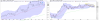
Need Help on roller coaster equity curve

You sound like a gambler. I think the books from Mark Douglas are close to useless, since most people in the markets don't have 'psychology' issues, but simply don't know what they're doing, period.

My suggestion is that you quit trading for the time being. :)
 
“It was never my thinking that made the big money for me, it always was sitting.”

I have read this before but I have a Jesse Livermore book that clearly states that this statements was misinterpreted. What he meant was "sitting and waiting". He felt the best way to make money was to sit and wait for the perfect setup without always being in the market.
 
Well that doesn't really answer my question. Instinct is trading in the opposite direction of the bull/bear trap(which I've learned from the market). However once again I was short AAPL(22nd and 23rd) before a huge spike on the 24th of June which quickly erased any little profit I had.

I showed a loss but did not sell out of emotions. If you look at the velocity of that move, it would be hard to not cover your shorts. I redid my charts on AAPL and had 3 resistances where it should not break. Low and behold the move broke all of them. In my mind I was saying,"Are you kidding me!!!!Time to take another loss..." Then it stalled for a few minutes before sneakingly breaking back below resistance. At that point I thought this is a GREAT place to short, much better then where I had initiated my previous short position which was showing a loss....
But again I was reminded by Paul Tudor Jones, losers average losers.....so I was like I will remain disciplined and not add. But it turned out my instinct was the better play.

So I guess my question is....is it better to believe your hunch? Or follow rules set by other traders/Paul Tudor??
Well, I don't do hunches, I use to lose way too much money playing hunches and why after 6+ years you doing roller coaster. Learn to program and back test your hunches, then toss away your sayings of other traders who didn't trade stocks but highly leveraged instruments. Even then there are times to "press" in trend but much less likely of doing so counter trend. Have you ever used Debit spreads to hedge? Buy nearby Calls and sell 1.5 as many 3-4 strikes above, then you have some insurance, when you feel you don't need debit call-sell it and keep short calls to recoup losses on long. If stock price goes back up, put long call on again. The most risk is always at beginnings of trades, better to give up a little in beginning than having many little losses, I concentrate on strictly on risk, also Like NoDoji, sell higher than near breakout areas and that always have so many traps who get in lower, that chop could be for many weeks of banging through and retracements. Using weeklies you can pick out what is more obvious and not as clear on dailies.
 

Attachments

  • AAPL-JUNE 26-2015.png
    AAPL-JUNE 26-2015.png
    109.2 KB · Views: 92
Trading should be simple , why trade so many markets? If you trade stocks , don't trade futures , and don't use margin, you need to trade small and aim big returns, find some cheap stocks and keep adding , I never made money with day trading , but I did make it by position trading, that's how big money is made.
 
So on my Optionshouse account which I mainly trade options/ETF's,stocks.....
I finally broke back even betting on the short side with today's action.
On my IB account with futures that is a DIFFERENT story lol...but we will save that story for another day.

However every time I make huge gains in a short period, I usually give it all back so I took full profits/half profits on some positions today.
I still believe I should hold a huge position on this one short but....I've been scarred many times before.

Anyways after trading for 6+ years I am debating if I should continue this roller-coaster ride.

It is driving me crazy!!!

Do you guys have similar thoughts??What should I be doing to smooth out equity curve?

1. Maintain one account for long term investing, and play the long side only when the market makes a draw. Do not try to pick the top of the index for the fade, it's a sucker's play, and I've been the sucker too many times, lol! Sure, you may score once in awhile and make a quick gain. Historically, the market has ALWAYS rallied off every dip, regardless of the reason for the draw (1987 crash, dot-com crash, financial crisis crash, flash crash, etc.).

2. Maintain another account for short term volatility plays, such as the IB futures account, where you can capture intraday swings on the S&P Emini or crude, and play long AND short.

And regarding AAPL, why are you trying to fade a move on one of the most heavily owned stock in the world, with a long term overall bullish chart, and a stock that is part of all three main indices (Dow/S&P/Nasdaq)? There are lots of weak stocks with weak fundamentals and bearish charts out there to fade. Sure, AAPL may take a dip here, however you will probably have more upside gains on buying the dip than trying to fade it.

In any case, if you keep two accounts outlined above, it will help with smoothing out the equity curve.

 
Last edited:
You sound like a gambler. I think the books from Mark Douglas are close to useless, since most people in the markets don't have 'psychology' issues, but simply don't know what they're doing, period.

My suggestion is that you quit trading for the time being. :)

a harsh but good post LF. It is very clear from the OP post that he does not have a solid edge and is relying on the 'gut feel', very likely he is someone else's Mr N's 'reliable profit centre'. My advice would be similar in that you should liquidate all of your accounts and stop trading for now. If you are serious and determined to make it in this business I would start doing some research about how the markets actually work. This will be harder than you think as the majority of textbooks/forum content/other media do not tell you this.

Personally OP I would continue your career/job dont put on hold any other plans while you research an edge. To do this you will have to have a good understanding of why and how the market moves. Choose a liquid instrument where the bulk of the trading is completed in the sessions you will eventually trade (if you get that far). Then go to work on researching who each of the main participants of the instrument are, what their purpose/goal is, their MO, the times they do their business. You need to be in a position where for example the ADR, seasonals, session liquidity etc is ingrained in your brain. You need to now everything about your chosen market, you need to analyse who wins/who loses/who is prepared to lose and why. You then design your plan to extract as much of the ADR as possible with risk focussed entries. This is the sort of info that is very rarely discussed on ET (funny that). Do not go buying any cheap ebooks, be very careful who you listen to. Be very careful and wary of technical analysis. Personally I am in the camp that it is possible to grind out a smallish edge using TA but most will not, I don't use it other than to know how weaker hands are likely positioned. Remember a rising TL or stochastic will sometimes work and sometimes not. The real juice is in working out why they sometimes 'work' and sometimes 'fail'.

GL.
 
On 6/24 there was a huge spike to the upside. I was short from previous days ago and was like WTF!

On 6/24 the daily range was $127 to $130. Even if you caught the entire move and put your entire account in that one move, you would have made . . . 2.4%. You've got to think bigger. Look for stocks where you can use your size advantage and buy at new highs right ahead of genuine large spikes, like 20% or 30%. Don't get caught in the "1% a day" trap. That's called a job.

There is a guy who posts on here sometimes, 4Nursebee. Go look at his blog and his equity curve and the big moves he gets by trading breakouts.
 
Well that doesn't really answer my question. Instinct is trading in the opposite direction of the bull/bear trap(which I've learned from the market). However once again I was short AAPL(22nd and 23rd) before a huge spike on the 24th of June which quickly erased any little profit I had.

I showed a loss but did not sell out of emotions. If you look at the velocity of that move, it would be hard to not cover your shorts. I redid my charts on AAPL and had 3 resistances where it should not break. Low and behold the move broke all of them. In my mind I was saying,"Are you kidding me!!!!Time to take another loss..." Then it stalled for a few minutes before sneakingly breaking back below resistance. At that point I thought this is a GREAT place to short, much better then where I had initiated my previous short position which was showing a loss....
But again I was reminded by Paul Tudor Jones, losers average losers.....so I was like I will remain disciplined and not add. But it turned out my instinct was the better play.

So I guess my question is....is it better to believe your hunch? Or follow rules set by other traders/Paul Tudor??

Be extremely cautious of anyone who speaks in meaningless platitudes. They have fooled many traders.

Use your instincts mixed with reason. surf
 
Well that doesn't really answer my question. Instinct is trading in the opposite direction of the bull/bear trap(which I've learned from the market). However once again I was short AAPL(22nd and 23rd) before a huge spike on the 24th of June which quickly erased any little profit I had.

I showed a loss but did not sell out of emotions. If you look at the velocity of that move, it would be hard to not cover your shorts. I redid my charts on AAPL and had 3 resistances where it should not break. Low and behold the move broke all of them. In my mind I was saying,"Are you kidding me!!!!Time to take another loss..." Then it stalled for a few minutes before sneakingly breaking back below resistance. At that point I thought this is a GREAT place to short, much better then where I had initiated my previous short position which was showing a loss....
But again I was reminded by Paul Tudor Jones, losers average losers.....so I was like I will remain disciplined and not add. But it turned out my instinct was the better play.

So I guess my question is....is it better to believe your hunch? Or follow rules set by other traders/Paul Tudor??

Its better to believe your hunch. Truth is, once you enter a trade, the outcome is random but you can manage the randomness. Unless you have information, you are trading noise. Admit it or not.

Most of the "price action TA" types can't handle that notion so they build elaborate constructs to delude themselves otherwise. Read dbphoenx and jackhershey threads for txtbook examples of these elaborate but deceptive constructs.

surf
 
Back
Top