My road to Heaven

Mincer #21

The saying goes perfectly to trading: "Many went to shear the sheep, but returned sheared."

This week, Wednesday and Friday, suffered major losses trading after 15:30. This is a good reason to analyze all ES trading.


Pic 112.png

Pic 113.png


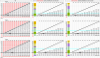
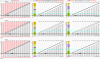
Obviously, MES trading is demanding on the quality of transactions. Any strong losses result in a stop on net profit. Last week, volatility fell and the problem showed its obviousness: Grosprofit in green, Netprofit - strongly in red. Let us analyze how the quality of trade will change if we imagine that we trade only ES with a minimum commission (3.88).

Pic 114.png

Pic 115.png


Let us compare reality with a hypothetical version in one table:
Pic 116.png


Separately, select the last month and two months:
Pic 117.png

Pic 118.png


The conclusions are simple:
1. The commission at MES is very voracious. The quality of the curves changes completely and there is a significant margin for dips. Therefore, it is better to start trading with mini- and at a minimum commission.
2. It is better to start not with $7000, but with ~$15000. Then the drawdowns will be workers (up to 7-9%) and not undermine the balance of the psyche.
3. Now volatility is falling and tough times are coming - when, after receiving a loss, the market does not provide new opportunities for entry. It will become much more difficult to earn money in comparison with March-April. Because of the commission, on the one hand, you have to leave for ES, but on the other hand, be prepared for a 20% drawdown. Or combine: a volatile market to trade MES, and a fading market - ES. Now is the weekend, so I will continue to trade 3 MES and think how to live.

P.S. A bug was detected in NT7: non-existent transactions are registered on a real account with similar to real IDs:
Pic 101.png

Pic 102.png
 
FDAX Forwardtest #16-#21

Using the weekend, I tested the setup on FDAX, which I have been eyeing for a long time. The entry point is very simple - two-parameter. Of those that are visible through the eyes. An interesting nuance - the asymmetry of the market is clearly visible. A good plus is that take profit is a bit more than stop loss.

29 days
169 transactions: +95; -74; 56%+.
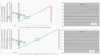
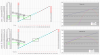
Pic 119.png

It turns out 234 points in 1.5 months for 1 contract.
$4,500 per month with a drawdown of $2,000. Calmar 3.1. With a drawdown of 10% of the deposit, the trading capital should be $20,000 for 1 contract. Estimated yield is 20% per month. But the liquidity of the system is very limited.

Naturally, more extensive testing is needed. But now there is already one technical problem - the time in the market is 14 hours a day, which is difficult for manual execution.
 
Extracts

In my opinion, the very correct concept of the "Form of organization of victory" is:

In trading an “edge” is a mathematical advantage. It basically means that if a trader takes enough trades of a certain type that he will, over a period of time, he will be profitable. Traders have to learn to structure their trades in ways that give them an edge; a mathematical advantage, if they want to be consistently profitable over time. The problem is edges can fleeting and are small. And edges need to be based on math which some call an “exact science”. Others say it is not an exact science. Nevertheless, at the bare minimum math seeks to use logic to understand and prove logic between quantities and objects. The problem in applying math to the market is that the market is not exact and it is full of uncertainty. Hence, a mathematical advantage is always going to be small. And it can be fleeting. That is, it happens quickly and can disappear quickly. But the good news is that is all that is needed to be profitable.

So traders have to structure their trades with scenarios or setups that involve entries, initial SL’s, initial PT’s based upon an edge they have found or discovered and employ. But that is not the end of the story. They now have “manage” the trade for a mathematical advantage which involves execution, on the fly adjustments of SL’s and PT’s within the dynamics of the trade as it unfolds. Since the market is filled with uncertainty no SL’s or PT should be set in stone. They all need to be adjustable but also have a mathematical logic, behind the initial setting of SL’s and PT’s, and any subsequent adjustment that is based upon “how” (i.e. the dynamics) the market is unfolding, in respect to the trade taken.

If you follow my journal I structure averaging down to give me a mathematical advantage. An edge. Even though the gurus “choke on their spittle” over the concept. I also take what I call straight scalps, long or short, with no averaging down.

When in this “structuring moment” of the trade it is only the INITIAL structure, based upon a mathematical logic. And is for SETTING the entry, initial SL’s, and initial PT. All those things are subject to adjustment as the trade unfolds (i.e. the dynamics or the “how” price is being made) EXCEPT my entry. You have doubtless heard (from the guru’s lol) that the only thing you can control is your SL and some might say your profit target, or PT for abrev. I would beg to differ. The only thing you can control is your entry! The market controls all else. It determines, by it’s dynamics, if your SL and or PT was or is appropriate. Therefore, I will adjust my SL and or PT based upon the dynamics as the trade unfolds. I CANNOT adjust my entry as it is already made and has become a reality in my original structure once I take it. I am “in” the market so to speak. That fact, I cannot change. It has happened. I can only do two things as concerns that fact. Exit or add to it. If I do the latter it needs to have a mathematical basis within the immediate and larger context AND within the present dynamics taking place. However, in the example below I discuss straight short and long scalps with no averaging down or scaling in as some prefer to call it LOL.

Allow me to give an example:

Price is in a range (defined as 20 or more bars of sideways PA). The larger Context is a gap down open from a previous bear channel. In other words, weakness is in the distant past (from a 5 min ...15..min perspective). The fact that we are now in a sideways range indicates the bulls are trying to reverse that weakness and they want a reversal up. But the fact we are staying in the range indicates the bears want the range to just become a bear flag. The bears want a downside BO. Remember, in a larger context a bear channel i.e. a downtrend, a 20 bar TR on a 5 min chart is like a 7 bar bear flag on a 15 min chart and a 3 bar bear flag on a 30 min chart. So, the tug of war between the bulls and bears continue until we get a successful (read my journal for def of a successful BO) and one side wins (for a while). Now, in that struggle the TR by it’s nature reveals that both are about even (thus creating the range or there would be no range created...let than one sink in as it applies to ALL price patterns even though some would say price patterns are hogwash LOL). One tactic or technique I use in such an environment is fading the outer limits of the range (both bottom and top). There is a 70% to 80% chance any BO attempt, bottom or top, will fail within 5 bars and price will trade back into the channel or further down or up into it, even if it never actually broke the upper or lower limits on the attempt. In the larger context those odds favor fading the BO attempt out of the top. Why? Previous weakness to the left before the range began. So 80% from top maybe 70% from bottom.

Ok, so BO attempts and their failure or success are now based upon mathematical logic. Now what about the entry..SL..PT in the initial structure of the trade. I got the math on my side in BO attempt failures. But where does a mathematical basis come into play in my initial trade structure?

Ok, my initial entry, if I am conservative, will be to short when price is in the top 1/4 of the range. If not so conservative, I may start shorting in the top 1/3 of the TR. Initial SL will be say 2 to 4 points above the top of the range or above my entry if using a set SL (maybe a little more in volatile market conditions) OR an alternative initial SL looking to the left and finding the closest or lowest (in terms of SL distance) swing high before the range began and placing the initial SL just above that swing high thus using an initial PA SL, as opposed to a dollar or set point SL. For the initial PT I use the traders equation that brooks teaches:

The probability of success X the initial reward needs to be greater than the probability of failure X the initial risk.

To come to the probability part of the equation I have to make a judgement call. To help me make that I ask: What just happened in price action? What are the chances of price hitting X target BEFORE it will hit X SL? Then I mentally adjust the target to give me a higher probability of success. If the probability of success is high say 60% to 75% then the left over percentage becomes the probability of failure figure. Once I assign the probability number I can plug in the numbers into the equation and structure my SL and PT to give me a positive traders equation. Mind you I don’t do this manually so much as mentally. Then I place my trade.

So, now that I am in the trade I have to manage the trade according to the unfolding dynamics of PA AFTER my entry. I have to monitor actual risk and actual PT. I want at least a 1 point scalp and prefer 2:1 reward to risk but will sometimes settle for 1:1. Often, when price moves immediately in my favor after my entry I can get a 3:1 or 6:1 reward to risk based upon my actual risk I suffered after my entry. If I can get that kind of reward I will grab it quickly even BEFORE my initial PT is reached because depending on the type of setup I entered on, I know that paper profit can disappear quickly. That is why traders get whipsawed. Price moves immediately in their favor..they get greedy thinking more is coming they will hold and bam suddenly price reverses and as quick as they saw a gain, they now see a good paper profit with a GOOD R:R, evaporate and they are now in a losing trade. See, they had a mathematical advantage but they did not take advantage of it in the dynamics of the unfolding trades. On most setups (there are some exceptions like in strong BO’s) if the market gives me a 3:1, 6:1, 8:1 ..etc reward to actual risk I would mathematically be foolish to not take it. I CANNOT go wrong taking it as that is an edge i.e. a mathematical advantage and math is relentless. Greed as well as fear can obliterate our “edge” as price dynamically unfolds. That is why, if you have looked at my chart in my journal you see me jumping in and out. The dynamics of the trade just gave ME a dynamic edge and I am taking it! It ain’t magic as ON aka Fedex likes to announce LOL.

Things are a bit different when averaging down although much of the process is very similar.

I will, perhaps at a later date post more on structuring a trade when utilizing averaging down.

I am posting this writeup I wrote in this thread because it is a thread about educators that tend to only discuss entries and rarely discuss managing a trade. I will also post it in my journal.

Happy trading

Volpri

Some folks can’t deal with the uncertainty of the markets. They want clearly defined setups with clear entries...exits..risk...based upon what they call backtesting. However the market doesn’t give a hoot about backtesting. That is only for the comfort of a trader that needs the reassurance that props up their hopes and dreams. Lol.

I have a defined system. I use an initial structure. Then I convert to a dynamic structure once a position is taken. That IS my structure. See, I am smart enough to know that the dynamics doesn’t have to match my initial structure. However, it often does. I do not attempt to presume to tell the market it has to match my initial structure. It depends on what happens in the dynamic if I will average down or not. If I average down there is a reason for it. A dynamic mathematical reason. Sorry if that is disconcerting to you but it is how I trade since I believe we trade in a fog and can never see clearly until things happen live.

You on the other hand are probably a systematic trader Come hell or high water your system rules the market. Only it doesn’t. You can’t tell the market what to do..ANYTIME. It doesn’t care about your system. The way I see it is I need adaptable strategies to employ to meet whatever the market is throwing at me. That is why I will switch and turn on a dime while other traders are keeping their fingers crossed and hoping that their well defined system pans out and they can chalk up another profit. How many well defined entries...exits...SL’s backtested malarkey..positive expectancy systems were flushed down the toilet and into the septic tank since ...well lets say feb of 2020?

See, my willing to be flexible is why I have a high win rate which is necessary to have when scalping. Most traders cannot flex with the market and cannot deal with the inherent uncertainty so they want a well defined system that for them makes them feel secure. The problem is, if the statistics thrown around are true, then 90% or more of traders lose, regardless of the system they employ. So they go from system to system searching for certainty. And I might add from blown account to blown account.

The double or triple up is in the new direction. Not the same direction as my averaged down entries. Not sure if you understood that. That is I would double or triple up in the opposite direction AFTER exiting all my averaged down contracts with a loss, once my premise is proven wrong.

I learned years ago from George Angell who learned it from another trader just how to get back a loss when a trader finds himself on the wrong side. Exit. Reverse his position and double or triple up in the reversed direction position. Price only has to move a short distance and one is at BE. A little more and one is back in the money. Often in minutes and sometimes just seconds. So, once my premise has proven out wrong I am out. And I go in the correct direction. I just judged the market wrong. Intraday trading requires alot of flexibility to the react to the dynamics of market action and not just some set system for entries and exits. I understand traders want straightforward, easy to decide binary systems but unfortunately, at least for myself, I, as a price action trader/scalper, cannot find KISS to be viable in the long run. I need to constantly ask myself on each bar what just happened and what is likely to happen next? Who controlled this bar the bears or bulls? What is the immediate context and the larger context in which this bar takes place? Is the trade conducive to averaging down techniques? Or should I just exit with a loss and enter again at a better position much like you describe above. Sometimes I do that. Other times I average down. Other times I just hold my original entry through any drawn down W/O adding any to the position if I think there is a good chance that price will bounce back before the session close. I am more apt to do as you suggest if we are in the afternoon and getting close to the close and I figure there won’t be enough time for the trade to bounce back and give me a profit. I sometimes do as you say above at times, but not always. If price is in what I call a grinding Small Pullback Bull Trend (SPBL) I prefer to average down over and over on PB’s to the 20 Ema and exiting with multiple profits. We just have not discussed all the ways I trade in this thread hence we had not talked about your concepts above.


The fact is you could still end up doing what you say and find yourself on the wrong side of the market over and over and you wouldn’t be just holding paper losses but actually enduring loss after loss until you hit it right. Like the slot machine! At least with averaging down they are only paper losses until you JUST have to get out cause the premise is wrong. See by averaging down I am not losing my position ( as turkey would say in the Livermore book) “if I exit I lose my position”. To contrary I am building my position and getting a better position And doings so at better prices, and if I know my stuff, price has a good probability of giving me a bounce that will allow me to get out of all my contracts with a profit. That is why it looks like magic as Fedex says. But if time is running out I will employ what you are talking about. I do understand that with averaging down that the paper losses are growing on EACH position as price moves against me whereas doing what you say I am taking an actual loss but stopping that particular entry from growing into a bigger loss. But then I am taking multiple losses whereas IF price bounces back on my averaged down position I have zero losses. So there are pros and cons to each scenario.

Good thinking IMO! I might add just don’t forget the larger and immediate context of the setups. And you might want to learn to apply the traders equation to every trade if you have never done so.

Rules for a setup for an entry can be exactly the same but under different context ( PA to left) the trade one time renders a profit and next time a loss. Nothing is more important than the context because that affects the probability of a trade being successful or not. The exact same setup in different contexts can, and likely will, render different results. In real estate you have no doubt heard, .....LOCATION LOCATION LOCATION. Samathing in trading. And use the traders equation to INITIALLY structure a trade. Actually do the math on each trade and plug the numbers in until you get proficient enough to do it mentally..on the fly.

Traders Equation (Source: Al Brooks)

probability of success x reward needs to be greater than probability of failure x risk

A trader runs this equation BEFORE entering a trade. It is slow at first but soon becomes second nature but he needs to do it for each trade.

Even with a positive traders equation before placing the trade a trader needs to realize that there is STILL a 40% chance it could be wrong. Nevertheless, you might be surprised just how this simple process can put a trader on the winning side more often instead of leaving him to squirm on the losing side.

If I get a chance I may post a chart with a trade or two detailing the process. If you are interested??? Just let me know.

So FIRST do an initial structure of the trade using the traders equation.

SECOND monitor dynamically, the trade as it unfolds after your entry.

After doing this and making the entry then the trader needs to observe the dynamics. By that I mean you have made your entry. You have a position. “How” is the trade developing over a particular time frame whether that be ..5 min..15 min..30 min..? Did PA go against you and take out your SL? Slowly or quickly? Did it go down 1/2 the distance to your stop then turn in your favor? If so “how” Grinding? Quickly? How did the last bar close? In your favor or against you? If you entered the trade did it immediately sail out of port in your favor with “0” adverse movement? PA back and forth...back and forth...

For instance, say you enter ES at 2950 it goes 1/4 point against you to 2949.75 then turns and sails in your favor 3.25 points to 2953.25 on the same bar or the very next bar. In such a case while your initial risk you used to structure the trade on... was... say 2 points the actual risk was 1/4 point or one tick which you need to add a tick to that making it 1/2 point.

So, dynamically you can exit at 2953.00 cause price is at 2953.25. Should you? I would say YES by all means exit. If you exit your reward to risk is R:R is 6:1. You actually risked 1/2 point to make 3 points. Mathematically that is a good trade. You cannot go wrong scalping 3 point for a R:R 6:1 If you make 10 trades that day and make 3 points per trade on 7 trades Then you make 21 points on those 7 trades. But you lose 2 points (assuming 2 pt SL) on 3 trades. So, 21-6 =15 points is your net for the day.

Why would I say exit in the trade above? You got three points on little adversity (risk) so why not hold for more? Because, dynamically, that was a high probability trade. Think about it. You got probability, reward, risk. The three variables. The perfect trade is high probability, Big reward, little risk. Now do you think market is going to give you perfect trades? A perfect trade does occasionally happen but it is very rare and not the norm. MOST of the time you can get one of the variables on your side, and sometimes two, but not all three. Now back to the trade. Is a 6:1 R:R good? In the world of scalping 1 to 8 points I would give a resounding YES! Now think through this. It is not what it seems on the surface. You made 3 points on very small adversity. That can only mean at the time of your entry you hit it right at the moment of high probability. And low risk. Some institution created this action (you don’t need to know who lol) That is, dynamically this PA is so, as opposed, to the initial structuring of the trade. So i planned but this is what is really happening. Think about this. In other areas of life we make plans but 99% of the time we have to make adjustment to our plans as life happens. Well SAME thing with trading!

So, dynamically the market has given you two of the three variables. So, let me ask you this. You got two variables on your side as the trade unfolded right after your entry. SHOULD YOU THEN EXPECT TO GET THE THIRD VARIABLE WHICH IS A BIG REWARD ALSO ON YOUR SIDE? No! No! No! Remember, it is very rare the market will give you a PERFECT trade. That is why you should immediately exit the above trade for a 3 point profit on a 1/2 point actual risk giving you a 6:1 reward to risk. Now here is precisely the mistake novices or even seasoned traders can make if they don’t understand this. THEY will hold for more profit! BIG mistake! (There exceptions ...like for instance, in very strong BO’s you might look at holding for a MM)

Their reasoning goes something like this: “The trade immediately took off in my favor. It didn’t come near my SL. This baby is going to give me a huge win. I am holding for BIG BUCKS NOT LITTLE DOES!” You see they don’t realize that the market just gave them a great R:R trade on a silver platter. Just basically handed it to them. But see greed kicks in. They hold and seconds, or minutes later, price drops back down through their entry and keeps going south hitting their SL and taking them out with a 2 point loss. A 100 bucks loss plus commissions in the ES if trading one contract. Of course worse if trading 5 contracts. They are left shaking their head in bewilderment muttering....I should of..could of...kick myself....well ...you get the picture. See all this is counter-intuitive. It seems wrong to exit such a good trade so early but actually exiting the trade is precisely the correct thing to do.

You may need to convince yourself by running the traders equation agains once you have 3 points in the bag in paper profits.

To run The Traders Equation you have to first assign probability. Will this trade likely go up another 10 points and give me 13 points profit? 50% chance? 60% chance? 40% chance? Or very unlikely considering the larger and immediate context so 20%.

Any time you are going to use the traders equation you are going to have to assign some probability number to the equation. The reward and risk is easy. Just pick them. Then assign the probability of PA giving you your hoped for reward without hitting your set SL. In other words, you, to assign probability to the equation are going to have to basically ask: given the immediate and bigger context (all the bars to the left), will this trade I am wanting to take likely be successful? Will it likely hit my PT BEFORE it will hit my SL? 20%, 40%, 60% chance? What is the chance? Once you decide that plug in the numbers. Plug them in. If it renders a positive trader equation you might look at taking the trade. If not adjust the SL and or reward and assign a new probability number. Run it again. If then positive consider taking the trade. If not might be better to skip the trade.
 
Made a calculation of the matrix RR and the probability of the target.

Three options:
- Real probabilities in my mind;
- optimistic;
- Super-optimistic.
And the three options are the same with the trailing stop.

Pic 120 real.png Pic 121 real w ts.png Pic 122 optim.png Pic 123 optim w ts.png Pic 124 superoptim.png Pic 125 superoptim w ts.png

Conclusion:
- It's scary to live))
- As expected, long goals do not justify themselves in mathematics. The longer the target, the more carefully the deal entry should be chosen. But the range of the target and the possibility of scenarios along this path greatly underestimate the probability.
- Trailing stop significantly improves the picture.
- The most important thing: additional entry between the point of initial entry and the stop is mathematically much more profitable. If you always enter your trades 1 point better than planned with the same take-profit point, this can VERY significantly change the picture.

Here is the file if someone wants to play around with their probabilities:
 

Attachments

We model the ideal process:
- takeprofit varies from 0 to 20 points ES;
- the probability varies linearly from 100% to 0% in increments of 5%;
- stoploss is either fixed (full) or trailing {-1, -2, -3, -4} pt;
- fees and slippage are not taken into account.

Question: what values of takeprofit give the maximum and optimal (-10% of maximum) profit?

Here are the charts for the four stoploss values:
Pic 129 s1.png Pic 130 s2.png Pic 131 s3.png Pic 132 s4.png

Here is the summary table:
Pic 133.png

Obviously, with a linear probability field, regardless of stoploss, the optimal takeprofit is 3-4 points. Therefore, the main and only task is the marking of zones and sections as a probability field. Which greatly depends on the method and approach. The closer to reality your view of the market, the more adequately applied models, the higher the chances of finding areas with a probability of 65-80% at an amplitude of 3-4 points.

With a stoploss of 3-4 points and the well-known RR=3 without using a trailing stop, you have no chance. And often do you see recoilless movements allowing such a trailing stop to slip? But since the real probability field is different and shifted to thick ends, then, possibly, somewhere on the RR above 6-8-10 there may be a positive zone. But! It is very likely that in doing so we will get out of the RTH borders with all the ensuing hole in risk control.

And then a dumb question comes to mind - if you can’t model the probability field for your high stop zone by -3-4 points, and at the same time try to simulate the territory by 10-20-30 points for your high take zone, then what your brain is trading and what for?
 
Mincer #23

Last week I bargained normally. But today it has severely failed. As a result, he rolled down to the starting deposit amount. Three months of trading empty. I'm at zero. Of the acquisitions, only a license for a reduced commission.

Today I stopped trusting myself and introduced restrictions on risk management by the broker.
 
Mincer #23

I take several setups to trade from Vintage. I'll see what happens. In history, it looks like this:

Low volatility:
Pic 137 malo Low vol.png

Average volatility:
Pic 135 malo Avg vol.png

High volatility:
Pic 136 malo High vol.png
 
Back
Top