You can post all you want and you might not be TJustice but there Is zero doubt that you have other usernames or you share usernames with other sludge on here or you’re a bot/paid poster. I also wouldn’t be suprised if you’re that piss boy $matthew. He’s the king of multi nicks.Gawd, you are the second person who thinks we may be the same person in the last 24 hours. Where is this coming from? Am I really going to have to read his posts for similarities?
No, I am not Tjustice. You can go back to your Nintendo now.
Edit: I wonder if someone is attempting to initiate a false accusation of me having multiple users in order to shut me up? After all, it is the Radical Leftist way.

You are using an out of date browser. It may not display this or other websites correctly.
You should upgrade or use an alternative browser.
You should upgrade or use an alternative browser.
Mississippi, Alabama, Louisiana, Oklahoma, Arkansas, Tennessee, Kentucky
- Thread starter exGOPer
- Start date
You can post all you want and you might not be TJustice but there Is zero doubt that you have other usernames or you share usernames with other sludge on here or you’re a bot/paid poster. I also wouldn’t be suprised if you’re that piss boy $matthew. He’s the king of multi nicks.
At least I'm not being accused of being you, right?
I don't post enough to be paid, I'd imagine. I go both ways, usually supporting Trump, but sometimes ripping him a new one like no one else. I can't imagine any political organization or media group tolerating or paying for that. I heavily slam Obama and the Bushes, but have favorable things to say about Bill Clinton.
Would it be fair to say my "think" is not usually the same as the group "think"?
Edit: I have no other alts or social media accounts anywhere except MaximumPossibleSuffering here on ET.
You should actually try and find a job.At least I'm not being accused of being you, right?
I don't post enough to be paid, I'd imagine. I go both ways, usually supporting Trump, but sometimes ripping him a new one like no one else. I can't imagine any political organization or media group tolerating or paying for that. I heavily slam Obama and the Bushes, but have favorable things to say about Bill Clinton.
Would it be fair to say my "think" is not usually the same as the group "think"?
Edit: I have no other alts or social media accounts anywhere except MaximumPossibleSuffering here on ET.
You should actually try and find a job.
I have two jobs plus my ET trolling. In fact, this Friday was a sad day for me. I had to cut the US Treasury a big check for Federal Income Taxes and my estimated quarterly tax payments went up.
At least I know my tax money will be well spent. Not.
Don’t you rent a place with some Iranian dude and share a Morrocan GF.I have two jobs plus my ET trolling. In fact, this Friday was a sad day for me. I had to cut the US Treasury a big check for Federal Income Taxes and my estimated quarterly tax payments went up.
At least I know my tax money will be well spent. Not.
Don’t you rent a place with some Iranian dude and share a Morrocan GF.
I moved from Washington to Texas and am no longer rockin' with my Morrocan. Interestingly, the average height is a lot lower here than in Washington State.
You can post all you want and you might not be TJustice but there Is zero doubt that you have other usernames or you share usernames with other sludge on here or you’re a bot/paid poster. I also wouldn’t be suprised if you’re that piss boy $matthew. He’s the king of multi nicks.
I think I know what the issue is. Someone may have been sniffing around my IP addresses and or browser history and said something. I use several different electronics devices, travel, and clear my browser history from time to time, especially before and after online financial transactions. Again, I am the only user for MaximumPossibleSuffering and never had any alts.
The devil is in the details. It is important to understand the methodologies employed in determining the validity of any statistics. In addition, when certain metrics are left out, such as crime statistics or climate considerations, one can paint an inaccurate picture of living conditions in an area and resident motivations to stay there. Futhermore, one has to watch certain metrics that may have subjective interpretation. It is critical that certain standards are agreed to before presenting statistics as facts.
Another factor to consider is how to account for commuting in statistics. Do the most productive people live in the suberbs? Also, much is made by the Left on how “prosperous” California is. However, I wonder if Right is just carrying a greater than usual share of burden in California versus other states.
Oregon, Washington, Utah, and Texas have been the main beneficiaries of California’s bad regulatory and tax environment. There have been lots of new business startups in these state, including technology and supporting industries. I would like to see relative employment growth statistics in these states versus California.
Louisianna, Mississippi, Alabama, Florida, South Carolina, and North Carolina are secondary beneficiaries to California’s anti-business environment. For example, large shipping companies find it cheaper to deliver Asian goods in these secondary state ports than California in spite of the many additional miles and days it takes versus delivering in California. California’s CARB rules prevent ships from idling to provide power. Instead, these shiiping companies have to pay seven figure fees to use onshore services.
California is becoming a great test case for Leftist policies being at odds with sound governance.
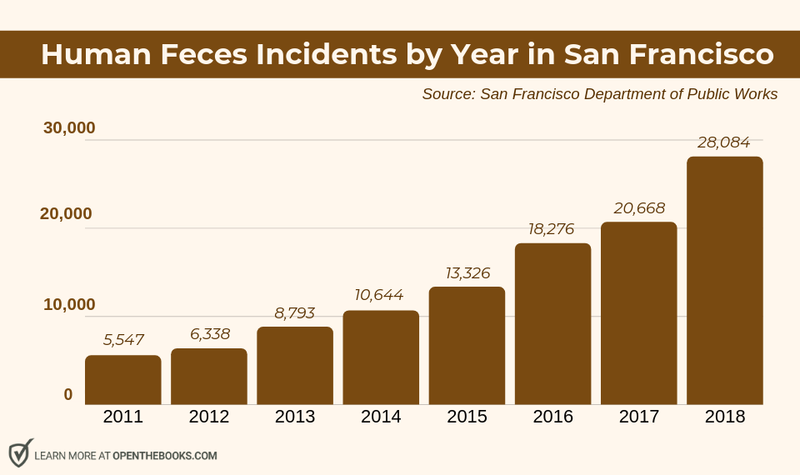
Over 30,000 homeless in Los Angeles alone. Feces and needles in San Francisco streets, huge budget deficits every single year, higher income taxes, gas taxes, sales taxes, real estate taxes, filthy rich extreme liberals who are out of touch and feel everything is hunky dory. After all, they are gaming the system and continue to grow rich each day! Yeah, California, the Golden State of extreme liberalism! Meanwhile, you have legions of extreme liberal poor saps still hang on every word of their liberal masters. You see, they have not figured out that they are mere slaves at the Democrat liberal plantation! Guaranteed voters and Democrats do not have to give them too much either! Just enough to make them think the freebies will keep coming!

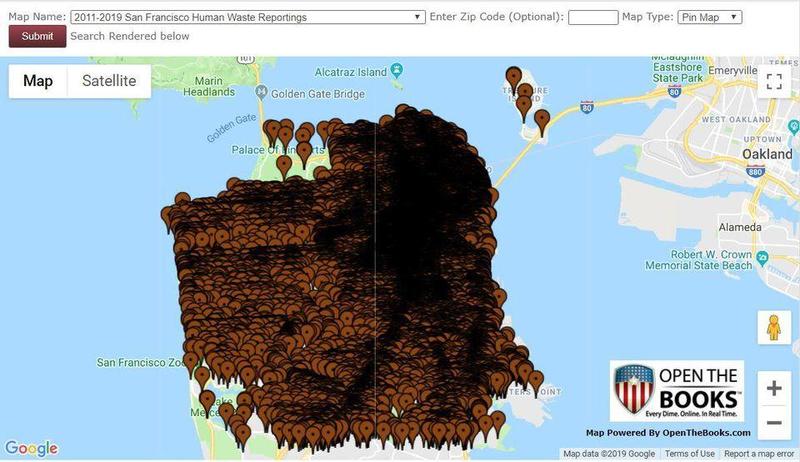
Apparently, San Francisco is just one giant greenhouse gas emitting turd now.
https://www.zerohedge.com/news/2019...pping-san-franciscos-132562-cases-human-feces
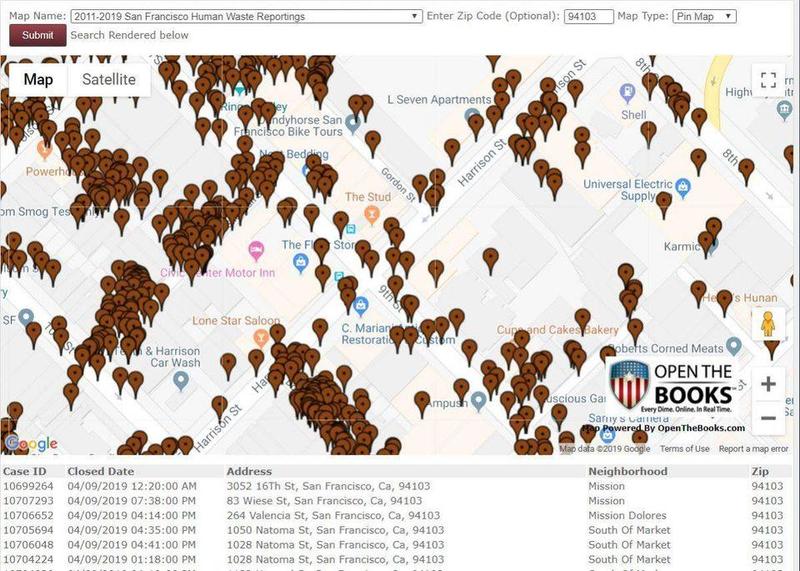
Behold The Shit Map: Mapping San Francisco's 132,562 Cases Of Human Feces
https://www.zerohedge.com/news/2019...pping-san-franciscos-132562-cases-human-feces
Behold The Shit Map: Mapping San Francisco's 132,562 Cases Of Human Feces