Mentors and education

Truth Bomb. If you want to optimize a trading strategy under real world conditions in the shortest time practical - keep a brutally honest trading journal.

BTW - backtesting is quite lacking when it comes to optimizing your position management. Under actual live conditions - position management is the first pillar to fail.

Exactly.
Most of the craft is practice and debugging.
Remove errors within the model and the strategy.

The model is the structure so it's the foundation.
Strategy is the process by which we exploit the model.
Feedbacks are the outcomes that our map produce against reality.
 
Truth Bomb. If you want to optimize a trading strategy under real world conditions in the shortest time practical - keep a brutally honest trading journal.

BTW - backtesting is quite lacking when it comes to optimizing your position management. Under actual live conditions - position management is the first pillar to fail.

Agree.
They do the same in Science.
Experiments are recorded while reproduced.
Trading is stochastic so we need a large sample.
Try long enough and honestly as possible before switching.

I believe that Position sizing is the second pillar of any strategy. First is the Edge. Second is the Exposure. Second because no money management can turn a unprofitable strategy into a profitable one.

But if not well sized then even having an edge can lead to ruin. Under uncertainty it’s better to under bet than over betting.

With some time and data we can start optimizing.

@SimpleMeLike
If I remember well I’ve read you said somewhere that you’ve changed multiple times your strategy. Is it ? If so then why ? And how long and to the letter have you spent reproducing the strategy ?
 
Emotional anxiety and honesty is something that I encourage clients to document, confront, and resolve. It's the root of all sorts of position management evil. And shitty position management sinks trading systems and blows out traders. But most traders invest 95 percent of their energy into trade entry and treat position management as an afterthought.

No worries.
What matters is the analysis.

A spreadsheet can't answer these questions:
  1. What's the problem ?
  2. What's the assumptions ?
  3. What's the evidence, reasons ?
  4. What's the viewpoints, perspectives ?
  5. What's the implications, consequences ?
  6. What's the feedbacks, learning points, take aways ?
 
VISUAL CHART JOURNALS

A helpful tip for journals, print out charts of your wins vs stops. Or screencap.

Next, put the winning trade charts in one folder and your stopout charts in a different folder.

Each weekend, carefully look for differences. The contrast is how to learn which chart patterns are most profitable for you.

That's how I learned best how to trade back in the 90s. And that's the basics to start...main focus once you learn what chart setups work best, is stops, exits, re-entries, scaling and the math.
 
Last edited:
Emotional anxiety and honesty is something that I encourage clients to document, confront, and resolve. It's the root of all sorts of position management evil. And shitty position management sinks trading systems and blows out traders. But most traders invest 95 percent of their energy into trade entry and treat position management as an afterthought.

It’s a luxury that not every one can afford.
I am limited to 1 contract with this volatility.
But when volatility was low I was able to scale.

Daaaaammmn it makes life easier,
And in addition I did better trade !
 
VISUAL CHART JOURNALS

A helpful tip for journals, print out charts of your wins vs stops. Or screencap.

Next, put the winning trade charts in one folder and your stopout charts in a different folder.

Each weekend, carefully look for differences. The contrast is how to learn which chart patterns are most profitable for you.

That's how I learned best how to trade back in the 90s.

Yes but ultimately good setups will have losers and inversely. But overall it’s a great idea.
 
Great post Andrea,

I rather stay in sim a lifetime, than lose money in a live account. Many say go live for real emotions, but I disagree. If a trader have the discipline to turn a sim account from $5000 to $50000 over XXX-XXXX amount of trades, then go live. Nice and Simple.

Thanks Simple,

I know it’s a strong urge for traders to want to trade live . . . because then there’s a possibility of making money. I’ve certainly experienced that many times myself. And it’s very very difficult to switch focus from winning and making money and excitement— to just following a plan.

This stuff is hard! That’s why so few people can actually do it successfully.
 
Agree.


@SimpleMeLike
If I remember well I’ve read you said somewhere that you’ve changed multiple times your strategy. Is it ? If so then why ? And how long and to the letter have you spent reproducing the strategy ?

The only thing I changed about my strategy is not risking $300 per trade to make $50 - $100. I now aim at R:R = 1 per trade and reduced my risk per trade to $200. I am evaluating max RR per trade (I could I have had) or increasing my profit targets to see what happens when I let the trade ride or swing for more profits.
 
VISUAL CHART JOURNALS

A helpful tip for journals, print out charts of your wins vs stops. Or screencap.

Next, put the winning trade charts in one folder and your stopout charts in a different folder.

Each weekend, carefully look for differences. The contrast is how to learn which chart patterns are most profitable for you.

That's how I learned best how to trade back in the 90s.

KCalhoun,

Great comment. Will start doing this.

I like this idea. Robert said something similar to seek anything different between the same setup where one trade win and the other loss.
 
Last edited:
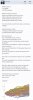
I am just leaving this here.
Might be useful.

E491A6DA-9ADC-4216-B79F-9E56FDA8D8F1.png 789BFC37-745B-4FF3-875B-1FFD7E08612F.png 310B14FD-82AE-4E98-9605-E81445A3D08C.png BCA89E22-B3DB-48C3-B93A-254D0CE20F4C.jpeg
 
Back
Top