You are using an out of date browser. It may not display this or other websites correctly.
You should upgrade or use an alternative browser.
You should upgrade or use an alternative browser.
Mathematical relationship between future and underlying
- Thread starter otello
- Start date

Yes.


Excerpt from Financial Derivatives: Markets and Applications (2023)
Determination of Futures Prices
How are futures contracts priced? To answer this, recall from our earlier discussion the following two factors: (i) futures are like forwards except for standardization and exchange trading and (ii) futures like forwards are derivative instruments. First, since a derivative derives its value from its underlying asset, the starting point in futures pricing is the spot price of the underlying asset. Next, as in the case of forwards, the price has to be determined by adjusting the spot price of the underlying asset by the carrying cost. Carrying cost refers to any additional costs that would be incurred in the case of forwards/futures. Since a futures contract calls for delivery at a future date, the short position (seller) will have to incur additional costs like storage and handling costs, etc. Furthermore, as the payment for the futures will be received only at maturity and not immediately as in the case of a spot transaction, the short position incurs the opportunity cost of later payment.
Given the stated logic, it should be clear that to arrive at a futures price, we would first need to start with the current spot price of the underlying asset and then adjust for additional costs. Notice that there are two additional costs: (i) cost of storage which includes the costs of handling, spoilage, shrinkage, etc., and (ii) the opportunity cost of having to receive payment only at maturity of the futures contract. Obviously, both these costs should be added to the current spot price. Finally, there is one other adjustment that may be necessary. This refers to something commonly known as convenience yield. Convenience yield refers to any benefits that could accrue to the short position (seller) from holding on to the spot asset until maturity. In the case of most underlying assets, there is little or no benefit that arises from holding the asset, as such in most cases no adjustment is necessary for convenience yield. However, in the case where a benefit does exist, an adjustment is necessary. Since this benefit accrues to the seller, the convenience yield should be deducted.
To summarize our discussion thus far, a futures contract should be priced by first determining the current spot price of the underlying asset and then adding both the cost of storage and the opportunity cost. The sum of both these costs is known as carrying cost. Finally, any convenience yield should be deducted. Deducting the carrying cost by the convenience yield gives the net carrying cost or simply net carry. Mathematically, the futures price can therefore be written as:

Equation (1) is commonly known as the cost-of-carry model (COC). Since the equation also tells us what the equilibrium futures price should be given the spot price, it is also known as the spot-futures parity equation.
Using the COC Model:
An Example Using our example of the cocoa farmer and confectioner, let us determine what the correct price of a 6-month cocoa futures should be given the following information.

The correct price of a 180-day (6-month) futures contract according to the COC model is RM 103.30. Notice that the storage cost of RM 5 per ton per year is entered as a percentage in the equation. The conversion from Ringgit amount to percent is done as follows:

Also notice that the equation is raised to the power of 0.5. This is to denote the 6-month or half-year period. For a 90-day or 3-month contract, the exponential would be 0.25.
Determination of Futures Prices
How are futures contracts priced? To answer this, recall from our earlier discussion the following two factors: (i) futures are like forwards except for standardization and exchange trading and (ii) futures like forwards are derivative instruments. First, since a derivative derives its value from its underlying asset, the starting point in futures pricing is the spot price of the underlying asset. Next, as in the case of forwards, the price has to be determined by adjusting the spot price of the underlying asset by the carrying cost. Carrying cost refers to any additional costs that would be incurred in the case of forwards/futures. Since a futures contract calls for delivery at a future date, the short position (seller) will have to incur additional costs like storage and handling costs, etc. Furthermore, as the payment for the futures will be received only at maturity and not immediately as in the case of a spot transaction, the short position incurs the opportunity cost of later payment.
Given the stated logic, it should be clear that to arrive at a futures price, we would first need to start with the current spot price of the underlying asset and then adjust for additional costs. Notice that there are two additional costs: (i) cost of storage which includes the costs of handling, spoilage, shrinkage, etc., and (ii) the opportunity cost of having to receive payment only at maturity of the futures contract. Obviously, both these costs should be added to the current spot price. Finally, there is one other adjustment that may be necessary. This refers to something commonly known as convenience yield. Convenience yield refers to any benefits that could accrue to the short position (seller) from holding on to the spot asset until maturity. In the case of most underlying assets, there is little or no benefit that arises from holding the asset, as such in most cases no adjustment is necessary for convenience yield. However, in the case where a benefit does exist, an adjustment is necessary. Since this benefit accrues to the seller, the convenience yield should be deducted.
To summarize our discussion thus far, a futures contract should be priced by first determining the current spot price of the underlying asset and then adding both the cost of storage and the opportunity cost. The sum of both these costs is known as carrying cost. Finally, any convenience yield should be deducted. Deducting the carrying cost by the convenience yield gives the net carrying cost or simply net carry. Mathematically, the futures price can therefore be written as:
Using the COC Model:
An Example Using our example of the cocoa farmer and confectioner, let us determine what the correct price of a 6-month cocoa futures should be given the following information.
- Spot price of cocoa = RM 98.00 per ton
- Risk-free interest rate (rf ) = 6% annualized
- Storage cost = RM 5 per ton/year
- Convenience yield to farmer = Nil
The correct price of a 180-day (6-month) futures contract according to the COC model is RM 103.30. Notice that the storage cost of RM 5 per ton per year is entered as a percentage in the equation. The conversion from Ringgit amount to percent is done as follows:
Also notice that the equation is raised to the power of 0.5. This is to denote the 6-month or half-year period. For a 90-day or 3-month contract, the exponential would be 0.25.
My trading activity is based mainly on the trading of futures and options which have the Frankfurt stock exchange index, the Dax, as their underlying.
For those who don't know it, the Dax is a basket of German shares that do not pay dividends (total return). I asked this question because, recently, using the formula I proposed, I obtained (by inverting the equation) a risk-free rate that I do not consider acceptable.
For those who don't know it, the Dax is a basket of German shares that do not pay dividends (total return). I asked this question because, recently, using the formula I proposed, I obtained (by inverting the equation) a risk-free rate that I do not consider acceptable.

Robert Morse
Sponsor
I'll skip the math formula for all and just explain. Every future can be bought or sold. It can be used for speculation or hedging. The act of hedging vs the cash asset is what keeps the prices inline. With regard to financial futures, if you short the Future, the hedge is to buy the basket of stocks (or another highly correlated basket or other indexed product). The cost to carry the stock basket would include the current cost to those participates to borrow money offset by the dividends this will receive. So the future's price would always include interest and dividend flows to the hedger. The same is true if the hedger buys the future. They need to input into their model the cost to short that basket and pay dividends.
I would like to know if the mathematical relationship between a future and its underlying, represented by a basket of shares that do not give dividends, is the following:
F=S*exp(rT)
with r, risk-free rate and T, remaining duration of the futures contract.
Thank you.
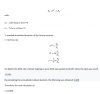

I also thought of calculating the risk-free interest rate in another way: by applying the put-call parity to a pair of option strikes that have the same expiration as the June 2024 future.
In practice, I imagine putting a box made up of two debit spreads on the market.
One consisting of a long call strike 18,000 and a short call strike 19,000.
The second consists of a long put strike 19,000 and a short put strike 18,000.
"Times New Roman";mso-bidi-font-family:"Courier New";color:#202124;mso-ansi-language:
EN;mso-fareast-language:IT">To do this I support a spending commitment of 992 points (€4,960). I call this amount the cost.
In the image you will find the details of the calculations.

In practice, I imagine putting a box made up of two debit spreads on the market.
One consisting of a long call strike 18,000 and a short call strike 19,000.
The second consists of a long put strike 19,000 and a short put strike 18,000.
"Times New Roman";mso-bidi-font-family:"Courier New";color:#202124;mso-ansi-language:
EN;mso-fareast-language:IT">To do this I support a spending commitment of 992 points (€4,960). I call this amount the cost.
In the image you will find the details of the calculations.