You are using an out of date browser. It may not display this or other websites correctly.
You should upgrade or use an alternative browser.
You should upgrade or use an alternative browser.
Market timing and style rotation
- Thread starter Junkou
- Start date

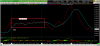
Over the weekend, I have also applied the similar methodologies of style rotation into Chinese market. It turns out the results are very good. Following chart shows the predictions on CSI 500 Index vs CSI 500 Index. It's also very interesting that when the prediction is to long CSI 500 Index, the market tends to rise. The rational is that investors are willing to buy smallcap stocks in a rising market because those stock have relative higher risk. Buying more risky stocks requires stronger market sentiment.


Chinese market have dropped over 10% since Feb. However, the long CSI 500 Index only strategy based on the rotation would return about 8% during the same period.
Latest predictions suggest Chinese equity market should rise in near future.
Chinese market have dropped over 10% since Feb. However, the long CSI 500 Index only strategy based on the rotation would return about 8% during the same period.
Latest predictions suggest Chinese equity market should rise in near future.
I will test your approach with intraday data.I tried a variation of this idea with the daily low prices of iShares Russell 2000 Value ETF (IWN) divided by the daily low prices of Invesco QQQ Trust (QQQ) then multiplied by 100. For the relative performance I fitted a curve to this ratio for rolling 4 month periods. The curves had a parabola (y = a + b * x + c * x^2) added to a cosine wave that might be skewed for right or left translation. The fitted curve rises when IWN is performing better than QQQ and vice versa.
For example, here is an example of ratio values, parabola trend, and fitted curve for 123 calendar days starting 20121123 and ending 20130325.
View attachment 282485
Here is the skewed cosine wave alone which is right-translated (falls faster than it rises).
View attachment 282486
The curve formula for this example is
whereCode:y = 100.706581115723 + 0.164993017911911 * x - 0.000613634416367859 * x^2 + 0.475093841552734 * skewed_cos(twopi / 45.5548653679802, 1.6029417514801, -0.509737253189087, x, 100)
skewed_cos(freq, phase, skew, x, iter) = cos(freq * x + phase) when iter == 0
skewed_cos(freq, phase, skew, x, iter) = cos(freq * x + phase + skew * skewed_cos(freq, phase, skew, x, iter - 1)) when iter > 0
X values are calendar days since the beginning of the 123 calendar day input period.
I ran a long-only test with price data adjusted for splits and dividends from 20000728 through 20220414 using 4-months (123 calendar days) for each fitted curve (data was linearly-interpreted for non-trading days). If the skewed cosine wave was rising, a potential simulated trade would buy IWN at the next day close and sell IWN at the close on the day the skewed cosine wave was predicted to peak. If the buy and/or sell dates occurred on non-trading days, one or both would be moved to the next trading day. Also, simulated trades would only be entered if the overall fitted curve was predicted to go up for the potential trade duration.
The result was 1807 simulated trades with a mean result of +0.98%, median result of +1.06%, and 1161 simulated trades (64.25%) profitable (results not adjusted for slippage and commissions).
So, I conclude trading on style rotation with price ratios of two different assets can be profitable.
Nice. Looks like you have some Special 'Smooth' Sauce. How'd your chart look for the day of May 3?What a timely timing:
View attachment 283830