
You are using an out of date browser. It may not display this or other websites correctly.
You should upgrade or use an alternative browser.
You should upgrade or use an alternative browser.
Making JH' SCT and all his material alive
- Thread starter WchPl
- Start date

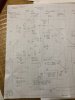
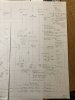

As you redraw the Dominant Segment Cycle 1 - flowchart; first by expanding it (I use 2 11x17 shts) so that you can become familiar with the distinctions as well as to draw a 2-3 bar visual example for each node that requires one.
First attempt
Can you please tell me what is written on the handwritten version where I put the red "??????" ? I can't read what is written.
Thanks a lot for the sharing !Dominant Segments Cycle 1
Currently doing a study on @Sprout 's Cycle 1 compared to mine AND parallely, I have built a numeric version of every cycles AND I am now stepping through Cycle 1 methodically with a node by node flow, reading Exact Science's posts that refer to each node and link. I also use the MADA Finite Series for Cycle 1 Word Document, which appears for now to be a nice support.
Doing all this and stepping into these docs (cycles) takes me time, I advance slowly. Nothing surprising, it's the one but last step before using/studying the instruments I will pay for on January. I understand the cycles studies is the intrabar flow study, which is what misses me for passing from EOB to intrabar orientation when performing RDBMS via MADA bar by bar.
That's why it seems so difficult.
I know now once the cycles are in my pocket, the instruments will be the very last thing before the big dive into full offer of the market's extraction every day.
With that said, I feel I've already done, many times, harder things in the past.
That's why I keep up the work. Gonna post when questions surge or relevant results are obtained.
Best extractions to RDBMSers.
Doing all this and stepping into these docs (cycles) takes me time, I advance slowly. Nothing surprising, it's the one but last step before using/studying the instruments I will pay for on January. I understand the cycles studies is the intrabar flow study, which is what misses me for passing from EOB to intrabar orientation when performing RDBMS via MADA bar by bar.
That's why it seems so difficult.
I know now once the cycles are in my pocket, the instruments will be the very last thing before the big dive into full offer of the market's extraction every day.
With that said, I feel I've already done, many times, harder things in the past.
That's why I keep up the work. Gonna post when questions surge or relevant results are obtained.
Best extractions to RDBMSers.
Flow chart Cycle 1 Analysis .
This will be a first step. An attempt to clear up for the very first time the document. No big deal with what will remain fuzzy or contradictory or misunderstood. This document needs a first clearing up action, to begin. And then we’ll enter into more details and refine the comprehension.
1 : at A-node, you must choose B or C. The A-node is a choice node. To arrive at node A, one must pass by the feedback loop, which begins at the exit loop text, which is after the J and K nodes. They are both in the EXIT column of the chart. My comprehension is that after one exits, he arrives at node A and have to choose between B and C.
Then what are B and C nodes ? B-node is a non dominant volume bar. This means decreasing volume move. No mention is made concerning the color of the bar. Onthologically, no color change is continuation of the sentiment.
C-node is VDU or DU. This reminds me the incalculable hours I had spent readung Spyder’s JH’s Equities Threads 1, 2 and 3. Dry up, Rockets, DU list etc.. I must say I almost don’t remember anything abuot all this. I notice first that on my chart I’ve illustrated this VDU or DU as an increasing so dominant volume move. The second thing I notice is, by comparison , that on Sprout’s flow chart cycle 1 (let’s call it FCC1), the visual example of 2 bars exposed a non dominant volume move. A note appears « coming out of MIDDAY). I don’t know yet what this refers to.
I also see when we are either at B or C node, we are in the N bar, WIAT action is required.
At first sight, I do not see difference between B and C nodes as both deal with non dom volume as illustrated on Sprout’s doc. Nevertheless, I see a subtle difference in the drawing in that the second bar of the illustrated B node is crosshatched. It must be the difference that makes the difference, but I can’t interprete it for now.
2- it says at B>>wait, repeat after similar bar. What does this mean ? It’s a shortcut in the spelling. B is in the WAIT column. I’m not clear yet with this sentence.
3- same as B.
4- FIND TROUGH at look back at open. Not clear too.
5- at E, choose F or G. Where is E ? I wonder how this chart works. I feel like it’s like when in a channel ? We always see containers, if things were in 3D, like from above. Like it’s flat. When entering in the left/right orientation, I began to imagine seeing the channel like if I was inside of it My sight would see LTL on my left and the RTL on the right. It’s like a path. I begin to wonder if this charts would work the same way. What I mean is that I see there is no direct link from D to E for example. Whereas we could pass from A to B. But we can also pass from A to C, which would avoid the following of the alphabetical order. So what I sense here is that the chart works as if one enters into it from the left side and watches right in front of him, having then when at A-node, B-node on its left and C-node on its right. One could then for example advance from B to D or from B to E.
More precisely, I see A, B, C and D nodes are of one kind, wich would be congruent with the fact they all 4 pertains to Wait N column. This makes me think about D-node. This is, by the way, precisely the node at chich I had troubles with seeing the near note. I see it’s « trough on N ». This reminds me the point 4 which I said is not clear too me. There’s also a PRV note as « if PRV > N ». And to this little text, an arrow is coming. It’s the look back arrow. This arrow comes from the « at OPEN » word which is in the n+1 = ENTER column. So point 4 begins to clear up a lillte bit. I see node D dealing with trough, look back and open. And I also see there’s another D node. It is below the first one I just talked about. It also deals with PRV and I notice on Sprout’s chart the « trough » note disappears whereas it is also noted on JH’s FCC1. No big deal.
So E node is in the n+1 ENTER column. There’s a OR next to it. I assume the upwards arrow sends to L-node which describes Volume lock in. I see I’ll have to read a couple of posts : 154, 6. The downwards arrow sends to PRV at OPEN. Then 3 arrows from here. They seem to all send to G-node. It’s the case where n+1 bar exceeds prior peak w/ any color. I don’t know if post 272 is related to this node. I’d say yes and I’ll check out. So the G-node describes the surge of an n+1 bar being above prior peak and having any color. That’s a dominant volume situation.
And now F-node. By conserving the same vision of left/right as described before, F node is on the left of G-node. F-node is visually described with a given n bar, followed by a n+1 bar being above the prior one AND its color changes.
6-At F, hold for H or J, or hold for L. At this moment I write, I see the different possible paths are A-B-E-F / A-C-E-F / A-B-E-G / A-C-E-G.
From what I understand of the text, here we can go from F to H/J or to L. So we can be sent from F to H/J or to L.
7- following the same comprehension of the last sentence of point 6, after E if we choose G we can be sent to H/J or to L. Meanwhile, the action required is HOLD. This is congruent with the ubication of H node which is in HOLD column ; nonetheless, J is in the EXIT column. And L is in the ENTER column. It is described as the volume LI test. Once again, I’ll have to read posts 154 and 6.
8- If H, then choose J or K for X. I had noticed when redrawing the FCC1, that X node, among others, is not present on the chart (I and O for example are also missing). I know that “X” is out of order and is the either or EXIT condition. I don’t know if I understand what this means. It seems to me like a word is missing into the phrase. Anyway, in a nutshell what I understand is that after E, if we choose F and then hold for H, then we’ll choose between J and K and the choosen one will like « take the place » of X node so to speak.
9 – If J, then exit and feedback to MADA 1- at A-node. That’s the pink link leading to start again from scratch into the cycle from what I understand. Reminds me the EE actino on the OOE of volume elements into RDBMS’ VTP.
10- If K, see if J. This K node with its « non dominant any color » reminds me B node. Just saying. K says exit.
11- If L, then hold for M (doji) or end of bar (n+1). Exit if loop N>>L repeats. Ok. L is next to E node. It says during n+1 bar, the lock in volume level is attained. Two arrows seem to arrive at L node : one coming from the « or » next to F-node and another coming from the « or » next to G-node. Again, it’s congruent with the text as it states on 6 and 7 that from F and G we can possibly hold for L. Good. Next is to deeal with M node, as it is mentionned in the 11-« If L » point. M is in the n+1 column. On Sprout’s drawing, I distinguish « DOM, not 2nd Bar or Internal ». I don’t know yet if the DOM referes to Depth of Market or to Dominant, but this will be easily DDd soon I assume. As stated at the beginning of this post, all the matter for now is to make a first « clear up » action before entering into finer views and comprehensions of this document. After reviewing the text, I’d rather say now it’s not DOM but DOJI. This would be congruent with the text (MADA finite series set). I must remind that for me, Doji means the price bar has the same open as its close. There is like no sentiment. I don’t know if my comprehension of what doji means, is deep enough to understand M-node at the moment. Anyway. That’s a first try. I see the link passing by M is coming from IBGS-N box. It passes on Sprout’s chart through α. I’m pretty sure that I’ve seen this symbol on other Flow Chart Cycles when I was redrawing them last days. Post 352 will help. And congruently with the text, the link coming from N to L passing by M and α converts into an exit loop if the path from N to L repeats.
12-If NOT L at end of bar, Then H occurs and go to MADA 8 and exit at J or at K as “X”.
Let’s have, at this step, an illustration of the paths I see.

See you tomorrow for the second half of the MADA finite series text concerning points. If I am able to, I'll also begin the study of the second part of the text of the doc which concerns nodes. I'll add thoses texts and what they teach me to what I have already done. Let's say Stage 1 will be done at this time.
Once the complete litterature of the MADA finite series doc is done, I'll start reading the posts mentionned on Sprout's own FCC1 and add those new elements of comprehension to the prior ones. This will be Stage 2.
I already feel stage 3 will reveal itself when there.
This will be a first step. An attempt to clear up for the very first time the document. No big deal with what will remain fuzzy or contradictory or misunderstood. This document needs a first clearing up action, to begin. And then we’ll enter into more details and refine the comprehension.
1 : at A-node, you must choose B or C. The A-node is a choice node. To arrive at node A, one must pass by the feedback loop, which begins at the exit loop text, which is after the J and K nodes. They are both in the EXIT column of the chart. My comprehension is that after one exits, he arrives at node A and have to choose between B and C.
Then what are B and C nodes ? B-node is a non dominant volume bar. This means decreasing volume move. No mention is made concerning the color of the bar. Onthologically, no color change is continuation of the sentiment.
C-node is VDU or DU. This reminds me the incalculable hours I had spent readung Spyder’s JH’s Equities Threads 1, 2 and 3. Dry up, Rockets, DU list etc.. I must say I almost don’t remember anything abuot all this. I notice first that on my chart I’ve illustrated this VDU or DU as an increasing so dominant volume move. The second thing I notice is, by comparison , that on Sprout’s flow chart cycle 1 (let’s call it FCC1), the visual example of 2 bars exposed a non dominant volume move. A note appears « coming out of MIDDAY). I don’t know yet what this refers to.
I also see when we are either at B or C node, we are in the N bar, WIAT action is required.
At first sight, I do not see difference between B and C nodes as both deal with non dom volume as illustrated on Sprout’s doc. Nevertheless, I see a subtle difference in the drawing in that the second bar of the illustrated B node is crosshatched. It must be the difference that makes the difference, but I can’t interprete it for now.
2- it says at B>>wait, repeat after similar bar. What does this mean ? It’s a shortcut in the spelling. B is in the WAIT column. I’m not clear yet with this sentence.
3- same as B.
4- FIND TROUGH at look back at open. Not clear too.
5- at E, choose F or G. Where is E ? I wonder how this chart works. I feel like it’s like when in a channel ? We always see containers, if things were in 3D, like from above. Like it’s flat. When entering in the left/right orientation, I began to imagine seeing the channel like if I was inside of it My sight would see LTL on my left and the RTL on the right. It’s like a path. I begin to wonder if this charts would work the same way. What I mean is that I see there is no direct link from D to E for example. Whereas we could pass from A to B. But we can also pass from A to C, which would avoid the following of the alphabetical order. So what I sense here is that the chart works as if one enters into it from the left side and watches right in front of him, having then when at A-node, B-node on its left and C-node on its right. One could then for example advance from B to D or from B to E.
More precisely, I see A, B, C and D nodes are of one kind, wich would be congruent with the fact they all 4 pertains to Wait N column. This makes me think about D-node. This is, by the way, precisely the node at chich I had troubles with seeing the near note. I see it’s « trough on N ». This reminds me the point 4 which I said is not clear too me. There’s also a PRV note as « if PRV > N ». And to this little text, an arrow is coming. It’s the look back arrow. This arrow comes from the « at OPEN » word which is in the n+1 = ENTER column. So point 4 begins to clear up a lillte bit. I see node D dealing with trough, look back and open. And I also see there’s another D node. It is below the first one I just talked about. It also deals with PRV and I notice on Sprout’s chart the « trough » note disappears whereas it is also noted on JH’s FCC1. No big deal.
So E node is in the n+1 ENTER column. There’s a OR next to it. I assume the upwards arrow sends to L-node which describes Volume lock in. I see I’ll have to read a couple of posts : 154, 6. The downwards arrow sends to PRV at OPEN. Then 3 arrows from here. They seem to all send to G-node. It’s the case where n+1 bar exceeds prior peak w/ any color. I don’t know if post 272 is related to this node. I’d say yes and I’ll check out. So the G-node describes the surge of an n+1 bar being above prior peak and having any color. That’s a dominant volume situation.
And now F-node. By conserving the same vision of left/right as described before, F node is on the left of G-node. F-node is visually described with a given n bar, followed by a n+1 bar being above the prior one AND its color changes.
6-At F, hold for H or J, or hold for L. At this moment I write, I see the different possible paths are A-B-E-F / A-C-E-F / A-B-E-G / A-C-E-G.
From what I understand of the text, here we can go from F to H/J or to L. So we can be sent from F to H/J or to L.
7- following the same comprehension of the last sentence of point 6, after E if we choose G we can be sent to H/J or to L. Meanwhile, the action required is HOLD. This is congruent with the ubication of H node which is in HOLD column ; nonetheless, J is in the EXIT column. And L is in the ENTER column. It is described as the volume LI test. Once again, I’ll have to read posts 154 and 6.
8- If H, then choose J or K for X. I had noticed when redrawing the FCC1, that X node, among others, is not present on the chart (I and O for example are also missing). I know that “X” is out of order and is the either or EXIT condition. I don’t know if I understand what this means. It seems to me like a word is missing into the phrase. Anyway, in a nutshell what I understand is that after E, if we choose F and then hold for H, then we’ll choose between J and K and the choosen one will like « take the place » of X node so to speak.
9 – If J, then exit and feedback to MADA 1- at A-node. That’s the pink link leading to start again from scratch into the cycle from what I understand. Reminds me the EE actino on the OOE of volume elements into RDBMS’ VTP.
10- If K, see if J. This K node with its « non dominant any color » reminds me B node. Just saying. K says exit.
11- If L, then hold for M (doji) or end of bar (n+1). Exit if loop N>>L repeats. Ok. L is next to E node. It says during n+1 bar, the lock in volume level is attained. Two arrows seem to arrive at L node : one coming from the « or » next to F-node and another coming from the « or » next to G-node. Again, it’s congruent with the text as it states on 6 and 7 that from F and G we can possibly hold for L. Good. Next is to deeal with M node, as it is mentionned in the 11-« If L » point. M is in the n+1 column. On Sprout’s drawing, I distinguish « DOM, not 2nd Bar or Internal ». I don’t know yet if the DOM referes to Depth of Market or to Dominant, but this will be easily DDd soon I assume. As stated at the beginning of this post, all the matter for now is to make a first « clear up » action before entering into finer views and comprehensions of this document. After reviewing the text, I’d rather say now it’s not DOM but DOJI. This would be congruent with the text (MADA finite series set). I must remind that for me, Doji means the price bar has the same open as its close. There is like no sentiment. I don’t know if my comprehension of what doji means, is deep enough to understand M-node at the moment. Anyway. That’s a first try. I see the link passing by M is coming from IBGS-N box. It passes on Sprout’s chart through α. I’m pretty sure that I’ve seen this symbol on other Flow Chart Cycles when I was redrawing them last days. Post 352 will help. And congruently with the text, the link coming from N to L passing by M and α converts into an exit loop if the path from N to L repeats.
12-If NOT L at end of bar, Then H occurs and go to MADA 8 and exit at J or at K as “X”.
Let’s have, at this step, an illustration of the paths I see.
See you tomorrow for the second half of the MADA finite series text concerning points. If I am able to, I'll also begin the study of the second part of the text of the doc which concerns nodes. I'll add thoses texts and what they teach me to what I have already done. Let's say Stage 1 will be done at this time.
Once the complete litterature of the MADA finite series doc is done, I'll start reading the posts mentionned on Sprout's own FCC1 and add those new elements of comprehension to the prior ones. This will be Stage 2.
I already feel stage 3 will reveal itself when there.
See you tomorrow for the second half of the MADA finite series text concerning points
12-If NOT L at end of bar, Then H occurs and go to MADA 8 and exit at J or at K as “X”. Ok, what is L ? it is the test of volume LI level. So far, it has been said that from F you can arrive at L, and also from G you can arrive at L (hold for). But one can also arrive from F and G to H or J. 3 possibilities so far from F and G : to H, to J, or to L. This point 12 states we can also arrive at NOT L at the end of the bar. What would this mean ? My interpretation is that at the end of the bar, volume is non dominant. This congruent with the fact that if L passes, then lock in is attained, then we know at F volume is also above LI being as it’s a DOM vol w/ color change, and G is a volume bar above prior peak w/ any color. So from F and G we have either H, J, L or not L. From this DD, I see F and G are all concerned by a LI level attained. The remaining possibility of surge is that LI is not attained, so to speak L test fails and then, according to the text of point 12, H occurs. What was H ? it was explained at point 8, so we exit either at J or K as the X.
13- If M, do N test. M is the doji occurrence. N is the IBGS box. Glad to see IBGS concept back, I’ve never attained the point where I knew I knew what it means. I know what it stands for, of course, but not sure about the concept. IB is clear though. Gaussian, for me it aludes to volume moves in SCT terms. Shift as I understand it is a gap, a lag, an interval, a space. Like if…no, I don’t know. Anyway, point 13 begins with the IF condition. This means for me the sequence from F and G has not come to an end yet. That’s a fifth possibility I assume. So after F and G we can either have : H, J, L.. Ow I notice I forgot K node. So in point 12 I should add K node as the fourth possibility and NOT L was already the fifth. This leads to now in point 13 to say : from F and G we can either have H, J, K, L, not L, AND N. So 6 possible surges. As N node is the IBGS bow, I’d say at first glimpse that it’s the IBGS test. So test if the bar is an IBGS. As I’m not clear yet with what this means, I can’t give any further intepretation.
14- If N test passes, go to Z and reverse as n+1 bar @ P. From P, feedback to MADA 5 @ E and test for “lock in” @ MADA 11, if required. So if IBGS test passes then we have an IBGS, then go to node Z… I don’t understand very well what « as n+1 bar at P » means. The rest of the phrase is interpreted on the chart.
15- So if N test fails, the other possibility at which we can arrive from M instructing to do N test, we hold until the end of bar n+1 and thus we are at P. This is fuzzy. Same feedback loop to E and L test if required.
16- If N test passes, go to Z and If volume drops or color changes, feedback to MADA 8 @ H. So although there are 2 possibilities for N test, I become aware now that they are in fact two families. The first case is N test fails. In this case, only one surge is possible. The other case/family is when N test passes : here we either have (a non dominant volume OR a change of color) OR (volume increases w/ same color). The second case has unconsciously already been studied at point 14. Now, if the first possibility surges (which contains, in fact 2 cases), we also arrive at Z but this time we feedback to point 8, so we are at H and we either choose J or K as X, for exit.
17- at P hold according to IBGS pass/fail color to end of bar and go to Q. Q has no definition clear for me at the moment.
18- Q at open of n+2 bar, choose R or S. R is described as INC volume w/ same color, while S is INC w/ same color AND above prior trough.
19- at R, hold for T for (J or K) as X or U. T is not on JH’s FCC1. I’ll have to read posts 117 and 232.
20- I suspect a typo here. Must be at S (and not at R), then same text as for R.
21-@ T, choose “X” or U. For “x” go to MADA 9 or 10; for U, go to W. U is a OR node. W in the description looks like L test but during n+2 or greater whereas L is on n+1. MADA 9 or 10 are for J and K as X for exit.
22- at W, hold for lock in and end of bar @ Y or N (MADA 13, and (14 or 15). Y is continuation feedback for more bars. I have no clue at the moment of what this means. If not Y from W, then back to N test so either MADA 13 and then MADA 14 or 15, so either N test pass or fail with the two families/cases.
23- at Y at EOB (n+2), feedback to MADA 16 at Q. I am in struggle with how these phrases are constructed. It is really not easy for me. I can’t understand nor discover what would the correctly expressed phrase saying the same as what is stated here. It is like a robot line in a movie. It’s the best way to make things appear fuzzy and to motivation one’s DD process. I can’t interprete anything nor put a link on the chart yet.
24- It’s talked about V node. Unless I’m tired, no thing has been said about it yet in the text. It appears on JH’s FCC1 to be a « OR » node. And I think it’s a « choice node », so more a link dividing itself into two links leading to more nodes, than an authentical node.
25- what ??? lol
Well all I’ve produced for now is really messy, fuzzy and most likely incorrect. No big deal, I assume messy is good at this level. Let’s see what the study of the texts on node, so next part of the MADA finite series doc, teaches me more.
Lunch time before that
Nodes studyLet’s see what the study of the texts on node
NB : the idea is first to study the nodes litterature as available in the MADA finite series document, ignoring quite a bit what has already been understood, discovered and unlocked thanks to the MADA points studies Next substep of Stage 1 will be merging the two studies, before going to Stage 2 which will be reading posts in the Exact Science thread, to feed more the comprehension.
A-This is choice node. B and C are the choices. Well, that’s great already being as like I had anticipated and named it, there are “choice nodes”. They are let’s say the first family of nodes. I must say the classification of nodes depends on, like any classification, the parameter(s) used. Thus we could make family of nodes sorted by the column to which they pertain, like N WAIT, Enter N+1, Hold n+2, and greater than n+2. This would be 4 kinds. On the other hand, if we choose as filtering parameter the “choice” or “no choice” node, this would be 2 kinds. Let’s, first, use the classification by “choice” and “not choice” node. It would not be surprising to see along this study on nodes, some exceptions or sub-families appear.
So, as JH says, anyone following the logic would begin the FCC1 with node A. As recently learnt, the A node is after exit loop. From what I’ve understood in the first step of the first Stage towards clearing up the FCC1 (studying the MADA 25 points), there’s only two ways of arriving at node A : the exit loop coming from P and the exit loop coming from (J or K) as X. So, the common point I see between the two paths is that we arrive a node A after Exit only.
So B and C are the choices when we are at node A. Both nodes B and C are in the WAIT column. As I’ve seen volume at VDU or DU is not for INC volume, DOM volume. That’s DDble being as both B and C are into the WAIT column AND the FCC1 is for DOM moves trades.
B- it’s a non dominant volume. Clear
C- Volume at VDU or DU. Not clear
D- D is a point at the end of the bar. Ok so this is not a choice node. Maybe the « point node « is one subfamily of the « not choice » node. At the next bar (n+1) open (so when next bar starts), it is determinated that bar n is a trough. My interpretation is that to arrive at NodePoint D, we must have prior bar below n-2 bar. This clears up what I had difficulty to read initially.
Then, PRV is used at 12 seconds into the bar (n+1). This means for me when the n+1 bar comes (with n being prior bar which is a trough), 12 seconds after it starts we use PRV. We use ? Don’t know yet what this concretely mean.
E- this is a choice node. Second one in the same family. Let’s have a real time uploaded listing of nodes as the study in this post grows and expands. The two choices are F and G. And let’s have also a listing of nodes sorted by the column they pertain to.
F- Dominant volume w/ color change. I could now maybe rename the « no category » column as « volume move ». So F is increasing volume with change in sentiment.
G- Volume surge > than prior peak w/ any color. This is an increasing volume move node, no matter what sentiment is.
H- Choice node. The text says it converges either F or G when dominance fails during the bar (n+1) for either F or G. Let’s rephrase this : it converges to F or G when volume is decreasing during n+1 bar for either F or G. I don’t understand for now being as in my rephrasing I just wrote « decreasing volume », whereas both F and G nodes refer to increasing volume move. On Sprout’s chart, I see a note next to H node : PRV DOM fails on n+1. So if PRV DOM fails, this would mean in real time, during n+1 bar, we know the volume of the current bar won’t reach LI level so i twill be decreasing so it will be non dominant, which has not its place in a Dominant Trades only Flow Chart Cycle.
X- This is a point where either J or K type failure occurs. Hmmm. I’m not clear with what is said here for now. I though from the MADA finite series that when H is reached, one has to choose between J or K (or L). If J or K then it’s exit loop and go back to A node. Here the « J or K failure occurs » seems to invalidate my comprehension. Well, I must admit I feel there is no substance in my comprehension, thus why I let this node aside for now.
So far, this is my nodes listing
J- Volume drops below prior. This is then in the volume move category of nodes. I see on Sprout’s chart there’s a doubt about « prior bar or prior trough ». At my current level of understanding which is the lowest, I’d limit myself to say it’s prior bar.
K- Non dom occurs, in ay color. This is a basic case of decreasing volume. Added to volume move column. Effectively, there’s a reason why to wonder about J as being below prior trough or bar. Cause it seems there is no difference between J and K at this state of comprehension. Something must be DDd here.
L- Volume lock in occurs for either an F or a G type (n+1). We know how lock in in measured. So I would create a nex column and name it as « test node ». I’m already thinking about N node in advance as I know its a (IBGS) test.
M- this is when doji occurs. Reminder : for me a doji bar is a price bar having its open and its close equal. This looks like a test node more than anything to me at the moment.
N- N is a test box where pas sis one tick further in sentiment than the doji price value. If my understand of what doji level means, pragmatically speaking it’s the open value if I follow what I say concerning doji, then passing the N test would mean having a non neutral sentiment on the price bar : short or long. Then the text says fail is when a doji occurs but remains limited to open current value or less in the direction of the current sentiment. Wow…Don’t get anything here. A fail. Fail is the opposite of pass. What did we say pass is ? It is when the sentiment of the price bar is not neutral. So the opposite of this would be : the sentiment of the current bar is neutral. So it would be a doji bar. That is congruent with the very first part of the fail test description : fail is when a doji occurs […]. As always or at least often, there’s a but : but remains limited. What remains limited ? the doji ? I don’t know. What’s next ? : limited to open current value. The open current value. I’d say this is the value of the open of the current bar. So the doji would be limited to the value of the open of the current bar…well that’s a bit redundant, being as I think doji is precisely open and close at same level. Must be something I’m missing. And finally what ? or less in the direction of the current sentiment. I feel two things here : I will be able to DD easily what is stated here AND the moment has not come yet. Anyway, N was a test node.
P- this is a choice node. Click, P takes its place into the listing. It converges either fail of doji or pass of doji during IBGS test N. This is a bit fuzzy but at the same time a bit clearer than when I first saw the IBGS box some days ago. I have no words to express what I understand. Then, either result is feedback to E to confirm either and confirm lock in. What the what ? lol
Q- From STM, I’d say the MADA point relative to Q had me struggling. Not sure. Anyway, the text says at open of bar n+2 or higher, a point of choice is reached. R or S are chosen. Better is chosen isn’t it ? Well, no matter. Q appears to be a choice node. Great, at least I learn something for sure about this Q node.
R- Increasing volume same color. This is the most perfect example of continuation, both price and volume agree. Volume move node.
S- Volume above prior trough and any color. Reminds me P2.ats a volume move node. Future is crystallizing into present. I don’t know why nor what nor how, but I just felt I understand better the flow of this chart, although everything remains fuzzy.
T- choice node. X and U are the choices ; Easy.
U- choice node too. N and W are the choices. Easy too.
V- choice node again. X and U are the choices. Still easy.
W- volume lock in occurs for either an R or S type node (they are both volume move nodes). We know how to measure lock in. So W could be a lock in reached when either at R or S. Is that a test node ? I’d say yes.
Y- continuation feedback at the end of n+2 or greater bar. Although I understand in generic terms what feedback means, I’ve not catched yet the sense it has on this flow chart. I’m not comfortable with it yes. I have the feeling it’s easy to understand, in fact. I don’t know where tu put it in my list ; maybe should I create another column for that unique node ? I let it rest for now.
Z- choice node. X and E are the choices after a pass on the N text. Quite clear.
Finally, that’s my listing.
Next step will be step 3 of Stage 1. Reminder :
Stage 1 : study the FCC1 with the MADA finite series Word Doc
Step1 : study of the MADA points
Step2 : study of nodes
Step3 : merging comprehensions of MADA points with nodes studies
Stage 2 : feed the comprehension with posts in Exact Science Thread
Stage 3 : will surely be revealed as stepping through Stages 1 an 2.
Serious back bain.
Hope to be operational tomorrow.
I find swimming and stretching in short intervals (3x3 rounds) to be very helpful for back pain.

JH Method is already being used by the 'Master Algo' that trades ES.