Now, let's deal with that again :
This case is very interesting to me.
First of all, it's necessary to say that your way of saying "in the comprehension you have, __ would not exist" is powerful, it mentions something important, and triggers a signal into my mind.
Let's start with the pragmatic context of P2. If we enlarge this concept to any context we could say then that :
- when P1 is there, the context is established pragmatically for another P1 or T1 to be there
- when T1 is there, the context is established pragmatically for another T1 or P2 to be there
- when P2 is there, the context is established pragmatically for T2P to be there
- when T2P is there, the context is established pragmatically for T2F to be there
- when T2F is there, the context is established pragmatically for P3P/P3F to be there
So
- if when T1 is there the context is established pragmatically for another T1 or P2 to be there AND when P1 is there, the context is established pragmatically for another P1 or T1 to be there, THEN when P1 is there, thhe context is established pragmatically for P2 to be there already.
etc.
Seems like when P1 is there, it already contains in itself every possibility of conditions for any context to surge. It's only bar after bar that the possibilities of the surging conditions to produce something find themselves reduced, remain intact, or become obvious.
That was a little preambula.
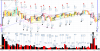
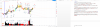
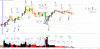
In the sequence I wanna discuss, we have : BO,T1-T1-P2>P1- T2P(between P1 and T1)- Fd LVBO/BO,T1. So to speak, a four bar context is exstablished as T2P is there at lock in of 4th bar of the trend.
Let's go from there.
P2 initiates A-band. A-band is killed when C-band becomes active. C-band becomes active when T2F is there. So A-band is killed when T2F appears. Also, B-band is active when T2P is there. B-band is killed ASA A-band is killed. In other words, when C-band is there, none of the prior bands is active anymore.
If we hold on the same vein of what was exposed in the preambula, when A-band is there, then we can say the context is pragmatically established for B-band to surge, and then for C-band to surge as C-band needs B-band to not exist anymore so it needs it to pass through the state of being. Ok.
So the sequence progresses until T2P, with P2 above P1. The example shows last bar ending the trend IDd as Fd LVBO/BO,T1. If BO,T1 it would be even more problematic for me, in practice. Effectively, even if I missed the Fd LVBO but BO,T1 was there and I did not miss it, I would assign P1 on current bar and being as FS takes advantage it would not change much the whole thing, neither for MT/MR nor for next IDs. A missed Fd, if alone so with no FS, would change the things way more : MT and turns would be affected, and so would be the beginning of the sequence due to P1 would be assigned on next bar, not on current one.
So let's talk about it : a Fd has been IDd on a bar after T2P.
From my LOD, the clue to getting of with EE is to know which band is active when the bar builds. We know that when a n-1 context is there, the pragmatic n context is established already. So what is Fd and what is its context, and when is its context established pragmatically speaking ?
First of all, let's remind this : MSO thread, post#68, JH
If you do not understand context you are screwed as a trader.
We in this work use shells of context. We use an onion approach.
In the attached from doaks, you see the first bands come and go.
P1 and T1 define A band top and bottom repsctively. P2 could be in or out of A band. A geomtric trend is established by P2.
B band comes into effect with the advent of T2P. See crosshatched zone.
C band is between T2P and T2F. it is shaded in blue.
we do not use D and E but they are inside of the Blue.
F band is both above and below the shown bands. Four mini zones apply. Once you understand the concept of zones and begin to use them, then they show "context".
So we learn that P2 initiates A-band. Once P2 is there, established, A-band EE can appear. There is no way an A-band EE could surge before P2 is already there. Only PP! can happen.
Once P2 is there, A-band is there. From my LOD, "once __ is there" = "once __ is there at LOCK IN".
BUT...this is gonna be a huge one ^^
I feel now this is an hindsight LOD POV. Now that I begin to log in real-time, I feel something new.
Let's take this and build a dynamic
P1 surges.
P1 is where it is in value, no matter which. From here, the context for T1 to happen is pragmatically established.
Then T1 happens.
From the very first instant this second bar began to build, to its lock-in, the level entered and stayed defenitively in a T1 level. It never changed from the first to the 300th second.
From here, the context for P2 to surge is pragmatically established AND to go deeper, so it is for T1repeat.
Then a new bar surges. Here, interesting things are beginning.
At the first second of the bar, it is a T1repeat. Then, when the level overpasses prior T1's, it becomes a P2<P1. And then in a third time, when it exceeds prior P1's level, it becomes a P2>P1. At lock in, it is a P2>P1. This bar passes through different states of being. This means, it could, along the way trigger some EE. It cannot be the case here cause we don't have any band established, no PP! is possible and we do not consider price (OB for ex). So, P2, just a P2. At this point, the context for T2P/A-band EE is pragmatically established.
The most important is coming up.
A new bar surges.
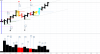
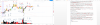
This bar passes through different states of being too. The difference with the prior one is that this time, A-band is active so A-band EE can appear. This bar passes through different zones, boxes. Here they are :
In real-time building, this is what I'd see :
- first zone, blue : at the first second of the building of the bar, it's an Ab LVBO
- when it enters into green zone, we have it now at T2P level
- then it penetrates yellow zone, and we have Ag VEBO.
- above would be Ag still.
Here, on this bar, we have three choices along the time. The first A-band EE (Ab) can be canceled by the T2P which, at its turn, can be absorbed by Ag.
In any case, an A-band EE would be what would prevent T2P to be.
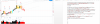
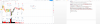
In the sequence I'm studying that's what happens :
And finally :
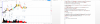
In the vein of prior DD, if an EE appeared here, it would be what would prevent T2F to happen. T2F is killed if under T1. So this bar can't be a T2F. It must be an EE. It is an EE then that will prevent T2F to happen. Which is this EE ?
We need an EE that can appear after B-band is there. At this moment, when the last bar of the sequence builds B-band is active, and so is A-band.
My DD is that is that, like Ab LVBO would have been the EE preventing T2P to surge at prior bar if this prior bar had had the same level as the current bar (the last one), well, a LVBO preventing T2F to happen is there here. Is it a B-band EE ? No, neither Ba nor Bc are LVBO.
A-band ? Yes it can be. It can be Ab LVBO being as the current bar does not active C-band strictly speaking being as for this we need T2F and T2F is not there for being under T1. T2F is between T2P and T1.
So my DD is that to see a Fd HVBO here, we'd need T2F to have been one of the state of being of the bar along its building. It's not the case, this bar, like Ab LVBO, always had an under T1 level all along. But, if this bar had passes through a T2F state of being, it means it would have killed any Fd LVBO possibility on this same bar. T2F is above T1, LVBO is below. Can't be both at the same time.
Nonetheless, if the last bar was a T2F, right between T1 and T2P and then a new bar was coming and at lock in was below T1, I would see Fd LVBO, and Ab LVBO killed by the presence of T2F killing B and A-bands and there respective EE's.
Therefore, even though this ride comes from a DD and a little Aha I've had recently concerning the fact that a bar passes through different states in real-time and so an EE can appear on this bar, which is not intuitively visible in hindisght, I've not come to any possibility of seeing the last bar of the snippet as a Fd.
In the litterature, concerning F-band, that's what we have :
Before in the A-band an Ab could occur when the bar value was after P2 and lower than T1. Later, after the T2P and T2F have appeared, the F context comes into view.
This is clear for me, T2P and T2F need both to have appeared for any F-band EE could surge.
On the example I'm dwelling on, from my LOD, T2F never happens. From what I feel now, it is not necessary that the value in volume be at a given level at LOCK IN, it can be whenever along the building of the bar. And once along the building of the bar, the value gives what is necessary to have for a given EE to be, then one has to wait until lock in if what must not be overpassed/must be overpassed is so / is not so, for then ID the given EE/see it killed.
But once again, on this example, I never see any T2F.
According to the VERS it is clear : T2F is killed when < T1. Why ? My DD is that we know T2F surges first after T2P. It is less than T2P. And it must be more than T1. When T2P is there, at lock in, both A-band and B-band are actives. If T2F appears, which mean it's above T1 after T2P, then the C-context is there. After that, Fd is for me the substitute to Ab LVBO in an other category, another context, another band.
I understad the logic behind the Fd LVBO on the snippet, but the thing is that I see it disrespectful of the rules, the VERS, the Band sheets and the litterature. I don't get how this can be.
I also know there may be a subtle thing I don't get, a differenciation between : context is there, and context is established pragmatically.
For instance, when T1 is there, A-band is delimited but not active. When P2 is there, the A-band is active, and the B-band context is already established pragmatically.
Then when T2P appears, so that means none of P1revchron/Ag/Ab are there, the A-band remains still active, B-band becomes active and it is delimited.
After that, if T2F appears, C-band is delimited and active and both A/B-bands are killed.
Like C-band EEs are killed until T2F is there, A/B-band EE's are killed when T2F is there.
For a F-band EE to be, we need the F-context .. to be there, or to be pragmatically established ? That's what I wonder. The concept of pragmatically established context as been, from what I know, talked by JH only when referring to the four bar context. And the thing was for Aa HVBO and it's not that clear cause in the litterature he was saying for Aa we need a four bars LATERAL. Lateral always meant to the price case. Fuzzy.
Anyway, the thing I think I need to unlock, if the Fd is correct on this sequence, is the subtility of "pragmatically established context" and "context established".
What I see in the litterature for F-context so for F-band EE's to be IDd, is thta we need to be "after T2F". On the discussed example there is no way for my LOD to see any T2F whithout violating my comprehension of what appear to me as clear rule from the VERS : T2F is killed of <T1. Logic, after T2P if a bar goes under T1, it would be Ab LVBO.
So I see Ab LVBO here.