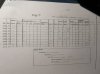
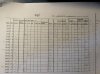
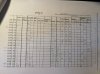
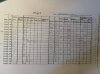
Bands are on or off. Active or not active. They continue to exist and are toggled on/off, based on the development and/or completion of the current bar. Once created, bands do not get "killed" until the volume sequence is reset with assignment, or EE, including FS.
B-band lives INSIDE A-band...
Maybe a simpler way to think about it is that "active" means it is the farthest progress that has been made in the OOE of bands. In this case B-band. But prior bands and EE's in prior bands are still there and available. Existence of B-band (or any band) means it is now POSSIBLE that an EE associated with that band can occur: there is no MUST occur in the context of this discussion. What happens is that as the trend progresses, the number of EE's available increases. No bands are "killed" until the volume sequence is reset with assignment or EE, includes FS.
Bar 8 Ab... if the bar can not travel far enough to reach and at least slightly exceed the lower limit of the B-band, then it can not be a B-band thing and must be something else. What can it be?
On most part true, however the OOE of bands is that when C-band initiates; A and B band are killed and no longer possible.
The Primary and Secondary bands have a function and express the progression of trend precisely.
The third move of a trend is a sub-fractal as expressed through the OOE of Bands. There is some overlap of the Primary and Secondary as is seen with Aa and Ab being possible when B-band initiates since they exist where B does not.