Not sure if I understand properly what you said here, but gonna give my best to get it right and apply it on next logs.
Thank you for the intervention and have a nice day.
That's already helping

Not sure if I understand properly what you said here, but gonna give my best to get it right and apply it on next logs.
Thank you for the intervention and have a nice day.
For the Great MdMap linking PC-VTP-EE :
There are three different contexts that must be planted on the P1 assigned to be sure which EE can appear/can't surge :
-> a LAT is already present so P1ass appears into a LAT
-> P1ass creates a LAT
-> there's no LAT before nor on P1ass (so it's on any other price case = AOPC)
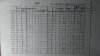
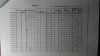
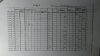
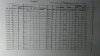
Here is a part of the AOPC context MdMp for beginning with P1ass.
View attachment 201378
What is the suffix 'xx.1, xx.2' referring to?
.1 is for n-1 item, .2 is for n-2 item.
So as an example, P1.2 is the first P1 assigned, the next bar is above so P1.1 and the next one is above too so P1.0
That's for me to remember how many repeated same volume elements have occured in a row. If in my MdMp I come to P1.0 (and there is no acc) I know it's the third one and the Ac scene is set. If I came to P1.1 I know there were only two P1s and then the PP3 scene is set. And so on. It's for remembering how many peaks/troughs of the same nature have occured so that some EE can / can't be encountered forward.
The idea to label it this way came from using the PP's board requirements.
.1 is for n-1 item, .2 is for n-2 item.
So as an example, P1.2 is the first P1 assigned, the next bar is above so P1.1 and the next one is above too so P1.0
That's for me to remember how many repeated same volume elements have occured in a row. If in my MdMp I come to P1.0 (and there is no acc) I know it's the third one and the Ac scene is set. If I came to P1.1 I know there were only two P1s and then the PP3 scene is set. And so on. It's for remembering how many peaks/troughs of the same nature have occured so that some EE can / can't be encountered forward.
The idea to label it this way came from using the PP's board requirements.
n-1 is lookback. 0th, 1st, 2nd, 3rd etc. bar index is lookforward. I think the latter bar by bar scheme would make more sense for encompassing all possibilities.
Not sure if I understand properly what you said here, but gonna give my best to get it right and apply it on next logs.