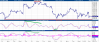
Macd

What do the TA savy folks think about fitting the best MACD settings to any asset?
It would be easy for me to just say two assets have different volatility or revert more agressively from oversold conditions, and,that sets of differing ma's such as 12,26 or 9,20
are required for good results, but i think this is obvious.
Math aside , just contrast US treasuries to a healthcare etf. TLT to PJP. Both are in lengthy uptrends but get there quite differently and fit/optimize with different MACD settings.
So I am a cripple that needs this stuff instead of pure PA. Nothing wrong with this right? Future not garaunteed of course.

I should add that i dont look for an outlier , lucky, setting but a best general range of settings that does not fall off dramatically to either side of optimal.
And to those who might say it is too generic so it cant work, i see it as just a method to enter trend on retraces and that can work. It may be the trader not the method at fault.

I been using MACD whenever it was first developed and still use it for Commodity Long term, using RSI on weekly charts, MACD on dailies, Volume on 2 Minute charts and system is automated for most part. I been using standard settings as I don't believe in micro fitting them to certain market, I have learned how price should react to the indicator, plus I rely on lag giving me better signals and not false signals, I laugh all the time when people want something as fast as price, moving ave of one has no lag, ROFL. But one should understand what price is doing before using indicators, all Oscillators are based on closes, highs/lows or different variations, and remembering what price should do when indicator is making a value, when indicator does not do as expected, added plus than just using price action. When price has tighter breaks in price and more extreme highs/lows, many indicators will show divergence. I hedge my futures positions and when price reaches what is considered high area, call spreads done expecting retracement. First target to unload half position is 8.35 cents.

Have used MACD since put on trading software in 1986 I meant to say, don't know when Appel made it.
 

Attachments
  • BEANOIL.png
    BEANOIL.png
    148.1 KB · Views: 146
Last edited:
I just think curve fitting variations of MACD unless both sides of what "Best" imputs are is road to disaster. Some indicators are going to see divergence and some are not.
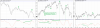
Between Line Osc and MACD, both have same highs/lows as other except divergence on the lows, and one has to watch out getting into indicators overload by using too many. Some indicators due better than others on certain timeframes. And some Authors of indicators didn't even make them for financial trading, take the CCI, author who invented CCI did it to see what was the most complicated math equation his Texas Instruments calculator could do, a game of devising a formula that a component can due. He doesn't even trade and yet so many use it for trading, I find that funny.
 

Attachments

  • INDICATORS.png
    INDICATORS.png
    65 KB · Views: 116
And some Authors of indicators didn't even make them for financial trading, take the CCI, author who invented CCI did it to see what was the most complicated math equation his Texas Instruments calculator could do, a game of devising a formula that a component can due. He doesn't even trade and yet so many use it for trading, I find that funny.

Regarding CCI, Neil Harrington pointed out that Lambert used mean deviation instead of standard deviation because in 1980, he was dealing with a Texas Instruments calculator, and not a personal computer. (Mean deviation was an easier calculation.) Had standard deviation been used, CCI would be very similar to Bollinger's %B oscillator.

PS: In this new form, CCI is basically the same as normalized price used by the pairs trading people.
 
Last edited:
I just think curve fitting variations of MACD unless both sides of what "Best" imputs are is road to disaster. Some indicators are going to see divergence and some are not.
Between Line Osc and MACD, both have same highs/lows as other except divergence on the lows, and one has to watch out getting into indicators overload by using too many. Some indicators due better than others on certain timeframes. And some Authors of indicators didn't even make them for financial trading, take the CCI, author who invented CCI did it to see what was the most complicated math equation his Texas Instruments calculator could do, a game of devising a formula that a component can due. He doesn't even trade and yet so many use it for trading, I find that funny.

I agree. The chief reason why I stopped using the MACD was that I got to the point where I knew what it would look like without plotting it. After all, if the slope of the price movement was changing, then the MACD would obviously begin to level off and "diverge" (which, if one understood PA, wasn't a divergence at all). Ditto with MAs and oscillators. And getting rid of all the clutter greatly improved my trading and results. That was 12 years ago. When someone says that the MACD diverged a month ago and that one can enter any time, he clearly has no idea what PA is all about.
 
I just think curve fitting variations of MACD unless both sides of what "Best" imputs are is road to disaster. Some indicators are going to see divergence and some are not.

I agree. The chief reason why I stopped using the MACD was that I got to the point where I knew what it would look like without plotting it. After all, if the slope of the price movement was changing, then the MACD would obviously begin to level off and "diverge" (which, if one understood PA, wasn't a divergence at all).

My chief interest in MACD is to use it to "instruct" a trade entry in an automated system. As I have come to use it for this purpose, no consideration of divergence is involved. In fact, I have found MACD to be quite useful for my purposes "turned on its head" so to speak. I do not use anything close the 12-26-9 that is the default on most charting programs. The differences, though, are not due to "curve fitting" in usual sense of that word. Rather, I am using the MACD to "catch" a particular PA behavior, and doing so required using significantly shorter MA lengths. Perhaps if one is using MACD to trade "divergences" or "zero-line crosses" or "MACD crosses" then the inputs might make little difference (though I do think it would likely make a difference based on what sort of trader you are, e.g. a scalper vs trend-follower).
 
I use the histogram. I signal that the histogram ROC has turned positive after a negative excursion. The histogram on the chart is supportive visually as well.
Phase or timing is why i adjust the period of the Ma's . Standard settings may be way out of
phase and the opportunity long past if an alert is based on standard settings with too much
lag for given asset.
 
I agree. The chief reason why I stopped using the MACD was that I got to the point where I knew what it would look like without plotting it. After all, if the slope of the price movement was changing, then the MACD would obviously begin to level off and "diverge" (which, if one understood PA, wasn't a divergence at all). Ditto with MAs and oscillators. And getting rid of all the clutter greatly improved my trading and results. That was 12 years ago. When someone says that the MACD diverged a month ago and that one can enter any time, he clearly has no idea what PA is all about.

Well, for programming purposes, I found MACD was easier to identify than just saying a break of lows as that didn't back test as well as MACD, what started out as easy concept for long term trading became thousands of lines of code in 1993 and I was smart, I went to local school and asked Dean to make it a school project and I would donate so much for equipment they wanted, there were many rewrites that year, Four years ago I had some folks reprogram to make it take into consideration two minute charts to find ultimate area to give it a try.

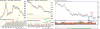
One signal one can't see in Price alone are hidden divergences. Higher indicator reading compared to last bump but lower highs compared to last highs, most likely will go down further.
Not the best examples, but get an idea.

Quitting time !!!
 

Attachments

  • REV DIV JAN 8 2915.png
    REV DIV JAN 8 2915.png
    93.8 KB · Views: 83
Well, for programming purposes, I found MACD was easier to identify than just saying a break of lows as that didn't back test as well as MACD, what started out as easy concept for long term trading became thousands of lines of code in 1993 and I was smart, I went to local school and asked Dean to make it a school project and I would donate so much for equipment they wanted, there were many rewrites that year, Four years ago I had some folks reprogram to make it take into consideration two minute charts to find ultimate area to give it a try.

One signal one can't see in Price alone are hidden divergences. Higher indicator reading compared to last bump but lower highs compared to last highs, most likely will go down further.
Not the best examples, but get an idea.

Quitting time !!!
Exactly right. The price action / indicator combo helps with regard to seeing the picture more clearly. Nice.
 
This is the class A divergence in play in Nikkei index. Circled is the 1 bar above the centreline I kept mentioning, which IMO suggests major weakening in price action. Even though it's class A divergence it is diminished in reward probability it being counter trend, so targets are quite conservative IMO.

nikkei daily.png
 
Back
Top