long term position trading -primarily etf's-

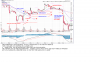
BABA STOPS OUT -
The trade went tepidly in my direction for a few days and then rolled over-
It failed to participate when others gained-
I raised the stop intraday - and did not raise the stop directly up to my entry cost-
The trade spiked down in the remaining 30 minutes and activated my stop- I was filled $.02 above the low of the day. No regrets- a .04% loss - less than 1/2%. View attachment 147009
It is gratifying when taking a small loss prevents a larger loss.
BABA STOPS OUT -
The trade went tepidly in my direction for a few days and then rolled over-
It failed to participate when others gained-
I raised the stop intraday - and did not raise the stop directly up to my entry cost-
The trade spiked down in the remaining 30 minutes and activated my stop- I was filled $.02 above the low of the day. No regrets- a .04% loss - less than 1/2%. View attachment 147009
This is the best example i can give of taking a small loss- when the trade is not performing to my expectations- rather than hanging on with a wider stop in order to be proven "right" .
In this particular example, the wider stop would have simply been the much wider loser-
Is saving one's position from a larger loss not very similar to keeping a larger
BABA SELL-OFF 12.01.14.PNG
profit?
 

Attachments

  • BABA SELL-OFF 12.01.14.PNG
    BABA SELL-OFF 12.01.14.PNG
    163.1 KB · Views: 24
PREMARKET- Before heading to work I reviewed my remaining positions-
AAPL has had a nice run higher, and it is in something of a wedge consolidation-
What is noticed -even on the 'fast' 2 hr chart- Is that AAPL behaved very nicely during it's uptrend - and never came close to testing the 30 ema without a single spike volatility penetration.
I chose to put a stop under the 30 ema (16.67 ) at $116.00 -feeling this was more than adequate to follow AAPL higher- I did not read anything of concern in the recent consolidation/wedge to suggest today's sell-off. Was it earnings? I don't know- it doesn't matter- It was a logical stop level and gained an additional 2% or so from the lower stop I had. Like Baba, it reinforces the idea of -give it a chance- but not too much-
Since there was no prior history of recent volatility- I felt this raised stop gave plenty of room for the trend to continue-
AAPL SELL-OFF 12.01.14.PNG
 
For tracking & contrarian purposes- i just purchased 3 shares of UVXY $19.75 as it pushes to an all-time low. Yes- All of $60.00 -expended- I won't mind if it happens to go to $0.00 Be great for the investment side.
This is a leveraged short of the Vix- The Vix is also at an all-time low today- Investors are "calm."
Note- uvxy does not track the vix well- due to the way it rebalances daily- and it's purchase is not an 'investment' - but I do intend to follow it with a fast time frame chart- With commission -average cost is $20.08
Nice 10% + move up in UVXY- I did not have any freed capitol- or I might have added to the position earlier- but not much- It is a good measure of market complacency- and the market cannot be complacent at these levels -without prompting a reaction move. I just took this as a tracking trade- Just 3 shares of freed cash I had - It's not the $$$ amount- that is insignificant- This is just me trying an aggressive entry - and now i will try to follow this trade aggressively with progressively raised stops higher- until I get knocked out of the trade.
I will go with the fast ema and set a stop at $21.00 on these shares- That's a 10% gain +from my entry in a few days. I'm thinking that the market is ripe for higher volatility.
uvxy dec 1 2014.PNG
 
Nice 10% + move up in UVXY- I did not have any freed capitol- or I might have added to the position earlier- but not much- It is a good measure of market complacency- and the market cannot be complacent at these levels -without prompting a reaction move. I just took this as a tracking trade- Just 3 shares of freed cash I had - It's not the $$$ amount- that is insignificant- This is just me trying an aggressive entry - and now i will try to follow this trade aggressively with progressively raised stops higher- until I get knocked out of the trade.
I will go with the fast ema and set a stop at $21.00 on these shares- That's a 10% gain +from my entry in a few days. I'm thinking that the market is ripe for higher volatility. View attachment 147079
I just read an observation in another thread (JS) by another experienced trader - pointing out TIME as an element in trading- and there is a valid point that he has made-This may not be his point-
But here is how i am viewing this- and it also corresponds to the shift i have made to trying to apply a faster chart- to get a better edge.
Perhaps the UVXY is not the best example-
TIME-
Why is the best signal to act on the earliest valid signal? Because- the Risk to being wrong is so much closer- and if the trade goes as you plan, the gain is that much higher- With each passing bar that goes to confirm your entry, the Risk increases and the potential gain is reduced.
Each trader must determine what is a valid signal- Entry or exit- If you enter or exit early- and are wrong- try it again- because it is a small loss- or the trade reverses and moves higher-
UVXY and Baba- both were early entries- gave the opportunities to move in my direction with a controlled downside risk- I didn't react on Baba sooner because i would have preferred it to become a "position' with upside momentum.
uvxy is a good example of an early and unfounded entry-that just happens to have moved in my favor- Technically, there was not a valid entry signal to enter when I did. It was a poor trade based on the TA- price dropping below prior support should be a 'short' trade-
When responding to faster signals- one has to be able to react in both directions if warranted.
With the market action seeming to stall- I am raising stops-
TDIV $28.16 ; splv $37.35 Cure $119, $103
 
I just read an observation in another thread (JS) by another experienced trader - pointing out TIME as an element in trading- and there is a valid point that he has made-This may not be his point-
But here is how i am viewing this- and it also corresponds to the shift i have made to trying to apply a faster chart- to get a better edge.
Perhaps the UVXY is not the best example-
TIME-
Why is the best signal to act on the earliest valid signal? Because- the Risk to being wrong is so much closer- and if the trade goes as you plan, the gain is that much higher- With each passing bar that goes to confirm your entry, the Risk increases and the potential gain is reduced.
Each trader must determine what is a valid signal- Entry or exit- If you enter or exit early- and are wrong- try it again- because it is a small loss- or the trade reverses and moves higher-
UVXY and Baba- both were early entries- gave the opportunities to move in my direction with a controlled downside risk- I didn't react on Baba sooner because i would have preferred it to become a "position' with upside momentum.
uvxy is a good example of an early and unfounded entry-that just happens to have moved in my favor- Technically, there was not a valid entry signal to enter when I did. It was a poor trade based on the TA- price dropping below prior support should be a 'short' trade-
When responding to faster signals- one has to be able to react in both directions if warranted.
With the market action seeming to stall- I am raising stops-
TDIV $28.16 ; splv $37.35 Cure $119, $103
Nice 10% + move up in UVXY- I did not have any freed capitol- or I might have added to the position earlier- but not much- It is a good measure of market complacency- and the market cannot be complacent at these levels -without prompting a reaction move. I just took this as a tracking trade- Just 3 shares of freed cash I had - It's not the $$$ amount- that is insignificant- This is just me trying an aggressive entry - and now i will try to follow this trade aggressively with progressively raised stops higher- until I get knocked out of the trade.
I will go with the fast ema and set a stop at $21.00 on these shares- That's a 10% gain +from my entry in a few days. I'm thinking that the market is ripe for higher volatility. View attachment 147079
Trade in UVXY stopped out today on the opening 2 hr bar- Actually got a very nice execution on my $21 stop at $20.96 Predominant trend rules again- So, perhaps this micro example suggests- If taking a trade that is countertrend- expect that trade to fail rather than succeed- and- in this example, I made a small 6% profit instead of the trade becoming a loser- 6% gain is not a bad trade- In a couple of days- If one actually had any amount of $$$$ of skin in the game- I actually covered my $2 in commission, and made a net $2 buck profit! I wouldn't take much of a gamble with this product though-I may play around with this again with a few shares- Perhaps a buy-stop waiting to get filled on a higher move. It will be interesting to see how it behaves going forward- Will the decline continue?
 
View attachment 147030
The initial look at the CURE -frame 3 period- using a 10 & 30 and a simple entry/exit condition rules certainly got chopped up. The take-away from that type of approach , is that it performed well when price was relatively smooth and trending- the last 2 trades captured profits, and got out of the position on larger multi bar declines, but failed during the earlier trades on the chart. Cure is a good example of low volume & volatility- Potentially, trading a more liquid etf (high daily volume) could apply this -or a similar approach with some success, and some safety built in-

How does one tackle the issue of repeated entries when it appears that the signal is there to get in ,
but the trade does not develop as trending? You only find out when it fails-
What about taking the very next entry? And it fails?
And then a 3rd entry- also fails......
And after getting stopped out for 3 consecutive losses- you don't enter trade 4- which becomes the trending trade you hoped would develop in Entry 1.
I think this happens to me - and other traders as well- and we get discouraged because we just got successive losses of perhaps 5,6,7% based on our belief in our "system" . We know it works- when it trends-We just cannot know when that trend is about to appear.
There are some money management things I can do on entry- Take a partial entry- add to the position as it passes my initial entry cost- I can wait for the trend to be clearly evident-on the daily or weekly charts- my choice- or can I try to be more tactical- take some entry and exit lessons from those that use
volatility to their advantage-
The chart in this post takes a look at momentum as defined here as the increasing gap between the 2 ema & the 30 ema- and takes some measurements of what % away the peaks represented. The price would be significantly further and a higher % away from the moving average line-when price peaked-
if you knew in advance- that once a momentum move higher exceeded 6% , a reversion would likely occur soon- perhaps within a bar or two- and that 8% would be extreme- 10% very unusual-
Would having an approach that sold some of the position while price was moving higher into that extended zone- and perhaps keeping a portion of the winning trade above the entry level- (Present Cure position partial sell is such an example)
Chart today is just of the ema's themselves- I will look to see if I can improve on the results of the 10,30 approach, using a faster chart, faster emas- and possibly add a split-position stop-loss - or even a limit sell % to capture a momentum move higher-
Just a trading note here- Flash crashes can occur to even "Solid" stocks or ETF's- A flash crash can activate a stop loss but get a much lower fill- only to find the price closes 5 minutes later back where it was- A flash crash shows on my fast charts for Cure- but did not show on the daily- It exceeded my stop-loss- but did not activate it- I'm starting to use a stop- with limit order to protect an unusually low fill occurring.
Another note- As J suggested- I'm going to start also looking at SPY- and I think SSO as a 2x -
As he pointed out, most everything correlates along with SPY-
Cure Chart :View attachment 147029
i WAS READY TO SHOW That the faster ema approach- dump the 10 & 30 and instead look at a 2 & 30-
would turn the losing 10-30 approach into a winning 2-30 approach- I still believe that there is some truth to be found there, but not in this example of CURE during that period- The lack of volume undoubtedly added to the gappiness of price movements and tells me that I need to focus on an approach that has good liquidity- good daily volume.
So, the Study part is not done-just because CURE doesn't 'Fit' - It tells me that one criteria to look for is adequate volume, with a better continuity of price exchange, the gaps will likely not be as large as often.
CURE 2 HR 2012 STUDY FAILS.PNG
 
Getting busy with late work hours-
I had several orders waiting for CURE today- one was limit to Buy lower, and the 2nd was a buy-stop -limit-
And i had a gap down limit in case of a flash crash-
I added back 1/3 Cure at 135.04 average cost now raised to $112.11.

Since i had my available cash wrapped up in the different CURE orders- I could not place any others-
After the fill on Cure- I canceled the remaining orders, and looked at SSO- the leveraged SPY 2x.
It broke through - making a higher high today- I have put in a Buy-stop for a higher move - price hitting $131 limit $132.00 The better purchase would have been as price moved up from the sideways base and taken an entry after a 129 .00 bar close- This pullback filled the gap move higher- and then price went directly up , with barely a pause at resistance- but did not close strong- This is the reason for the wider buy-stop- above today's high-
Got to get my feet wet in SSO- tracking the SPY- and an actual $$$ position is a good motivator-
This is the textbook -price retraces after a high- tries to rally higher- - price stalls at resistance (prior high levels) has a pullback (handle) then moves higher- Bit of red on the close though- Prompts the higher buy-stop on my part-

aside from this actual trade- I think SPY or the SSO 2.6M on the 30!!!! that's volume!
So, for a 'study' this will be the new subject - as well as the new trade. SDS would be the short focused counter trade- i did take a few day position in SDS that turned out profitable in the prior decline- but it was a very short duration 2-3 days and had tightly raised stops - much like the recent UVXY trade..
Hope to get some charts developing this week-
 
Getting busy with late work hours-
I had several orders waiting for CURE today- one was limit to Buy lower, and the 2nd was a buy-stop -limit-
And i had a gap down limit in case of a flash crash-
I added back 1/3 Cure at 135.04 average cost now raised to $112.11.

Since i had my available cash wrapped up in the different CURE orders- I could not place any others-
After the fill on Cure- I canceled the remaining orders, and looked at SSO- the leveraged SPY 2x.
It broke through - making a higher high today- I have put in a Buy-stop for a higher move - price hitting $131 limit $132.00 The better purchase would have been as price moved up from the sideways base and taken an entry after a 129 .00 bar close- This pullback filled the gap move higher- and then price went directly up , with barely a pause at resistance- but did not close strong- This is the reason for the wider buy-stop- above today's high-
Got to get my feet wet in SSO- tracking the SPY- and an actual $$$ position is a good motivator-
This is the textbook -price retraces after a high- tries to rally higher- - price stalls at resistance (prior high levels) has a pullback (handle) then moves higher- Bit of red on the close though- Prompts the higher buy-stop on my part-

aside from this actual trade- I think SPY or the SSO 2.6M on the 30!!!! that's volume!
So, for a 'study' this will be the new subject - as well as the new trade. SDS would be the short focused counter trade- i did take a few day position in SDS that turned out profitable in the prior decline- but it was a very short duration 2-3 days and had tightly raised stops - much like the recent UVXY trade..
Hope to get some charts developing this week-
mY BUY-STOP was not hit by intraday price moves today- That is the advantage of having a buy-stop higher and expecting it to be filled with a major move. the downside is that you give up on a higher entry fill the larger % loss on the trade if it turns.
In this example, since i am not in the trade with a wide fill, I can now hope for a deeper pullback and getter a better low cost entry - with a smaller stop - If i think the market trend continues-
i have a real advantage here- in that I am simply swing trading and this journal is just my personal challenge to myself to step up to the plate- treat trading more responsibly- let me digress......
I follow a few threads occaisionally here on ET and find i am drawn particularly to those individuals that have recently turned to trading- and the process they go through as the importance in their lives is significant should they ultimately 'succeed' or fail. And, Ialso learn by reading the mixed wisdoms that other traders present to them. Sap that i am, I occaisionally try to impart my perception- valid or not- I hope I am constructive in my comments, because i once also shared the somewhat dire urgency of making something positive happen- and trading was my vehicle of choice by which I felt I could accomplish that circa 2000 or thereabouts-
- I made money in the bull market- It was Soooo Eassssy. Just Buy- Go Long- Tech Bull.
I actually thought in that period that i would give up the day job and live on my trading earnings-
that didn't last long though- Gave back all the profits and a substantial amount of the starting nest egg as the market quit trending in my favor-
I didn't blow my entire account-Didn't go to $0.00 still trading today with the remnants- but i think i had ample opportunity to step up to the plate in the last decade and i chose to be in and out, and since this trading account was not essential to me or my family- it became recreational. Offset by other demands and interests...... a little gain here, alittle give back there.....but- over time, the account continued to decline due to the discretionary approach- and the lack of a disciplined-approach.
Back to the "new Traders' - I think trading under pressure of Having to perform - whether it is to meet some company quota- or some self imposed demand- Is perhaps totally not viable for most over time- I guess some trading firms would consider it to be the winnowing of the wheat from the chaff- That which survives gets to move on and survive again.
Combine that with personal demands- family financial needs- no other alternatives- got to succeed-
All that in a daily changing market - different dynamics evolving- it is no surprise the attrition rate is likely very high-
I think the demand to be a success from the beginning is unrealistic- unless you're in the middle of a blazing bull market and just take the ride higher- And that is only a temporary advantage-
How one determines to sit aside or take the losses is only recognized after numerous trade failures suggest that the trend has changed.
I believe it is about surviving, preserving capitol, taking advantage of market momentum swings and learning to wait - I still struggle with the wait part. Bull market saved me from myself.
I think it is best if each of us recognizes that this is not the "final chapter" - Regardless of how we perform in the present , we will get a new opportunity in the near future- Can we apply what we have learned in the past to that which occurs in the future? If one has too much pressure- self imposed or external- to succeed- How can one be observant and unbiased? How can one qualify the merits of their approach objectivly with so much at stake?
Conversely- if one does not feel pressure to perform at a higher level, One fails to try to achieve in spite of adversity? Pressure- properly applied - is a motivating force in our lives- It can be beneficial in that it makes us step up our game- brings out the best in us- dspite our shortcomings-
I respect thost that try to challenge themselves against the markets daily- It is the ultimate test of skill and endurance -adaptability- - and discipline- that sets a higher standard necessary for success over a changing environment.

Got off on a tangent- Follow up to why the SSO trde did not fill since i used a higher buy-stop order- As a discretionary tool- a buy-stop with limit makes the price go in your direction before your order is activated. Sometimes this works- sometimes not- I'd rather give up a 1/2 point getting into a winning trade late - that getting in at market and dropping 3 points on the close- Typically prefer this on an impending breakout set up. Not in the trade on the failed breakout, allows me to follow it potentially lower for a better Risk to Reward entry. Concerned about the loss of momentum though.

instead of a conventional price chart - consider a different view of price-action- and what it may suggest:
SSO RENKO 12.04.14.PNG
 
mY BUY-STOP was not hit by intraday price moves today- That is the advantage of having a buy-stop higher and expecting it to be filled with a major move. the downside is that you give up on a higher entry fill the larger % loss on the trade if it turns.
In this example, since i am not in the trade with a wide fill, I can now hope for a deeper pullback and getter a better low cost entry - with a smaller stop - If i think the market trend continues-
i have a real advantage here- in that I am simply swing trading and this journal is just my personal challenge to myself to step up to the plate- treat trading more responsibly- let me digress......
I follow a few threads occaisionally here on ET and find i am drawn particularly to those individuals that have recently turned to trading- and the process they go through as the importance in their lives is significant should they ultimately 'succeed' or fail. And, Ialso learn by reading the mixed wisdoms that other traders present to them. Sap that i am, I occaisionally try to impart my perception- valid or not- I hope I am constructive in my comments, because i once also shared the somewhat dire urgency of making something positive happen- and trading was my vehicle of choice by which I felt I could accomplish that circa 2000 or thereabouts-
- I made money in the bull market- It was Soooo Eassssy. Just Buy- Go Long- Tech Bull.
I actually thought in that period that i would give up the day job and live on my trading earnings-
that didn't last long though- Gave back all the profits and a substantial amount of the starting nest egg as the market quit trending in my favor-
I didn't blow my entire account-Didn't go to $0.00 still trading today with the remnants- but i think i had ample opportunity to step up to the plate in the last decade and i chose to be in and out, and since this trading account was not essential to me or my family- it became recreational. Offset by other demands and interests...... a little gain here, alittle give back there.....but- over time, the account continued to decline due to the discretionary approach- and the lack of a disciplined-approach.
Back to the "new Traders' - I think trading under pressure of Having to perform - whether it is to meet some company quota- or some self imposed demand- Is perhaps totally not viable for most over time- I guess some trading firms would consider it to be the winnowing of the wheat from the chaff- That which survives gets to move on and survive again.
Combine that with personal demands- family financial needs- no other alternatives- got to succeed-
All that in a daily changing market - different dynamics evolving- it is no surprise the attrition rate is likely very high-
I think the demand to be a success from the beginning is unrealistic- unless you're in the middle of a blazing bull market and just take the ride higher- And that is only a temporary advantage-
How one determines to sit aside or take the losses is only recognized after numerous trade failures suggest that the trend has changed.
I believe it is about surviving, preserving capitol, taking advantage of market momentum swings and learning to wait - I still struggle with the wait part. Bull market saved me from myself.
I think it is best if each of us recognizes that this is not the "final chapter" - Regardless of how we perform in the present , we will get a new opportunity in the near future- Can we apply what we have learned in the past to that which occurs in the future? If one has too much pressure- self imposed or external- to succeed- How can one be observant and unbiased? How can one qualify the merits of their approach objectivly with so much at stake?
Conversely- if one does not feel pressure to perform at a higher level, One fails to try to achieve in spite of adversity? Pressure- properly applied - is a motivating force in our lives- It can be beneficial in that it makes us step up our game- brings out the best in us- dspite our shortcomings-
I respect thost that try to challenge themselves against the markets daily- It is the ultimate test of skill and endurance -adaptability- - and discipline- that sets a higher standard necessary for success over a changing environment.

Got off on a tangent- Follow up to why the SSO trde did not fill since i used a higher buy-stop order- As a discretionary tool- a buy-stop with limit makes the price go in your direction before your order is activated. Sometimes this works- sometimes not- I'd rather give up a 1/2 point getting into a winning trade late - that getting in at market and dropping 3 points on the close- Typically prefer this on an impending breakout set up. Not in the trade on the failed breakout, allows me to follow it potentially lower for a better Risk to Reward entry. Concerned about the loss of momentum though.

instead of a conventional price chart - consider a different view of price-action- and what it may suggest:
View attachment 147142

Got out of work early- apparently a good jobs report and the Dow is approaching 18,000- just closed above 17,000 5 months ago they say!
It does not seem prudent to jump into new positions as the market is making new highs- but the rally of the past 6 weeks left a lot of folks waiting for a pullback. Boat sailed, weren't onboard. No telling what will occur next week, but I purchased SSO $130.83, and TQQQ 103.69 11:45 am - Stops in place and to be adjusted as needed this weekend. If market weakens, I'll take the loss-
Entire portfolio is now fully invested ($70.00 cash) .With no individual stocks-
The Trading account now has a 50-50 conservative etf to leveraged etf exposure.
Exposure with DTN (conservative ), VIG (conservative) is held in a separate account.
In the retirement account, I have been reducing the bond position, and adding exposure to emerging mkts, & europe- Reportedly, US companies are highly valued at present, with better 'values' overseas.
In the retirement account, my choices are mutual funds- which carry a higher expense ratio than etf's- I cannot put stops in place, am limited to how much I can take out of any single fund in 1 day ($4,999) or that particular fund is locked out for exchanges for 30 days- This is designed by the fund mngrs to stop fund trading . I don't intend to discuss much in this thread at this time regarding mutual funds-nor the inability to freely move assets-- but I'll use a bond fund I own as a relatively stable performer- and an
example of a simplistic set of guidelines that could be advantageous even in something as sedate as bond funds.
The attached file shows a 3 year chart with a bond fund- and this example has a 10 ema as the trigger- close below- raise stop-loss close above- reenter- Again, this is not necessarily the approach one would use- I perhaps would consider a faster ema for a portion of the positiuon, and perhaps the 10 for the remainder- A lot would depend on position size, transaction costs etc----
Getting to the point-
As one approaches retirement, bonds generally are considered more stable than stocks- and are considered "safer" -and lower return. .The bond fund I illustrate here (not a recommendation btw) lost 20% in the 2007-09 decline- indeed "safer" than stocks-
However, even "Safer" means there is both Risk and opportunity.
In the attached chart, AMHIX tends to trend well over 3 years, with a single substantial decline-
An investor could sit through these swings believeing in the end that all will be well, or they could take a form of action to be out of the investment- or reduce the size of the position- based on some simple TA.
The basic set up is - define a level that one would like to be out of a trade- a signal when one would get back in- (and how to deal with the whip-saw when it occurs-)
There was a market decline in 2012- and the fund also declined from it's nice uptrend- Something as simple as exiting if price made a new low below an ema- and reentering on a move back above- One could add whatever they chose- trend lines- volatility ATR values etc.
In this KISS example -AMHIX returns an average of 8%/year- By missing the largest part of the decline due to a stop execution, and a rule to get back in when price rises again- The return exceeds 10%/year-
That is a notable difference. One worthy of consideration in protecting what one has gained from an unexpected market wide decline.
amhix bond dec 2014.PNG
 
Time is a limiting factor as several have pointed out- to me on this and other forums- I will try to fast forward in my new position- SSO following the SPY with some leverage- I actually have not done any homework on this yet- so I have some personal assumptions- but will try to not be too biased in my look back.
In the look back /study of historical CURE price action, I think i realized that the large intermittent gaps between price was likely due in large to the low volume # of shares exchanged. This can be viewed as one drops down into faster time frames and finds there are periods where no transactions occur-
That was not enough for me to abandon CURE- I added back to the position this week- but it did prove to me that the wide volatility did not lend itself to be traded with a simple EMA approach.
The net goal of any approach is 2 fold- Get out during a period of decline- prevent giving back large amoungts of profits- and get back in earlier.
What i start with- may not be what i end with-it's my learning process- but I think there is some merit in starting to understand what is "Normal" for the instrument one is trading-and to start with a basic outline. To do this, Let's view the historical price swings by looking back -say 3 years- and view the graph - with price- and then let's exclude price and just use a couple of moving average lines to understand momentum moving away from the slower average, and always coming back closer to it. This touches on the idea that price will always revert to the mean- But how can one take advantage of it when trading? I think it is by realizing extremes are points of opportunity-
 
Back
Top