Leverage Loan for Investing

I'm just not sure what a "short-term cash alternative" is

In order of duration and default risk exposure,

very very very low - cash
very very low- - money market
very low - short term government bonds
low - short term investment grade corporate bonds

It is possible that money market funds are not available options anymore. Nonetheless, I would call and ask for an option to go to cash without immediately generating plan closing fees. Tell them you want to re-think your allocation.

However, You may have to eat additional costs of exiting each fund and STILL stay within "the plan". At least, you have time to think things over..which you have started already. BTW if the market goes up, it would also be improper to agonize over missed gains.
 
^ You might be jumping to conclusions as the OP hasn't provided enough information. OP provides the current allocation, but not the original allocation from two years ago. OP may also have a large DB pension plan which could be a proxy for a fixed-income component of one's portfolio.

Yes. I passed on that risk back to the OP by making an over-generalization in my first sentence.

By "fixed income component on your personal balance sheet", I mean everything. It could be his allowance from his mother or his monthly skim off a casino.

Cash flow statement is the more appropriate FS, but I hope both of you get my meaning.
 
This sounds like a neighbor who got second mortgage just before real estate meltdown to flip houses, he ended up bankrupt, divorced and with child support payments bigger than old mortgage. I recall him laughing at me when I said I had stopped buying properties to rent out, year earlier. He made very little on flipping a couple of them and that gave him incentive to buy many more.

Markets are long overdue for huge correction here in USA. I would have never taken a loan of this large and have no knowledge of what you are going to do with the money. Best to take the loss and get out, start learning about how to invest. It is so easy for you to lose so much more.
Could I borrow your crystal ball for a moment?
 
I would sell it all and put the 100k in OTM S&P calls.... And take the wifey out for dinner for the 3k leftover...
Can't go wrong... wifey happy plus you have great upside potential... :thumbsup:;)
 
Could I borrow your crystal ball for a moment?

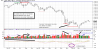
No crystal ball, but knowledge on reading charts. Plus, my long term approach is selling new highs, so I am often counter to over all markets.
 

Attachments

  • EXTREME.png
    EXTREME.png
    124.3 KB · Views: 27
If your advisor put you into 100% equities in total without regard to a bond/fixed income component on your personal balance sheet. Then, he obviously wasn't advising according to your best interests. Not foul play, but it's gross negligence.

You need to cut risk and put funds in a short-term cash alternative until you figure out what is right for you. This is not trading money...yet. :)
That's totally true. You always need some fixed income component.
 
Your advisor can't be trusted, he wanted you to lever up and buy funds that would benefit them? Sounds like an "agency" problem to me. Get a fiduciary or buy books on investing and do it your own
 
Two years ago, I consulted a financial advisor at London Life (Canadian provider of life and health insurance) as my investing knowledge at the time was very limited. I was advised that since I carried no debt, the best way to make money would be using leverage to invest. The plan was to borrow $100 000 at 3.5% interest and invest it into London Life segregated funds chosen by my advisor. It’s been just over two years now, and the account is currently at $103 000. So I’ve paid $7000 in interest, but the fund value has only grown by $3000.

Obviously, this hasn’t been a good investment strategy. I’m just not sure if I should call it quits now before I lose more money or if I should wait for the fund to increase in value. The investment was started right before the price of oil dropped (November 2014), so the timing wasn’t great as I was initially invested all in Canadian equities. The fund was at a low of $88 000 at one point, but has since recovered. The investment is now more diversified with 40% in global equity, 40% in Canadian equity, and 20% in US equity. Any suggestions or advice would be greatly appreciated. Thanks.


i think ur adviser did a half his job, borrowing at low rates can be attractive to fund investments if u know the odds are high and personally if u knew ur self what ur doing where the loss is minimized, lastly how much of ur income does the 3500 a year represent, cuz sometimes the best investments are not available immediately, so borrowing at a low rate might be good if u know to invest it at a higher rate and u might have to absorb the interest for few years if that opportunity is not,

the big question is whats ur investments experience now? is it still limited or is it much better?????

if limited i would close out the investment right away, cuz what would happen if its at 80k instead of a 100?? can u afford the 20k loss???? how did u feel when it was down to 88k???? did it shake u or is ur networth/income larger where it wasnt the issue, u must take these factors into account,,,

borrowing at 3.5% is awesome which not everyone has the access to it,,, but only if there is a good use to it with great confidence and limits to losing (as in whats worse case scenario),,,,

i used to do something similar to this back in the days borrow at lower rate to invest at higher but my experience was limited back then and i got hammered, the only thing that kept me afloat is the fact my income from my current job can dwarf the amounts i took and i recovered,,, but in terms of borrow low invest high i miserably failed, at least back then

there is been times i also borrowed to invest but when i didnt find anything good use for it and i paid back the money and ended up losing on the interest for the 7 months i had the money,,, point is dont force the trade(investment)

 
Back
Top