
large study finds that (hydroxy)chloroquine killing more than it "cures"

You should get your head out of the MSM's ass if you really want to know what is happening in the world. The Epoch Times is a good source for information, specially CCP.

Here it is:

Hydroxychloroquine Study Corrected After More Than 100 Scientists Question Findings
May 31, 2020 15:14, Last Updated: May 31, 2020 15:36
By Katabella Roberts
Medical journal The Lancet on May 29 issued a correction to a recent study which found that antimalarial drugs Hydroxychloroquine and chloroquine were linked with an increased risk of mortality in hospitals, and an increased frequency of irregular heart rhythms.

The study, titled, “Hydroxychloroquine or chloroquine with or without a macrolide for treatment of COVID-19: a multinational registry analysis,” and published on May 22, included records of 96,032 patients from 671 hospitals in six continents. The patients were hospitalized between Dec. 20, 2019, and April 14, 2020.

Patients receiving the anti-malarials were put in four different groups: chloroquine alone, chloroquine with a macrolide, hydroxychloroquine alone, or hydroxychloroquine with a macrolide. Patients who received none of the treatments formed a control group. Researchers found the 14,888 patients in the treatment group suffered higher mortality when compared to the control group of over 80,000.


Protect yourself against fake news. Get real news directly to your phone. Download The Epoch Times app here.

“We were unable to confirm a benefit of hydroxychloroquine or chloroquine, when used alone or with a macrolide, on in-hospital outcomes for COVID-19,” the researchers wrote.

The study led the World Health Organization to temporarily suspend the trial of hydroxychloroquine on COVID-19 patients, and to the UK regulatory body, MHRA, requesting the temporary pause of recruitment into all hydroxychloroquine trials in the UK. France also changed its national recommendation of the drug in COVID-19 treatments and halted all trials.


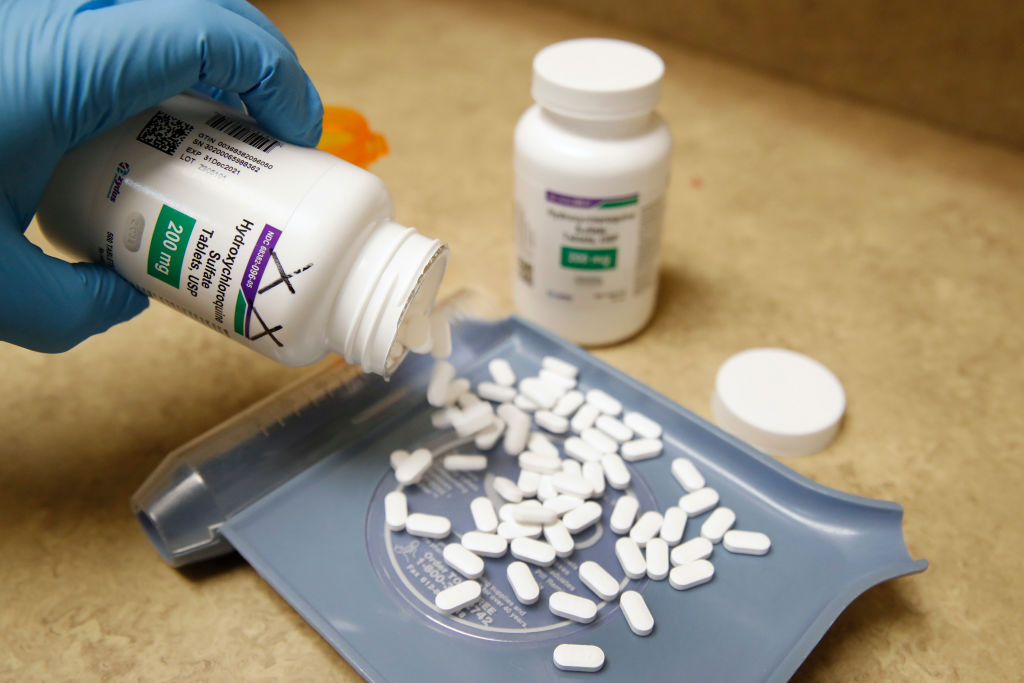
A pharmacy tech pours out pills of hydroxychloroquine at Rock Canyon Pharmacy in Provo, Utah, on May 20, 2020. (George Frey/AFP via Getty Images)


However, more than a hundred scientists and medical professionals raised questions about integrity of data analyzed in the study and subsequently wrote an open letter to its authors and the editor of The Lancet, listing 10 major concerns.

These included the fact that there was “no ethics review,” and “unusually small reported variances in baseline variables, interventions and outcomes,” as well as “no mention of the countries or hospitals that contributed to the data source and no acknowledgments to their contributions.” A request to the authors for information on the contributing centers was denied, the letter said.

Among the scientists other concerns were that the average daily doses of hydroxychloroquine were higher than the FDA-recommended amounts and that data reportedly from Australian patients did not seem to match data from the Australian government.

“Too many cases for just five hospitals, more in hospital deaths than had occurred in the entire country during the study period,” they wrote, noting that Surgisphere, a healthcare data analytics company, has since stated this was an error of classification of one hospital from Asia. “This indicates the need for further error checking throughout the data base,” they wrote.

The scientists also said the authors “have not adhered to standard practices in the machine learning and statistics community. They have not released their code or data.”

“Data from Africa indicate that nearly 25% of all COVID-19 cases and 40% of all deaths in the continent occurred in Surgisphere-associated hospitals which had sophisticated electronic patient data recording, and patient monitoring able to detect and record ‘nonsustained [at least 6 secs] or sustained ventricular tachycardia or ventricular fibrillation.’ Both the numbers of cases and deaths, and the detailed data collection, seem unlikely.”


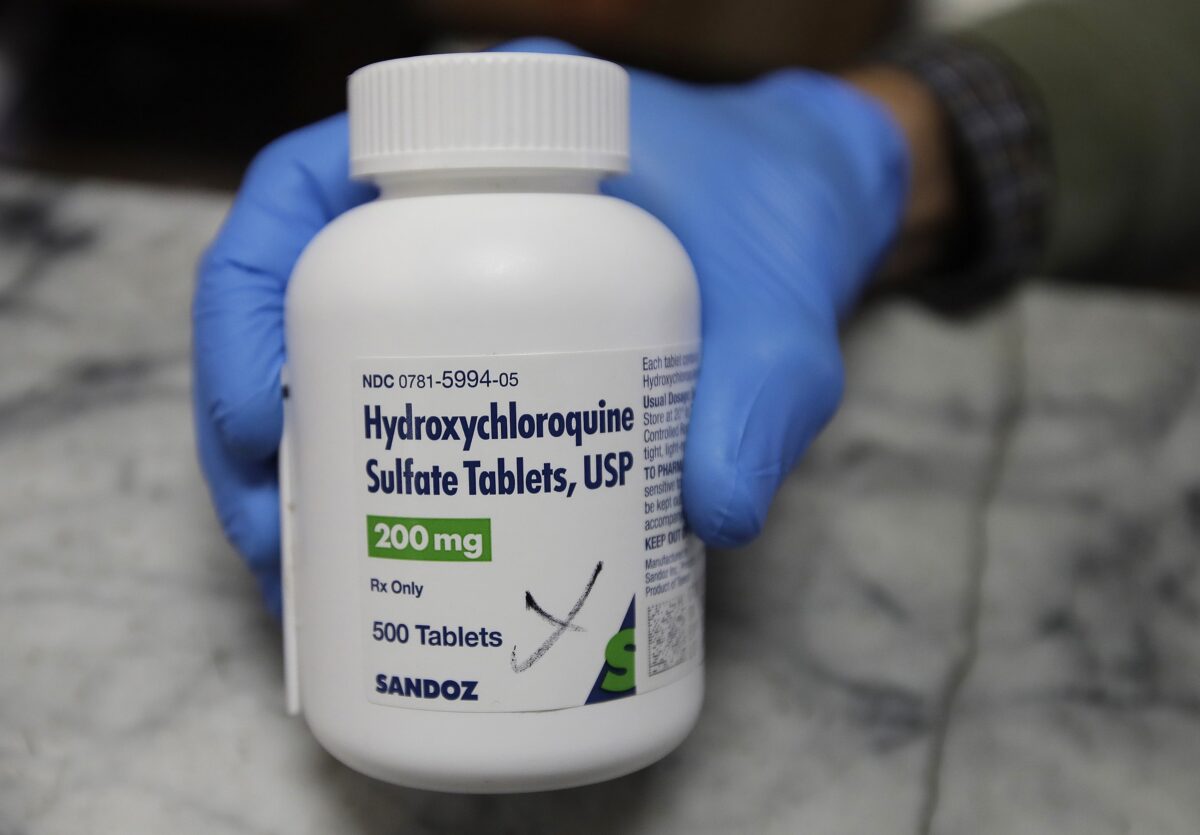
A pharmacist shows a bottle of the drug hydroxychloroquine in Oakland, Calif., on April 6, 2020. (Ben Margot/AP Photo)


The Lancet’s study was informed by data from Surgisphere of which Sapan Desai, the president and Chief Executive Officer, is listed as one of the four authors.

“We discovered that a hospital that joined the Surgisphere registry on April 1, 2020 (in between our quarterly audit periods) self-designated as belonging to the Australasia continental designation. In reviewing the data from each of the hospitals in the registry, we noted that this hospital should have more appropriately been assigned to the Asian continental designation,” Surgisphere said in a statement.

“This hospital was properly reclassified in our database. The findings of the paper are unaffected by this update,” the company said.

In the correction issued on Friday, The Lancet also mentioned the same hospital.

“The appendix has also been corrected. An incorrect appendix table S3 was included, originally derived from a propensity score matched and weighted table developed during a preliminary analysis. The unadjusted raw summary data are now included.”

The Lancet added that there “have been no changes to the findings of the paper,” and that the corrections have been made to the online version and will also be made to the printed version.

In response to the correction issued on May 29, James Watson, a Thailand-based statistician with the University of Oxford’s Centre for Tropical Medicine and Global Health, who led the drafting of the letter, told BuzzFeed News that the authors of the study had failed to address the other nine points referred to in the letter.
Fuck you are stupid, I already quoted it. You don't even read your own shit-baby targeted articles to recognise the part I quoted, I thought so.

I learned something recently from the non-MSM media so it must be true, they said you are a joke to them.
 
horse feathers, lol.
mask up.jpg

mask up, every thing'l be fine.
 
Last edited:
Fuck you are stupid, I already quoted it. You don't even read your own shit-baby targeted articles to recognise the part I quoted, I thought so.

I learned something recently from the non-MSM media so it must be true, they said you are a joke to them.
You are welcome.
 
I'll just put you on ignore for a bit, you are a complete moron, waste of everyone's time.
Haha. I posted an article that contradicted the left's position on Hydroxychoroquine, you couldn't deny it's findings and I am a waste of time. Funny as shit.

See you later punchy. Or not.
 
LancetGate: Pulling a Fast One on Proponents of Hydroxychloroquine and Chloroquine
Shaky data from a leading medical journal that progressive opinion has swallowed with delight.
George-Parry-300dpi-scaled.jpg


by GEORGE PARRY

June 1, 2020, 12:09 AM


Dr. Didier Raoult (YouTube screenshot)
DidierRaoult-scaled.jpg


The Lancet is one of the world’s oldest and best-known medical journals. According to its “manifesto,” it “sets extremely high standards. We select only the best research papers for their quality of work and the progression they bring.… We recognize that a great research paper is not enough and that it requires development, mobilization and exposure. So we promise to set agendas, create context, inform leaders, start debates, and advocate for the idea that research can and will make a difference.”

Pursuant to that mission statement, on May 22, 2020, the Lancet published a study by Dr. Mandeep R. Mehra of the Harvard Medical School and Dr. Sapan S. Desai of Surgisphere Corporation that concluded that the malaria drugs hydroxychloroquine (HCQ) and chloroquine (CQ) did not improve the condition of COVID-19 patients and may have harmed some of them. The study was purportedly based on the medical records of 15,000 patients who received either HCQ or CQ and 81,000 who did not.

This study set off an orgy of celebration by the progressive media. Under the headline “Malaria Drug Taken by Trump Is Tied to Increased Risk of Heart Problems and Death in New Study,” the New York Times advised its readers that, according to the researchers, the “drugs did not help coronavirus patients, and should not be used outside clinical trials.” The front page of the Philadelphia Inquirer featured an article by the Washington Post headlined “Antimalarial drug touted by Trump linked to increased risk of death in coronavirus patients, study says.”

And so on.

To anyone who has been paying attention to the excellent patient outcomes and findings by well-qualified treating physicians that have overwhelmingly demonstrated the efficacy of using HCQ to successfully and safely treat COVID-19, the Lancet article makes no sense. The researchers’ conclusions are squarely at odds with the reports by physicians across America and around the world of their positive patient outcomes as well as HCQ’s well-established safety profile. Similarly, they contradict patient studies by researchers affiliated with the Stanford University Medical School and clinical trials in France under the auspices of the world-renowned medical researcher, Dr. Didier Raoult.

On April 9, 2020, Dr. Raoult’s team published its abstract of a “cohort study” of 1,061 patients which found that early treatment of COVID-19 with HCQ and azithromycin yielded a “good clinical outcome and virological cure … in 973 patients within 10 days (91.7%).” The abstract also indicated that “no cardiac toxicity” was noted and concluded the following:

The HCQ-AZ combination, when started immediately after diagnosis, is a safe and efficient treatment for COVID-19, with a mortality rate of 0.5%, in elderly patients. It avoids worsening and clears virus persistence and contagiosity in most cases.

On May 27, 2020, Raoult’s team published “Early Diagnosis and Management of COVID-19 Patients: A Real-Life Cohort Study of 3,737 Patients, Marseille, France.” That study also found that early use of the HCQ and azithromycin combination produced overwhelmingly positive patient outcomes. The researchers concluded the following:

Treatment with HCQ-AZ was associated with a decreased risk of transfer to the ICU or death (HR 0.19 0.12-0.29), decreased risk of hospitalization ≥10 days (odds ratios 95% CI 0.37 0.26-0.51) and shorter duration of viral shedding (time to negative PCR: HR 1.27 1.16-1.39). QTc prolongation [cardiac arrythmia] (>60 ms) was observed in 25 patients (0.67%) leading to the cessation of treatment in 3 cases. No cases of torsade de pointe [abnormal heart rhythm] or sudden death were observed…. Early diagnosis, early isolation and early treatment with at least 3 days of HCQ-AZ result in a significantly better clinical outcome and contagiosity in patients with COVID-19 than other treatments. (Emphasis added.)

Similarly, on May 27, 2020, the American Journal of Epidemiology published “Early Outpatient Treatment of Symptomatic, High-Risk Covid-19 Patients that Should be Ramped-Up Immediately as Key to the Pandemic Crisis,” by Dr. Harvey A. Risch of the Yale School of Public Health. Here, in relevant part, is the abstract:

Hydroxychloroquine+azithromycin has been widely misrepresented in both clinical reports and public media, and outpatient trials results are not expected until September. Early outpatient illness is very different than later hospitalized florid disease and the treatments differ. Evidence about use of hydroxychloroquine alone, or of hydroxychloroquine+azithromycin in inpatients, is irrelevant concerning efficacy of the pair in early high-risk outpatient disease. Five studies, including two controlled clinical trials, have demonstrated significant major outpatient treatment efficacy. Hydroxychloroquine+azithromycin has been used as standard-of-care in more than 300,000 older adults with multicomorbidities, with estimated proportion diagnosed with cardiac arrhythmias attributable to the medications 47/100,000 users, of which estimated mortality is <20%, 9/100,000 users, compared to the 10,000 Americans now dying each week. These medications need to be widely available and promoted immediately for physicians to prescribe. (Emphasis added.)

Nevertheless, despite all of the above, after publishing the contrary study by Drs. Mehra and Desai, the Lancet successfully lobbied the World Health Organization to suspend all clinical trials of HCQ. And, for added measure, France has banned its use.

So, how was it that the the Lancet article wound up contradicting the findings of HCQ’s many advocates? Was it because the study pertained to the treatment of hospitalized patients whose COVID-19 had progressed to the point where HCQ would no longer be effective? In other words, to paraphrase Dr. Risch’s abstract in the American Journal of Epidemiology, was the Mehra–Desai study based on “irrelevant evidence” about the use of HCQ to treat “inpatients” whose COVID-19 had reached the point where it was “very different” from the “early outpatient” phase of the disease?

Well, it turns out that the answers to those questions can’t be found in the study. As a matter of fact, the data on which the study is purportedly based are being seriously questioned by the scientific community.

On May 28, 2020, dozens of eminent “clinicians, medical researchers, statisticians and ethicists from [universities and medical centers] across the world” addressed an open letter to the study’s authors and the editor of the Lancet in which they raised “both methodological and data integrity concerns.” Here are some of the highlights:

  1. The study’s authors did not indicate the “severity” of the disease being treated. Was it early on in the COVID-19 progression or late in the process? Similarly, they did not indicate the dosages of HCQ or CQ used.
  2. The authors have not adhered to “standard practices in the machine learning and statistics community. They have not released their code or data. There is no data/code sharing and availability statement in the paper.”
  3. There was no mention of the countries or hospitals from which the data were purportedly obtained, and the authors have denied requests for that information.
  4. The numbers of cases and deaths as well as the detailed data collection from Surgisphere-associated hospitals in Africa “seem unlikely.”
  5. Reported ratios of HCQ to CQ are “implausible.”
The open letter then states that “it is imperative” that “Surgisphere provides details on data provenance” and that there be “independent validation” and “additional analyses” by “at least one other independent and respected institution” to “assess the validity of the [study’s] conclusions.”

And it concluded with this: “In the interests of transparency, we also ask The Lancet to make openly available the peer review comments that led to this manuscript to be [sic] accepted for publication.”

There’s much more, but you get the idea. The letter writers smell a rat. As does Dr. Didier Raoult who, on May 29, 2020, tweeted (as translated) the following:

We are wondering about the existence of the company Surgisphere, in charge of collecting Lancet data. To our knowledge, many denials but not a single testimony, neither from a partner hospital, nor from a doctor who provided data on the study.

On the same date, FranceSoir published its investigative report on Surgisphere with the stinging subhead (as translated), “LancetGate: is Surgisphere the company which provided the study data serious?”

Noting that (as translated) “several companies with the same name were successively registered in various [American] states, then liquidated or suspended,” the article observed that, “for a study the size of that of The Lancet (96,000 participants), this company, which claims to be specialized in big data and artificial intelligence, to date does not really provide factual support of its existence or ability to do so.” Instead, citing information from LinkedIn, the article states that “the company reports 5 people working there, 4 of whom arrived either in March or April 2020. We did Google searches on each of them without much success (very few mentions or publications) and the profile of [Surgisphere employee] Stacy Prigmore caught our attention because we cannot find any information on him [sic].… The company’s website gives the impression of only existing or having activity since March 2020 and nothing between 2013 and 2020.”

In addition, many other scientists and researchers have raised their concerns about the impact of this evolving scandal. According to the New York Times, some have posted their concerns online using hashtags like #Lancetgate and #whats_with_hcq_lancet_paper, even as Agence France-Presse has quoted Professor Gilbert Deray of Pitie-Salpetriere University Hospital stating, “If the Lancet article is a fraud, it will shatter trust in scientists in a lasting way. I await with concern the results of the investigation.”

Meanwhile, Dr. Raoult isn’t waiting for the investigative results. He bluntly summed up the Lancet study as “crap” and declared that “We’ve had 4,000 patients [in his studies], so, don’t believe I will change because there are people making of big data a sort of completely delirious fantasy.” He added that he does not trust research involving “big data” that “takes data we don’t know the quality of, that mixes everything, mixes treatments we don’t know what dose has been given.” In short, despite the ban in France on HCQ, he will continue to treat COVID-19 patients with HCQ and azithromycin since they are “the most fitted treatments given the current state of science and knowledge.”

Subsequently, Dr. Raoult posted this tweet:

Winston Churchill: “Now this is not the end. It is not even the beginning of the end. But it is, perhaps, the end of the beginning”… Of the war against chloroquine.

We can only hope he’s right.

George Parry is a former federal and state prosecutor. He blogs at knowledgeisgood.net and may be reached by email at kignet1@gmail.com.
 
Internal FDA Documents Show How Little Evidence The Agency Had Before Allowing Malaria Drugs To Be Used To Treat COVID-19
A May whistleblower complaint alleged that the FDA’s emergency authorization of chloroquine and hydroxychloroquine came about as a result of political pressure from the White House.
https://www.buzzfeednews.com/article/zahrahirji/fda-eua-hydroxychloroquine-chloroquine

The Food and Drug Administration authorized two malaria drugs boosted by President Donald Trump to treat COVID-19 in March based on threadbare evidence, according to an agency review obtained by BuzzFeed News through a Freedom of Information Act lawsuit.

The review also raised serious questions about shoddy practices at overseas factories that manufactured and donated the drugs for use in American hospitals, according to the documents.

The use of the drugs to treat COVID-19 has been politically charged from the start.

On March 19, as the number of coronavirus cases in the US started to surge, President Donald Trump called for widespread use of the two drugs, chloroquine phosphate and hydroxychloroquine sulfate, to treat the new disease, for which there is no known cure. Nine days later, the FDA issued an emergency use authorization (EUA), a special provision that allows the agency to quickly greenlight the widespread use of unapproved drugs during a public health emergency, allowing the malaria drugs to be used to treat hospitalized COVID-19 patients.

Medical experts, meanwhile, raised concerns about the drugs saying they could cause serious health issues and were not proven to work. Even the FDA issued a warning, four weeks after its authorization, cautioning that use of the drugs outside hospitals could cause “life-threatening” heart problems.

Then, a top science official in the Trump administration alleged that the emergency authorization was dangerous and came about as a result of political pressure. Rick Bright, director of the Biomedical Advanced Research and Development Authority, claimed he was pressured to sign off on the EUA, and was retaliated against after raising safety concerns about the malaria drugs and their importation from low-quality factories in India and Pakistan. “There wasn't sufficient data at the time to support the use of this drug without close physician supervision," Bright told Congress, after filing a whistleblower complaint in May.

Days after that, President Trump stunned the nation by announcing on live television that he was taking the drugs himself. “What do you have to lose?” he asked.

The FDA documents, released publicly now for the first time, outlined what data the agency used to make the hot-button decision to allow widespread use of the drugs.

The EUA review, conducted by six FDA officials, referred to only two studies of the malaria drugs, which either showed negligible results or have since been called into question altogether.

At its center was a controversial French study that claimed that the malaria drug, combined with an antibiotic, was very effective at treating coronavirus infections. That study has since been criticized because of numerous problems, including failing to include the outcomes of patients on the drugs who died or were hospitalized. Two weeks after the study was published, the publisher issued a notice saying the study did not meet its "expected standard."

The FDA review also cited a small Chinese trial of 30 patients that showed the drugs had little to no effect on patient outcomes, and a letter from Chinese scientists that said it was effective — but was not backed up with any data. The review also included a reference to 16 clinical trials that were still underway and noted that many doctors had a “substantial interest” in trying the drugs.

According to the review document, officials briefly warned about the risks of giving the drugs to patients with heart problems as part of a longer section detailing warnings and precautions. “Chloroquine- or hydroxychloroquine-related cardiac conduction disorders (i.e. QT prolongation, ventricular arrhythmias) are rare but life-threatening adverse reactions and are usually associated with long-term use and high cumulative doses,” officials wrote.

The document also reviewed the risks posed by the millions of doses of the drugs that were donated for use in the US. Analyzing the 1 million chloroquine tablets donated to the US by Bayer Pharmaceuticals, the review noted they were made at never-inspected factories in India with “a low reputation for quality.” The pills were made by a manufacturer in India whose other factories had failed previous FDA inspections. That meant, “facilities used to manufacture this chloroquine are presumed to have even lower standards of quality.”

A chemical analysis of the chloroquine pills conducted on March 27, also among the public records, indicated the tablets contained small impurities but met standards.

“Based on the scientific evidence available to FDA, it is reasonable to believe that these products may be effective in treating the serious or life-threatening disease, COVID-19,” the FDA officials concluded.

“At least we have some hints now of what they were depending on" for the EUA, said Peter Lurie, a former FDA executive who now leads the advocacy group Center for Science in the Public Interest. "It still seems to me to be a thin read and one is left with the question of whether the approval had something to do with pressure from the White House."

Since the review was submitted, growing evidence has suggested that these drugs may do more harm than good. After a second clinical trial involving the drugs was recently halted, French, Italian, and Belgian officials last week all banned the use of the drug as a therapy for the novel coronavirus.

“I think it's fair to ask whether the FDA — expert in assessing drug data — should or could have spotted those issues,” Ohio State University law professor Patricia Zettler, former FDA associate chief counsel during the Obama administration, told BuzzFeed News by email. Zettler added, however, that the standard for an emergency use authorization is always low.

Here is a copy of the federal review of the EUA application for the malaria drugs as a possible COVID-19 treatment outside of clinical trials:

(More info at above url)
 
Internal FDA Documents Show How Little Evidence The Agency Had Before Allowing Malaria Drugs To Be Used To Treat COVID-19
A May whistleblower complaint alleged that the FDA’s emergency authorization of chloroquine and hydroxychloroquine came about as a result of political pressure from the White House.
https://www.buzzfeednews.com/article/zahrahirji/fda-eua-hydroxychloroquine-chloroquine

The Food and Drug Administration authorized two malaria drugs boosted by President Donald Trump to treat COVID-19 in March based on threadbare evidence, according to an agency review obtained by BuzzFeed News through a Freedom of Information Act lawsuit.

The review also raised serious questions about shoddy practices at overseas factories that manufactured and donated the drugs for use in American hospitals, according to the documents.

The use of the drugs to treat COVID-19 has been politically charged from the start.

On March 19, as the number of coronavirus cases in the US started to surge, President Donald Trump called for widespread use of the two drugs, chloroquine phosphate and hydroxychloroquine sulfate, to treat the new disease, for which there is no known cure. Nine days later, the FDA issued an emergency use authorization (EUA), a special provision that allows the agency to quickly greenlight the widespread use of unapproved drugs during a public health emergency, allowing the malaria drugs to be used to treat hospitalized COVID-19 patients.

Medical experts, meanwhile, raised concerns about the drugs saying they could cause serious health issues and were not proven to work. Even the FDA issued a warning, four weeks after its authorization, cautioning that use of the drugs outside hospitals could cause “life-threatening” heart problems.

Then, a top science official in the Trump administration alleged that the emergency authorization was dangerous and came about as a result of political pressure. Rick Bright, director of the Biomedical Advanced Research and Development Authority, claimed he was pressured to sign off on the EUA, and was retaliated against after raising safety concerns about the malaria drugs and their importation from low-quality factories in India and Pakistan. “There wasn't sufficient data at the time to support the use of this drug without close physician supervision," Bright told Congress, after filing a whistleblower complaint in May.

Days after that, President Trump stunned the nation by announcing on live television that he was taking the drugs himself. “What do you have to lose?” he asked.

The FDA documents, released publicly now for the first time, outlined what data the agency used to make the hot-button decision to allow widespread use of the drugs.

The EUA review, conducted by six FDA officials, referred to only two studies of the malaria drugs, which either showed negligible results or have since been called into question altogether.

At its center was a controversial French study that claimed that the malaria drug, combined with an antibiotic, was very effective at treating coronavirus infections. That study has since been criticized because of numerous problems, including failing to include the outcomes of patients on the drugs who died or were hospitalized. Two weeks after the study was published, the publisher issued a notice saying the study did not meet its "expected standard."

The FDA review also cited a small Chinese trial of 30 patients that showed the drugs had little to no effect on patient outcomes, and a letter from Chinese scientists that said it was effective — but was not backed up with any data. The review also included a reference to 16 clinical trials that were still underway and noted that many doctors had a “substantial interest” in trying the drugs.

According to the review document, officials briefly warned about the risks of giving the drugs to patients with heart problems as part of a longer section detailing warnings and precautions. “Chloroquine- or hydroxychloroquine-related cardiac conduction disorders (i.e. QT prolongation, ventricular arrhythmias) are rare but life-threatening adverse reactions and are usually associated with long-term use and high cumulative doses,” officials wrote.

The document also reviewed the risks posed by the millions of doses of the drugs that were donated for use in the US. Analyzing the 1 million chloroquine tablets donated to the US by Bayer Pharmaceuticals, the review noted they were made at never-inspected factories in India with “a low reputation for quality.” The pills were made by a manufacturer in India whose other factories had failed previous FDA inspections. That meant, “facilities used to manufacture this chloroquine are presumed to have even lower standards of quality.”

A chemical analysis of the chloroquine pills conducted on March 27, also among the public records, indicated the tablets contained small impurities but met standards.

“Based on the scientific evidence available to FDA, it is reasonable to believe that these products may be effective in treating the serious or life-threatening disease, COVID-19,” the FDA officials concluded.

“At least we have some hints now of what they were depending on" for the EUA, said Peter Lurie, a former FDA executive who now leads the advocacy group Center for Science in the Public Interest. "It still seems to me to be a thin read and one is left with the question of whether the approval had something to do with pressure from the White House."

Since the review was submitted, growing evidence has suggested that these drugs may do more harm than good. After a second clinical trial involving the drugs was recently halted, French, Italian, and Belgian officials last week all banned the use of the drug as a therapy for the novel coronavirus.

“I think it's fair to ask whether the FDA — expert in assessing drug data — should or could have spotted those issues,” Ohio State University law professor Patricia Zettler, former FDA associate chief counsel during the Obama administration, told BuzzFeed News by email. Zettler added, however, that the standard for an emergency use authorization is always low.

Here is a copy of the federal review of the EUA application for the malaria drugs as a possible COVID-19 treatment outside of clinical trials:

(More info at above url)

They're rubber stamping every big pharma trial with ties to this admin too
 
Back
Top