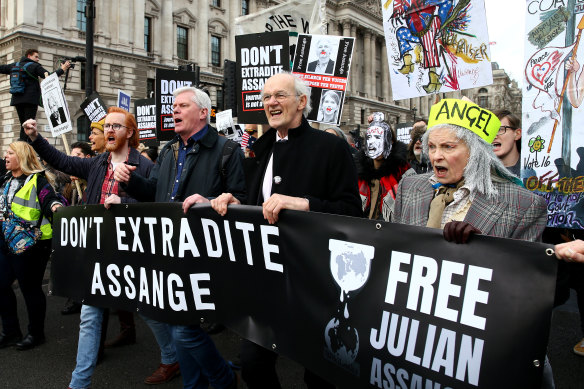
JULIAN ASSANGE’S U.S. EXTRADITION RULING STRIKES A BLOW TO PRESS FREEDOM
Though Assange isn’t a traditional publisher, like, say, The New York Times, charging him under the Espionage Act for publishing government secrets could be a slippery slope in which more mainstream outlets are similarly prosecuted. “The U.S. government itself is endangering the ability of the media to bring to light uncomfortable truths and expose official crimes and cover-ups,” read a Friday editorial in The Guardian, one of the first outlets to publish revelations from the WikiLeaks cache. “The decision is not only a blow for his family and friends, who fear he would not survive imprisonment in the U.S.,” added Guardian editors. “It is also a blow for all those who wish to protect the freedom of the press.”
Though Assange isn’t a traditional publisher, like, say, The New York Times, charging him under the Espionage Act for publishing government secrets could be a slippery slope in which more mainstream outlets are similarly prosecuted. “The U.S. government itself is endangering the ability of the media to bring to light uncomfortable truths and expose official crimes and cover-ups,” read a Friday editorial in The Guardian, one of the first outlets to publish revelations from the WikiLeaks cache. “The decision is not only a blow for his family and friends, who fear he would not survive imprisonment in the U.S.,” added Guardian editors. “It is also a blow for all those who wish to protect the freedom of the press.”