https://www.newscientist.com/article/dn6680-sunspot-activity-impacts-on-crop-success/
Sunspot activity impacts on crop success
By Hazel Muir
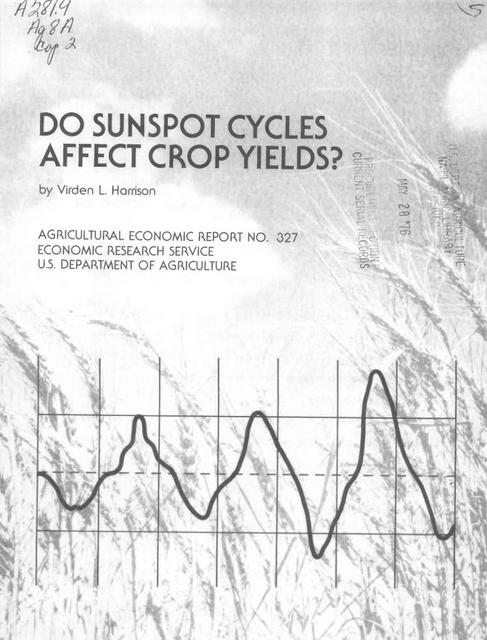
The mysterious sunspot cycle has a subtle influence on crop success, a study of wheat prices in the US suggests.
In 2003, astrophysicist Lev Pustilnik of Tel Aviv University and Gregory Yom Din, an agricultural economist at Haifa University, both in Israel, showed that wheat prices in 17th-century England were influenced by the solar cycle – whereby sunspot numbers rise and fall over a period of about 11 years (
New Scientist print edition, 20 December 2003).
Periods of low sunspot activity corresponded to peaks in the price of wheat, indicating a lower crop yield. This backs the idea that the solar cycle affects climate and crop yields on Earth, possibly by changing levels of cloud cover.
Now the team has done a similar analysis for wheat prices in the US during the 20th century. They did not expect to see a sunspot connection due to modern technologies that make crops more robust in unfavourable weather, globalised markets and massive economic disruption during two world wars.
But surprisingly, they did find a
link between numbers of sunspots and the price of wheat.
They suspect the effect persists because 70% of US durum wheat grows in one part of North Dakota, where localised weather conditions could have a dramatic impact on total production.