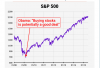
Or he grew and matured and realized that his personal wealth wasn't all important anymore and optimizing his tail risk avoidance wasn't the most important thing going on in his life. You can change your strategy based on a change in your outlook in life and you weren't by definition "wrong" either way. Happens to most of us as we get older.You guys are missing my point, it's not about me being paranoid about tail risks, its about the following:
Buffett owned "nothing but goverment bonds" all the way to 2008. Then, he took all of that and put into stocks. Clearly there was a 'risk management' of some kind that made him avoid stocks before 2008, perhaps he was being guided by utility (he wanted to ensure he was going to remain wealthy no matter what) or by something else, some sort of tail risk avoidance. Even though he found plenty of cheap stocks before that (and he bought them through Berkshire but NOT with his personal account), and he hates cash long term, YET he STILL avoided stocks with his personal account for YEARS.
But in 2008 that changed, valuations improved and he went "all-in", but as I have argued using Taleb's and the Kelly formula, in most instances more benefits (returns) do NOT warrant one throw caution at the wind like that. He junked his risk management either because:
1)He was being guided by something else, perhaps the deside to maximize Fame/Reputation rather than risk adjusted wealth
2)His is blind to tail risks and simply doesn't believe he can be wrong about the US, no matter what is thrown at the country. So perhaps he thought "ah, I was being paranoid about holding all these bonds, US will come back from this, no need to insure against something that I was insuring before, that was silly"
Either he made a "mistake" before 2008, or he made a "mistake" after it. The way he behaved does not look consistent
Also, it's very possible that he's far craftier than we give him credit for. The U.S. economy was in a tailspin and he had billions in Berkshire Hathaway and his foundation at risk. He is hands down the most respected money manager in the world. It means a great deal when he puts down all his money on the U.S., he actually has the ability to move markets with that kind of move by changing everyone's perception of how much confidence they should have in the U.S. economy at a time when there was a high level of irrational fear. Perhaps he was just signaling that the U.S. economy had his full faith and trust in the strongest possible way, in hopes that it would become a self-fulfilling prophecy of a sort for the entire economy. At the same time, that was a relatively minor investment given the giant tail of his other investments he was swinging with it.
Last edited: