Is volume analysis useful in index futures?

In futures, there is open interest besides volume. It puzzles me whether one should consider both open interest and volume in futures analysis. Which is more important consideration? Open interest or volume?
They are two different animals and can't really be compared. There is a way to analyse price movement using OI, but as I remember from decades ago OI is announced only weekly, but maybe that's changed. If not, using such for short term trading would not really work. And, in any event, IMHO OI analysis is really just guessing what the longs and shorts are doing. I have no 'open interest' in it!!

If you have to ask which is more important, I would guess that you have not given much study to volume. You may want to do so for a few months, and if you come to understand its value, you'll never enter a trade without considering it.
 
They are two different animals and can't really be compared. There is a way to analyse price movement using OI, but as I remember from decades ago OI is announced only weekly, but maybe that's changed. If not, using such for short term trading would not really work. And, in any event, IMHO OI analysis is really just guessing what the longs and shorts are doing. I have no 'open interest' in it!!

If you have to ask which is more important, I would guess that you have not given much study to volume. You may want to do so for a few months, and if you come to understand its value, you'll never enter a trade without considering it.

Fortunately, if one is trading price, no guessing is necessary: if buying interest outweighs selling interest, price will rise; if selling interest outweighs buying interest, price will fall. And that's all there is to it. One needn't trade price, of course. Many retail traders don't. They trade indicators. In fact, one can hardly see price on their charts, to the extent that there's really no need even to plot it, much less volume.

As to studying volume, I recommend the section posted here from The Richard D. Wyckoff Method of Trading and Investing in Stocks. It's only eight pages, and will answer many questions.
 
I trade with scant conscious reference to volume on index or other futures.

A friend uses volume in nearly every trading decision.

We are both scalpers to semi-swing traders. Occasionally taking a large trade. He is I guess somewhat Wyckoff founded.

So without using volume and sufficiently capitilized to avoid ulcers, fair money is made. We did a similar dollar value on the same subset of instruments over the six months I selected, all things considered we were putting in similar time and effort. Illness and personal life stuff affects things however, keep calm and carry on etc. and it rebounds.

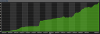
Looking at below it is a proxy for my health, mood and ability to filter outside influences. I decided to plan and take a big swing trade in Feb during a major house move & decoration.

In April I decided to start using volume as my friend did, it did not go well. I was impressed by his ability to call breakouts however.. he has been using volume for five years, a month was not enough time to adapt. I got frustrated and switched back to my old ways.

It is difficult to switch horses mid-race, mental conflict arises and the resultant bad days are obvious.

upload_2017-12-26_10-41-52.png


Once you accept that a partial grasp of the variables is sufficient it calms the mind. Is volume necessary to make good money at a retail trader level? No. At an institutional level? Probably, at least to justify the trades to investors and regulators.

Of course this is specifically Futures.
 

Attachments

  • upload_2017-12-26_10-1-28.png
    upload_2017-12-26_10-1-28.png
    31.9 KB · Views: 21
Last edited:
Once you accept that a partial grasp of the variables is sufficient it calms the mind. Is volume necessary to make good money at a retail trader level? No. At an institutional level? Probably, at least to justify the trades to investors and regulators.

Necessary? No. Useful (in re the title of the thread)? Yes. What is more important, however, is that you are at least open-minded about it, a rare quality on ET.
 
Necessary? No. Useful (in re the title of the thread)? Yes. What is more important, however, is that you are at least open-minded about it, a rare quality on ET.

Indeed, my open mind is somewhat hangover affected today.

Remembering I am anonymous, not a vendor I decided to leave the left axis in though once can be certain accusations will happen. Beginners need to see it actually can be done in retail. Whether or not it is they who can do it, another matter.

I would hazard however that had I started integrating volume at the beginning a few years back, I'd probably be more polished.
 
I think many might feel since price is in part caused by volume and yet when you see a huge bar and don't have "Market profile", you can't tell if there was volume all the way through one bar or volume at bottom and or top. But as in any indicator, trendlines to mark S&R or monkey throwing darts, can be way to reduce trades and must be done IMHO, of back testing and studying the stats. Just by themselves, nothing works all the time nor work never of the time. I lean on as prices drop against strategy system to add to position whereas many rather add on as trades becomes positive, each new rule either adds or takes away signals. Does any of it make a difference? It can if your back testing shows it will over ten plus years.

I believe that providing you can read charts well, make one system when there is divergence based on higher highs and less volume to buy at Ganns' 50% retracement or sell at 50% retracement might in certain timeframes, both could be profitable or both can be losing trades.

I this newer traders would do better that less is more and as your experience expands, more favorable signals added because the stats makes the decisions.

So can you make a living in sport of Bowling? I think bowling has become less and less of dying sport, but those who never went, just like trading, skills make the difference.

Have you explored much of Gann’s work? Any particular reference you would recommend for a beginner to understand his method from a bird’s eye view?
 
Indeed, my open mind is somewhat hangover affected today.

Remembering I am anonymous, not a vendor I decided to leave the left axis in though once can be certain accusations will happen. Beginners need to see it actually can be done in retail. Whether or not it is they who can do it, another matter.

I would hazard however that had I started integrating volume at the beginning a few years back, I'd probably be more polished.

I quickly discovered (unless one’s automated) the necessity to refrain from trading fast timeframes while incorporating new material. It’s too tempting to apply bits and pieces of a method without being firmly grounded in the basic concept and principals.

Others might have more success doing it but I’m more of a methodical plodder.
 
Back
Top