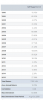
It's on their sales documents on their site. By law they have to list the max peak to trough drawdown. It's 67% in 2008.
Correction: It's 63%. My mistake.
Correction: It's 63%. My mistake.

Got it. I missed max draw down. Tough for sure, and most investors would be freaking out. But they knew what they were doing and survived. The strategy is called Aggressive after all.Here you go. Let's call it 64%.
None of the 6 "answers" have any value. Only one respondent presents any data, and his data are % that expire worthless, a common mistake. What matters is expectation.
Hi KTM,To be fair, the question is a bit one dimensional - and a bit nonsensical - if that's a word.
Options are far from one dimensional, nor do they occur in a vacuum. The concept of explicitly buying (or selling) them and systemically holding to expiry is not practical nor engaged in by nearly anyone that understands them. I think a lot of options traders start out that way, until we have some limit down nights.
They were designed as a tool to protect (or enhance) an investment in the underlying. Probably about 30 seconds later, outright speculation began. Most of the folks I know that deal in them in any meaningful way (as speculators) are using spreads and are both buying and selling - as I do. Of course there are institutions that are protecting significant underlying positions as well.
None of the 6 "answers" have any value. Only one respondent presents any data, and his data are % that expire worthless, a common mistake. What matters is expectation.