
You are using an out of date browser. It may not display this or other websites correctly.
You should upgrade or use an alternative browser.
You should upgrade or use an alternative browser.
is it hard?
- Thread starter met1989
- Start date


Robert Morse
Sponsor
Wow, and no sarcasm. Good for you destriero . It is not clear to me he wanted to do a buy-write vs just be short from his question.Price the same strike put as the short call. The difference in the price of the put and the extrinsic value of the call will be the same (absent rates & divs) Short 100 call = short shares & short 100 put. So put value = call time value.
Last edited:
what?Wow, and no sarcasm. Good for you D. It is not clear to me he wanted to do a buy-write vs just be short from his question.
Wow, and no sarcasm. Good for you destriero . It is not clear to me he wanted to do a buy-write vs just be short from his question.
Wanted to let him know how to price/conceptualize the vol-component in the DITM option, short-call in this case, as expressed as the synthetic.
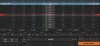
Below is a Nov exp 10% ITM call and same-strike put on GOOGL. On the far-right you can see that the deltas (ignore sign) approximate 100. The (85.87) and 14.14 figures.
The embedded "time value" in the call is equivalent to the premium in the *same-strike* put. Summing their deltas = 100. It's only 1bp off. 85.87 + 14.14 = 100.01 deltas. Obv deltas are delimited to 100. Your delta-marks can show you edge w.r.t. the arbitrage if you're holding locks.
The premium equivalence (8.90) is governed by the conversion arbitrage: buy 100 shares; sell 1060C; buy 1060P. You're long 100 shares naturally and short 100 shares via the 1160 synthetic short. You're long 100 GOOGL shares and short 100 shares in the option synthetic (short 1060C/long 1060P).
Further, you can do the same without the share-component in the arbitrage in buying say the 1150 synthetic and shorting the 1160 synthetic. You're then "long" the 50-60 box. It's a profitable arbitrage f you buy it at a discount to $10.00 (strike-differential), absent rates.
Put another way. What is the difference between a call and a put? Shares (conversion arbitrage).
The difference between a call spread and a put spread? The box.
Last edited:
The embedded "time value" in the call is equivalent to the premium in the *same-strike* put.
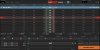
[nitpicking] In your GOOGL example, a Call actually has more extrinsic values than its corresponding Put of the same strike and maturity. See 11.28 vs 9.15 in the attached screenshot.
Similar for indices like SPY, where calls are trading with more extrinsic values than puts right now.
Conversely, puts can be trading with more extrinsic values than calls. See another thread on a hard-to-borrow stock TLRY for example. https://www.elitetrader.com/et/threads/324953/
Attachments
Last edited:
hey
is it hard to sell in the money but very deep in the money like 10% how to profitfrom it wait for expiry or are there other ways?
Yeah, pretty hard but we'll get your money before Deshiterio.