
Is God mute?

When man became self-aware he also became aware of his own mortality. In order to salve his fear of death and his sorrow for the death of those he loved he created GOD.

God is man's mythical 'savior' from his inevitable death. He dreams of an 'afterlife' in which he has a continued existence and in which he can imagine the continued existence of those he has loved.

It is all myth.

Though one were strong as seven,
He too with death shall dwell,
Nor wake with wings in heaven,
Nor weep for pains in hell;

Though one were fair as roses,
His beauty clouds and closes;
And well though love reposes,
In the end it is not well.

Pale, beyond porch and portal,
Crowned with calm leaves, she stands
Who gathers all things mortal
With cold immortal hands;

Her languid lips are sweeter
Than love's who fears to greet her
To men that mix and meet her
From many times and lands.

She waits for each and other,
She waits for all men born;
Forgets the earth her mother,
The life of fruits and corn;

And spring and seed and swallow
Take wing for her and follow
Where summer song rings hollow
And flowers are put to scorn.

There go the loves that wither,
The old loves with wearier wings;
And all dead years draw thither,
And all disastrous things;

Dead dreams of days forsaken,
Blind buds that snows have shaken,
Wild leaves that winds have taken,
Red strays of ruined springs.

We are not sure of sorrow,
And joy was never sure;
To-day will die to-morrow;
Time stoops to no man's lure;

And love, grown faint and fretful,
With lips but half regretful
Sighs, and with eyes forgetful
Weeps that no loves endure.

From too much love of living,
From hope and fear set free,
We thank with brief thanksgiving
Whatever gods may be

That no life lives for ever;
That dead men rise up never;
That even the weariest river
Winds somewhere safe to sea.

Then star nor sun shall waken,
Nor any change of light:
Nor sound of waters shaken,
Nor any sound or sight:

Nor wintry leaves nor vernal,
Nor days nor things diurnal;
Only the sleep eternal
In an eternal night.


Charles Algernon Swinburne....The Garden of Proserpine. 1866
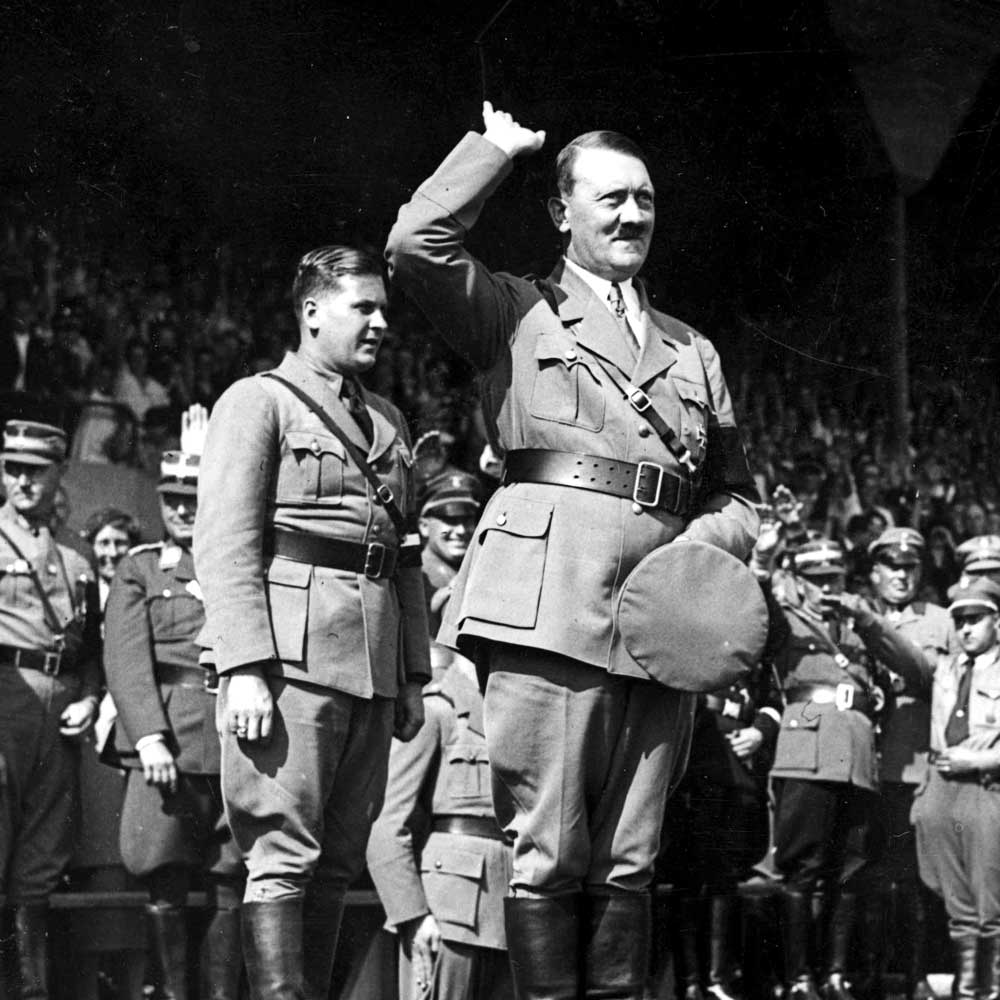


My feeling as a Christian points me to my Lord and Savior as a fighter. It points me to the man who once in loneliness, surrounded only by a few followers, recognized these Jews for what they were and summoned men to fight against them and who, God's truth! was greatest not as a sufferer but as a fighter. In boundless love as a Christian and as a man I read through the passage which tells us how the Lord at last rose in His might and seized the scourge to drive out of the Temple the brood of vipers and adders. How terrific was his fight against the Jewish poison. Today, after two thousand years, with deepest emotion I recognize more profoundly than ever before the fact that it was for this that He had to shed his blood upon the Cross. As a Christian I have no duty to allow myself to be cheated, but I have the duty to be a fighter for truth and justice. And as a man I have the duty to see to it that human society does not suffer the same catastrophic collapse as did the civilization of the ancient world some two thousand years ago—a civilization which was driven to its ruin through this same Jewish people.

Then indeed when Rome collapsed there were endless streams of new German bands flowing into the Empire from the North; but, if Germany collapses today, who is there to come after us? German blood upon this earth is on the way to gradual exhaustion unless we pull ourselves together and make ourselves free!

And if there is anything which could demonstrate that we are acting rightly, it is the distress that daily grows. For as a Christian I have also a duty to my own people. And when I look on my people I see them work and work and toil and labor, and at the end of the week they have only for their wages wretchedness and misery. When I go out in the morning and see these men standing in their queues and look into their pinched faces, then I believe I would be no Christian, but a very devil, if I felt no pity for them, if I did not, as did our Lord two thousand years ago, turn against those by whom today this poor people are plundered and exploited.

Speech delivered at Munich 12 April 1922; from Norman H. Baynes, ed. (1942). The Speeches of Adolf Hitler: April 1922-August 1939. 1. New York: Oxford University Press. pp. 19-20.

https://en.wikiquote.org/wiki/Adolf_Hitler's_religious_views

Hitler-Youth-Rally-Nuremberg-1934.12.19.jpg

http://skepticism.org/timeline/may-history/5947-hitler-gives-speech-importance-obeying-orders.html


http://lybio.net/tag/donald-trumps-hitler-speech/


Vanity Fair: Trump kept a Volume of Hitler’s Speeches By His Bedside

Vanity fair article from 1990, Trump kept a volume of Hitler’s speeches by his bedside.

Yeah.

Now, I didn’t know if this was true. So I said – you know, I’ve seen a lot of Hitler’s speeches on you know – old documentary some stuff. But I don’t sprechen sie German. I don’t know what he was saying.

So I had one of Hitler’s speeches translated into English and I think this tells us a lot about where Donald Trump is getting his ideas. Look at this Hitler’s speech and we’ve translated for you.

Thank you, thank you. We’re going to make Germany great again, that I can tell you. Believe me.

Germany doesn’t win anymore.

England, France, America – they’re laughing at us. The Treaty of Versailles? A terrible deal!

We have stupid people who are our leaders, really stupid people making terrible deals.

... ...


I wonder if Donald Trump did really understand what he was putting himself into.
The sharks in the business world are, more often than not, shredded by politicians.
 
When man became self-aware he also became aware of his own mortality. In order to salve his fear of death and his sorrow for the death of those he loved he created GOD.

God is man's mythical 'savior' from his inevitable death. He dreams of an 'afterlife' in which he has a continued existence and in which he can imagine the continued existence of those he has loved.
...

Happened to see this in the Times:

http://www.nytimes.com/2016/08/29/opinion/why-we-never-die.html?smid=tw-share

He's working pretty hard at a pretty unconvincing thesis.
 
When man became self-aware he also became aware of his own mortality. In order to salve his fear of death and his sorrow for the death of those he loved he created GOD.

God is man's mythical 'savior' from his inevitable death. He dreams of an 'afterlife' in which he has a continued existence and in which he can imagine the continued existence of those he has loved.

It is all myth.

Though one were strong as seven,
He too with death shall dwell,
Nor wake with wings in heaven,
Nor weep for pains in hell;

Though one were fair as roses,
His beauty clouds and closes;
And well though love reposes,
In the end it is not well.

Pale, beyond porch and portal,
Crowned with calm leaves, she stands
Who gathers all things mortal
With cold immortal hands;

Her languid lips are sweeter
Than love's who fears to greet her
To men that mix and meet her
From many times and lands.

She waits for each and other,
She waits for all men born;
Forgets the earth her mother,
The life of fruits and corn;

And spring and seed and swallow
Take wing for her and follow
Where summer song rings hollow
And flowers are put to scorn.

There go the loves that wither,
The old loves with wearier wings;
And all dead years draw thither,
And all disastrous things;

Dead dreams of days forsaken,
Blind buds that snows have shaken,
Wild leaves that winds have taken,
Red strays of ruined springs.

We are not sure of sorrow,
And joy was never sure;
To-day will die to-morrow;
Time stoops to no man's lure;

And love, grown faint and fretful,
With lips but half regretful
Sighs, and with eyes forgetful
Weeps that no loves endure.

From too much love of living,
From hope and fear set free,
We thank with brief thanksgiving
Whatever gods may be

That no life lives for ever;
That dead men rise up never;
That even the weariest river
Winds somewhere safe to sea.

Then star nor sun shall waken,
Nor any change of light:
Nor sound of waters shaken,
Nor any sound or sight:

Nor wintry leaves nor vernal,
Nor days nor things diurnal;
Only the sleep eternal
In an eternal night.


Charles Algernon Swinburne....The Garden of Proserpine. 1866
Have you read any Ernest Becker?
 
Have you read any Ernest Becker?

Ernest Becker Hmm. The Denial of Death. 1974.

I know that year because it has several reasons for me to remember it.

1. I bought one of my most precious possessions that year. A grandfather clock. The year is embossed in gold so I see it every time I clean the clock.

2. I left my academic position in that year to start my own company.

#2 connects to Ernest Becker.

Ernest Becker was a classic example of the horribleness, and uselessness of being an academic. He spent his whole life shuffling from academic position to academic position.

Working and reworking the same ideas trying to justify keeping his job.

https://en.wikipedia.org/wiki/Ernest_Becker

Yes he got to write a Pulitzer prize winning book. A Pulitzer gets you $10,000. Not enough to finance a down payment on a house. Won't even buy you a decent used car. There is an Ernest Becker Foundation. Funded by a rich doctor who read and liked the book and, having a lot of money, created a foundation. Why not. Becker himself died a relative pauper.

The book is read by students who then put it into their book shelves and forget about it. When they die it sells for fifteen cents.

His ideas were actually quite pedestrian. Swinburne is 1866. A lot of water under the bridge.

Have I read him? His book used to be on my book shelves but it's not there any more. It must be in those boxes in the back of my garage waiting for me to die.
 
so how do you really feel about him and his book.
I feel wrong laughing about that on a Sunday morning... but that was pretty humorous.


Ernest Becker Hmm. The Denial of Death. 1974.

I know that year because it has several reasons for me to remember it.

1. I bought one of my most precious possessions that year. A grandfather clock. The year is embossed in gold so I see it every time I clean the clock.

2. I left my academic position in that year to start my own company.

#2 connects to Ernest Becker.

Ernest Becker was a classic example of the horribleness, and uselessness of being an academic. He spent his whole life shuffling from academic position to academic position.

Working and reworking the same ideas trying to justify keeping his job.

https://en.wikipedia.org/wiki/Ernest_Becker

Yes he got to write a Pulitzer prize winning book. A Pulitzer gets you $10,000. Not enough to finance a down payment on a house. Won't even buy you a decent used car. There is an Ernest Becker Foundation. Funded by a rich doctor who read and liked the book and, having a lot of money, created a foundation. Why not. Becker himself died a relative pauper.

The book is read by students who then put it into their book shelves and forget about it. When they die it sells for fifteen cents.

His ideas were actually quite pedestrian. Swinburne is 1866. A lot of water under the bridge.

Have I read him? His book used to be on my book shelves but it's not there any more. It must be in those boxes in the back of my garage waiting for me to die.
 
Back
Top