Is Credit Spread really profitable?

I can't figure this one out ... You know you are picking pennies in front of a steamroller, so the answer is to trade small. How small to make it meaningful though? I just can't understand why retail trader would play this game with personal funds without any possibility to scale? I'm getting a feeling many people simply find it intellectually challenging. But I guess nothing wrong with learning new things, should pay benefits sooner or later.

I meant on a single position.. but yes , your point makes sense.
 
Stops don't work very well with options in my experience. They move too much, get triggered really easily without need, so you have to put in so much slack that it's not worth the approach. IMO, the whole point of the credit spread is that the risk management is built right into the trade structure itself.

People still use stops? And stops on options? Oh man..
 
"And stops on options? Oh man.."

I was going to express the same sentiments, but then someone informed us that it is because we don't understand stops. I'll google them later.
 
"And stops on options? Oh man.."

I was going to express the same sentiments, but then someone informed us that it is because we don't understand stops. I'll google them later.

Wow, I never got that emergency telegram with the all-caps bold red lettering. I must not be one of "us" yet. Sooo jealous...

Who was it that informed that universal but still highly exclusive group that none of you understand stops? Must be some moron who specializes in absolutes.

Nah, can't possibly be anybody like that here on ET.
 
Lately I was working on credit spread strategy and saw many conflicts. The losers are far out-sized, and even with extremely high winning rates, can barely offset losses.

* If we sell .70 delta credit spreads. Assuming 100 width spread, and if we could collect 25% of width as credit, and lot size 100, gives expected value (% prob * return * lot size):

  • Winning trades approximately 0.70 * 25.0 * 100.0 = $1750.0
  • Loosing trades approximately 0.30 * -100.0 * 100.0 = - $3000.0
  • Net is net negative

* I can change delta and go out further, but that will lower credit. I could try more credit, but that will push me towards ATM options. Even if my assumptions are wrong and we can get over 25% of spread width as credit, the overall calculation won’t change much.

* This calculation is based on no management. If we take profit early (and/or cut losses earlier), results could be worse – as the probability of touch is much higher than delta probabilities suggests. The moment we actively manage the positions, we might get knocked off the trades often, and the winners may make even less.

* Assuming that the IV is usually overstated - for indexes etc. IV been quite low and unless we wait long to place our trades, that advantage is minimal (any may work in both direction).

Is there any statistical study which proves that this strategy is profitable long term? If yes, under what scenarios? Any reason media is advertising this as a best strategy ever discovered?

The edge is not in the credit spread. If that was the case we would all be printing money selling iron condors and strangles. The edge is usually in the mean reversion of implied volatility.
 
The edge is not in the credit spread. If that was the case we would all be printing money selling iron condors and strangles. The edge is usually in the mean reversion of implied volatility.

In my research, the edge is in identifying market environment. Is this the right time to sell a credit spread or buy a straddle or stay flat?

Selling low vix environments and buying high vix markets works great.
 
Wait, is this the opposite of below?

Sort of, yes = why IMO most short vol funds fail.

The market is leptokurtotic, and volatility is clumpy. While in general I am not a big fan of mean reversion , mean reversion can work if done within the same market environment. The problem is vol sellers be selling vol :). Short vol sellers tend to have a low level of sophistication .
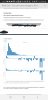
Once a high vol market environment is established, GTFO of short vol. Volatility is highly "clumpy", blowing short sellers out in the process, especially if they are betting on mean reversion into a tail event market .
 
Here is a piece of a research report I did. May be tough to decipher BUT basically this chart shows how short vol is FAR more profitable in low vol environments than in high vol environments.

I compared profitability of a 1stdv to 2stdv put spread sale VS selling the straddle in various 30 day atm iv tranches.

Long story short when vix is less than 18, sell vol. When vix is higher than 28, get flat. When vix is higher than 35, BUY VOL!
 

Attachments

  • Screenshot_20190826-090826_Word.jpg
    Screenshot_20190826-090826_Word.jpg
    340.5 KB · Views: 55
Short vol sellers tend to have a low level of sophistication .
You are referring to retail traders, right? I thought that professional premium sellers are part of the largest institutions and are very sophisticated. Or is there no such thing as professional desks dedicated exclusively to premium selling?
 
Back
Top