You know his name's not Todd right?todd uses webull? i heard alot of degenerate reddit noobs all use rh or webull to trade. don't know if that is true or not?

You are using an out of date browser. It may not display this or other websites correctly.
You should upgrade or use an alternative browser.
You should upgrade or use an alternative browser.
Index trading course where can I find a good one?
- Thread starter andy_p
- Start date

You are full of shit with your Hanweck claims. And your coding snippet is absolutely laughable. You totally ridiculed yourself once again. Enough said.
lol I never made any claims other than identical software builds run a lot faster on the Lambda than my Xeon. Hanweck/CBOE told me about webull.
These are YOUR claims.. like the claim you're sitting on $10MM in T Bills. Like you're female and have children. Shall I go on?
Last edited:
You seem busy losing wagers on this thread.
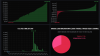
ok stonk market is closed. end up making $862.50 for the day in trading the stonk market and $0 doing door dash.
Attachments

Since you’re selling courses and claiming to be expert on institutional order flow, market structure etc, so let’s put options aside for a moment, and can you please give us (“non-institutional traders”) a quick lesson on the SPX institutional order flow?
About 20 years ago, I was mentored for 12 months by Kevin Haggerty. He was a head trader for Fidelity (one of the largest institutions in the world), and so I have fairly good idea about how the biggest intuitions work their orders, so I’ll keep you honest.
You can start with how market makers look at the order flow in their books in the morning, how they decide in which direction they’ll take the stock in the morning, how far they’ll run it up or drop it down, and their reasoning behind it.
Thanks
Index MMs don't "decide which direction they'll take the stock in the morning / run it up or drop it down" etc.
That may be a feature for a DPM in an individual equity where they hold a meaningful portion of the OI, but obviously SPX / NDX etc- no single MM is playing that game. Leave that conjecture to r/wallstreetbets. (Maybe 20 years ago there was more manipulation of index...)
What do you want to know about institutional order flow in SPX, today?
It's obviously been dominated for some time now by short vol strats in some form or another. Everyone's making a big deal of the public facing ETF growth (JEPI / XLYD) but as you probably are aware, short vol has been a feature of the index space for a long time now- and especially post-2008.
If you want to get into the weeds-
I think most outside observers look at prior crashes vs current selloffs and compare spot-vol dynamics, making all sorts of assumptions that miss a very obvious and easy to grasp structural change in the market.
If you traded the crash during Q4 2018- you'll know what I mean very intuitively. A lot of the short vol used to be deployed in iron condors and short ~5-8% OTM puts inside of 6 weeks to maturity. The notional there was not trivial... at any given point in 2018 you had Harvest & UBS collectively short 200,000 SPX iron condors within 8 weeks. Additionally, you had another Put Write fund short ~200,000 SPX puts in that same time-frame.
Anyone just looking at GEX- you wouldn't pick this up, you might even think the market was "more short gamma" because of all those downside puts in the OI, but they were held long by dealers (I was one, at the time).
The functional difference then versus now- in 2018, when we'd sell off enough to pierce a defensive trigger, the fund would (systematically) come to market to close & roll their short options. This was true for the iron condors, and it was true for the puts.
So- if you have dealers continuously hedging long gamma, while you have initiators discretely hedging short gamma, you don't actually have a very supportive market when viewed solely through the lens of GEX / gamma flows. Arguably you have a more volatile one- if you conceptually think through the nature of the liquidity: a smooth absorptive bid on the way down punctuated by a liquidity-taking (options) / sell order which concentrates the entirety of the volume but all in one fell swoop.
The single biggest change structurally to the index volatility space over the last 5 years has been the collective shift out of defensive / tactical trading around short volatility positions into a mode which focuses on a greater dispersion of strikes and tenors while taking each (smaller bet) to maturity. It's overdue and intelligent- at least now the short vol strats tacitly use their positioning to their advantage- rather than the other way around.
AFAIK the only strats that have not made the shift are the GS XSP/ SPX put write & the Gateway / Nuveen overwrite... most of the other flows now have left rolling iron condors and short puts to the past, and target 7DTE tenors that are held to maturity.
That's why when people ask- "is the market different now"- waiting for VIX to show signs of life on the way down.. it's hard to say it's not. This is a meaningful change
how do you see the space

@carson_volsignals with all due respect, it seems like you’re confusing the terminology of “institutional market order flow” in equity markets vs order flow in the options markets.
The Greek stuff in your post has nothing to do with the subject of institutional market order flow in equity market, plus options don’t move the markets, it’s the big institutional elephants buying and selling stocks, not the option market.
There is much bigger world of trading beyond options which many option traders don't understand because lots of failed traders turn to options because it is relatively easy to make money from IV and theta (providing one has thorough knowledge of synthetics) rather than making money from picking directions.
The Greek stuff in your post has nothing to do with the subject of institutional market order flow in equity market, plus options don’t move the markets, it’s the big institutional elephants buying and selling stocks, not the option market.
There is much bigger world of trading beyond options which many option traders don't understand because lots of failed traders turn to options because it is relatively easy to make money from IV and theta (providing one has thorough knowledge of synthetics) rather than making money from picking directions.
@carson_volsignals with all due respect, it seems like you’re confusing the terminology of “institutional market order flow” in equity markets vs order flow in the options markets.
The Greek stuff in your post has nothing to do with the subject of institutional market order flow in equity market, plus options don’t move the markets, it’s the big institutional elephants buying and selling stocks, not the option market.
There is much bigger world of trading beyond options which many option traders don't understand because lots of failed traders turn to options because it is relatively easy to make money from IV and theta (providing one has thorough knowledge of synthetics) rather than making money from picking directions.
We are just talking different things. I don't challenge the notion that there is a massive world beyond that of options. And at times like these, when core assumptions on longer term rates are tested, for example, options & systematic flows take a back-seat.
Option & systematic flows, however, can be extremely impactful- especially when traditional liquidity is dormant or not particularly 'busy'.
Is there much about the current regime that is interesting, in your view? For a long time now it seems like we've been dominated by *mostly* passive flows into equities. Perhaps those winds are changing... maybe more your realm. How do you see the current regime or its changing?
And yes- I viewed this thread through the lens of index options / market structure- apologies for crossing over.
We are just talking different things. I don't challenge the notion that there is a massive world beyond that of options. And at times like these, when core assumptions on longer term rates are tested, for example, options & systematic flows take a back-seat.
Option & systematic flows, however, can be extremely impactful- especially when traditional liquidity is dormant or not particularly 'busy'.
Is there much about the current regime that is interesting, in your view? For a long time now it seems like we've been dominated by *mostly* passive flows into equities. Perhaps those winds are changing... maybe more your realm. How do you see the current regime or its changing?
And yes- I viewed this thread through the lens of index options / market structure- apologies for crossing over.
I cannot comment on your observations regarding gamma flows, etc, as it is outside of my circle of competency.
I’m guessing that you’re trading <15DTE and focusing on utilising every possible edge that deep understanding of options can offer, something that I don’t pay much attention to.
My current trading style is the opposite, I trade option spreads that are usually directional OTM wingspreads between 30-70 DTE, so they’re usually fairly stable structures to begin with, and then I swing trade around them, therefore I’m not really concerned with squeezing every edge from options as my main edge comes from TA. But I can imagine how useful your knowledge can be.
Regarding your question about the current regime, this time I’m not sure about the terminology, so this time I might cross over

There is no doubt that markets have changed, yet at the same time the human nature is always the same, so the changes are not a big deal.
Yes, as you say, we’ve been dominated by *mostly* passive flows into equities. I guess investors had not much else to choose from, and the money printing kept the market up for years. But as you’ve probably noticed, the last SPX rally was driven by just a few tech stocks, rest of the market didn’t participate.
What’s ahead? Nobody really knows. I make my directional decisions on weekly TFs and use daily TFs for setups / triggers and then I overlay the underlayings with option spreads, and then when the underlaying moves towards my target, I dissect, adjust and “massage the position” to lock in profits and to reduce the risk.
When everyone starts running for the exit door, stocks can gap down, options can be hard to fill, therefore doing daily fire drill and being prepared for any scenario is my general view on the current equity market. (if that’s what you meant by my view on the current market regime?)
Being few steps ahead of the crowd, and knowing how to construct option spreads at key reversal points when the order flow is changing works like a charm during current markets. You seem to be one of the very few who can sense that the winds are changing
https://www.elitetrader.com/et/threads/any-one-brave-enough-to-short-nvda.376032/4

Definitely Jim Dalton.
Here are my results after learning from him since 2018.
https://www.forexfactory.com/easytraider
Here are my results after learning from him since 2018.
https://www.forexfactory.com/easytraider