

My experience is with futures, and of course all electronic futures exchanges have very strict Message-to-Fill Ratio Policies, and it is usually just less than 20:1. CME, ICE and Eurex have those circulars posted on their websites buried in the exchange regulations.
An FCM has absolutely no control over enforcement - the exchange notifies the clearing firm directly and not the account holder - and the sh*t flows downhill from there. Violators almost always are notified by the clearing firm and not the exchange. And they take fines out of trading accounts in some cases, or restrict access to the end user.
Doesn't matter if you're a member or non-member as far as I am aware. Each cancel or replace or price change or quantity change is a message to the exchange that carries your own unique electronic footprint complete with identifiers.
The fact of the matter is that ECN infrastructure is currency to an exchange, and they get paid on executed trades and not electronic messages. I am very careful not to run my spread automation when markets are not trading at my level of interest, and I have software plug-ins to monitor my Message-to-Fill ratios. There have been times when I will fire off 1-lot orders and lose a few hundred dollars or more for the sake of satisfying my daily quota of fills versus messages. If you think about it, why would an exchange tolerate several hundred electronic communication messages in order to process only one fill?
In the futures world, at least, they want you to actually trade and not flood the ECN with a bunch of cute geek garbage. Maybe that's why the futures don't have the level of HFT ills as the equity markets.
An FCM has absolutely no control over enforcement - the exchange notifies the clearing firm directly and not the account holder - and the sh*t flows downhill from there. Violators almost always are notified by the clearing firm and not the exchange. And they take fines out of trading accounts in some cases, or restrict access to the end user.
Doesn't matter if you're a member or non-member as far as I am aware. Each cancel or replace or price change or quantity change is a message to the exchange that carries your own unique electronic footprint complete with identifiers.
The fact of the matter is that ECN infrastructure is currency to an exchange, and they get paid on executed trades and not electronic messages. I am very careful not to run my spread automation when markets are not trading at my level of interest, and I have software plug-ins to monitor my Message-to-Fill ratios. There have been times when I will fire off 1-lot orders and lose a few hundred dollars or more for the sake of satisfying my daily quota of fills versus messages. If you think about it, why would an exchange tolerate several hundred electronic communication messages in order to process only one fill?
In the futures world, at least, they want you to actually trade and not flood the ECN with a bunch of cute geek garbage. Maybe that's why the futures don't have the level of HFT ills as the equity markets.

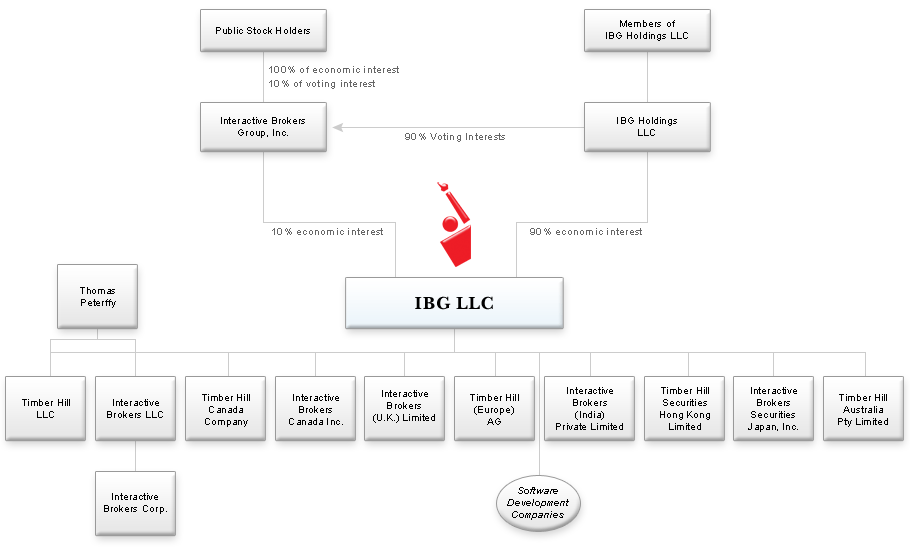
 But separation of the two entities may be rather difficult, given that "all properties are used by both our market making and electronic brokerage segments." Talk about Chinese walls... (src: