
IB has most number of profitable traders (2014)

I believe trader performance overall follows a standard bell curve distribution. If we view the whole amount of traders as group, most are breaking even in the middle of curve, on one side on the tail we have a small tranche of traders losing large amount of their account equity, on the other side we have a tail consisting of a minor group of traders making outsized returns.

.
thanks
Could you post any statistics that you base this on.
 
thanks
Could you post any statistics that you base this on.
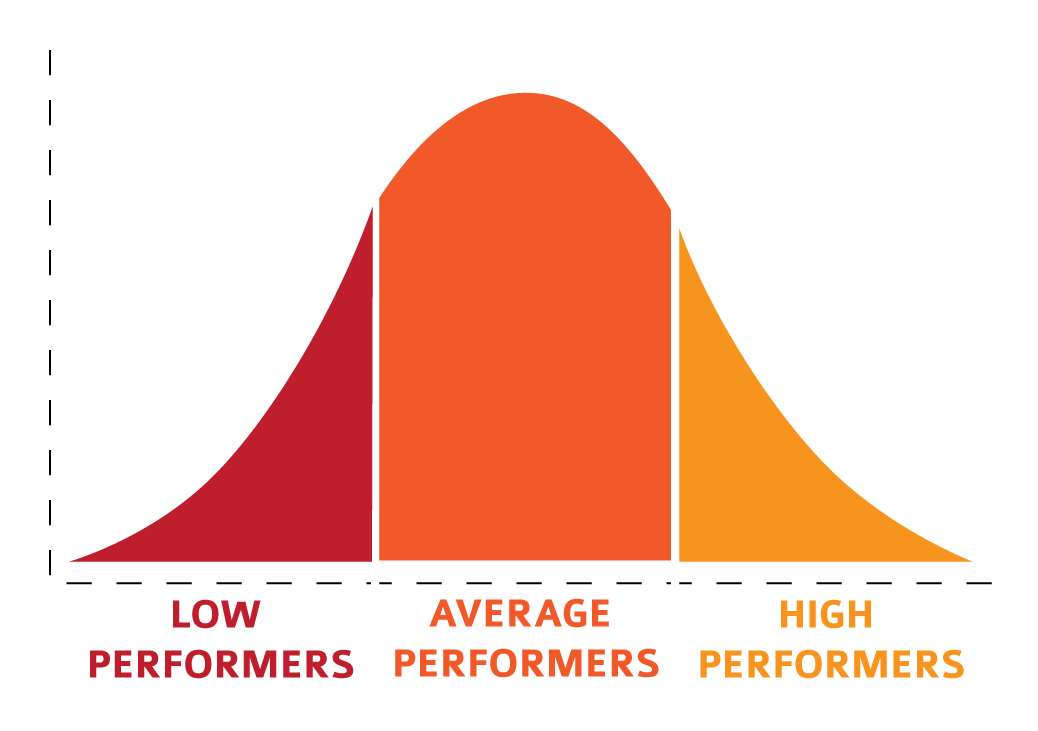
Well, I base it on the published brokerage statistics I have seen. On average as a group traders seam to be centred in the middle, maybe in the range of +10% to -10% if I guess. Traders with <2 years experience heavily on the negative side with outsized losses and traders with >15 years experience on the positive side of the curve. Which is just logical. The more trading experience and deep market understanding you acquire, the more consistent your returns will be.
 
I believe trader performance overall follows a standard bell curve distribution. If we view the whole amount of traders as group, most are breaking even in the middle of curve, on one side on the tail we have a small tranche of traders losing large amount of their account equity, on the other side we have a tail consisting of a minor group of traders making outsized returns.

This makes sense. I think the average amateur trader should break even before commissions (exactly zero alpha). If we include "investors" then there is probably even a small positive average. But there is selection bias. Unless you get a constant supply of new customers then after a while the surviving population of traders will be those who are succesful (skillful and lucky; or just lucky). This will bias the average up.

This is all before costs....


I'm not surprised that the stats are particularly bad for retail forex where the broker sets the spread rather than allowing their clients to trade in a competitive market (e.g. forex futures on the CME or an ECN with competitive setting of the bid/ask). If the spread is not set competitively, I'm sure people are paying far more spread on every trade, and that really adds up over time. This is also (to a lesser degree) a problem in equities, where there is competitive setting of bids/offers on the exchanges, yet some players can jump the queue through "broker internalization", "broker priority", or "sale of order flow to wholesalers".

I think its possible, just, to make reasonable money day trading the cheapest futures (down to timeframes of a few hours, not minutes). However using the typical spreads on forex spread bets (the most common way of trading amongst UK punters) you're likely to have a significantly negative sharpe. With that kind of average return it isn't suprising you get 90% plus of customers losing money.

(I don't want to repeat the points I made on the other thread about day trading...)

"Update: I’ve just confirmed it with IB, their numbers include all clients who’ve traded forex in a given quarter. Since IB has a massive clients base it means that if someone trades equities for a living and made an fx trade just once in a quarter – they would be included in this list. It explains how come IB has so many clients – most of them are not active forex traders but just traders who’ve traded forex at least once."

This includes me (I'm an IB client). I don't actively trade forex but I need to do so to cover my futures margin. So I made maybe a dozen forex trades last year. On which I lost a small amount of money. Although I was up overall I guess I would be counted as a loser. I'm not sure how representative I am though.

A few years back someone posted a 5 year stats of about 10 brokers. Not sure how folks gets their hands on this type of info from the broker unless they are brokers themselves that worked at the firm. I don't remember the specific numbers back then but they look similar to the stats roberk posted but just different brokerage firms.

Was it this guy http://theessentialsoftrading.com/B.../starting-to-detail-forex-profitability-data/?
 
I believe trader performance overall follows a standard bell curve distribution. If we view the whole amount of traders as group, most are breaking even in the middle of curve, on one side on the tail we have a small tranche of traders losing large amount of their account equity, on the other side we have a tail consisting of a minor group of traders making outsized returns.

graph-1-01.jpg


Then it comes to IB, I do know there is a lot of professionals trading there, like CTA's, Managed Accounts/Managed Futures businesses and small HF's. They also have a 20k limit to open an account, this weeds out non-liquid beginners forcing them to other brokers.

It's not going to be a bell curve. It's a skewed distribution with a fat right hand tail. The "winners" will continue to take marketshare from the "losers." So for every winner, there will be 3 losers. This is especially the case in zero-sum markets like derivatives and futures.
 
Back
Top