
How do you trade Natural Gas?

Hi Mav.. ive been following it almost every day. Been trading it.. but lately noticed there are some set patterns..
a) Initial move: Around 8:20 am or so, Secondary move.. and then a third move around 1:30
b) Certain patterns like if secondary move is all the way up.. then around 1:30 usually comes off etc
c) Trend line break or respect of the 5 min trend line..

Will try to get some charts so i can share these patterns and maybe exchange some ideas.. if open i can also message u
 
Can i ask if you are trading ACD.. what is the opening range you use for NG? I do 9 am to 9:20 am.. seems ok.. but was just more trial and error.. any recommendations?

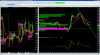
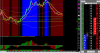
Just sharing some charts
 

Attachments

  • NG5minCumDelta.png
    NG5minCumDelta.png
    61.3 KB · Views: 42
  • NGMain.png
    NGMain.png
    65.3 KB · Views: 40
Hi Mav.. ive been following it almost every day. Been trading it.. but lately noticed there are some set patterns..
a) Initial move: Around 8:20 am or so, Secondary move.. and then a third move around 1:30
b) Certain patterns like if secondary move is all the way up.. then around 1:30 usually comes off etc
c) Trend line break or respect of the 5 min trend line..

Will try to get some charts so i can share these patterns and maybe exchange some ideas.. if open i can also message u

A few suggestions for you. I would focus on trading natural gas spreads (futures spreads), not the outright. Two, forget about trend lines, learn more about the fundamentals of natural gas and volatility. Natural Gas is highly influenced by weather demand and ignoring that is playing with fire. The EIA website is a great place to start. Start tracking storage. Natty follows storage levels very closely. They even have futures on end of season storage but not very liquid.
 
Will do.. thanks.. so 2 part question
a) for day trading.. do u use the front month calendar spreads? (i know spreads are good for swing trading and if u see some threads here and on FIO.. im trying.. though slowly trying to learn)

b) If you are swing trading the spreads.. do u use any technical indicators on the chart? and what timeframe chart do u use? (they say usually prop traders dont use any indicators or just one MA or RSI etc and trade on daily charts)

Of course what i am getting on reading up/comments on spreads is that fundamentals and statistics.. are much more important.. like superimpose multiple spread curves, see the forward curve.. other fundamentals like weather and storage and see if there are any opportunities on one of the spreads..

I know we can also use flys to mitigate risk.. so wondering if i can start looking at things the right way.. and with a proper method..
 
Share what? I trade it actively.
Hi Mav,

Can you share if you trade it at all during the slow summer months? Seems like at some point you may just take a summer break and wait until fall? Just curious as I don't trade it but have thought about trying to trading it on a sim to get a feel if I could trade it.

Thanks if you reply.
 
Hi Mav,

Can you share if you trade it at all during the slow summer months? Seems like at some point you may just take a summer break and wait until fall? Just curious as I don't trade it but have thought about trying to trading it on a sim to get a feel if I could trade it.

Thanks if you reply.

The summer is NOT the slow months. In fact, I predict this summer will be very volatile. Winters going forward will be much less volatile and summers more so. Volatility in natty is correlated to storage levels and natty is going to be very tight all summer. It's burned through the entire surplus the last couple of years and now LNG and exports to Mexico are getting very active. Fasten your seat belts, this summer is going to be wild.
 
I'm always amazed when I read about trading NG futures, one of those markets that seems almost impossible to model. The near term is driven by weather, which is not any easier to forecast than anything else, making the spot price a throw of the dice. The forward curve has pronounced seasonal patterns that eliminate any of the conventional curvature trades using intramarket calendar spreads. There is no other market that correlates with NG, so you don't have inter-market spread opportunities. And so-called "smart money" hedge funds (Amaranth) have epic fails trading NG, making widows of their clients. And yet, there is still a following for trading this market. Go figure.

Looks like an interesting book here:


Hedge Hogs: The Cowboy Traders Behind Wall Street's Largest Hedge Fund DisasterMay 21, 2013
by Barbara T. Dreyfuss
Hardcover
$ 9.97 (List Price $28.00)

At its peak, hedge fund Amaranth Advisors LLC had more than $9 billion in assets. A few weeks later, it completely collapsed. The disaster was largely triggered by one man: thirty-two-year-old hotshot trader Brian Hunter. His high-risk bets on natural gas prices bankrupted his firm and destroyed his career, while John Arnold, his rival at competitor fund Centaurus, emerged as the highest-paid trader on Wall Street. Meticulously researched and character-driven, Hedge Hogs is a riveting fly-on-the-wall account of the largest hedge fund collapse in history: a blistering tale of the recent past that explains our precarious present . . . and may predict our future.
 
So funny with trading....one guy says "impossible to model" the next guy says it's the "easiest to model".

My take is everything works and nothing works.

When traders say they don't do any predictions (or any relative/inter-market movement of directions), that saying itself is actually a huge prediction for that no predictions can be working well according to their trading models and skills (or whatever that can help them pretty well with supplying predictions).
 
Trading crude oil is fairly straightforward, news and talk everywhere of it...

However, how do you trade Natural Gas? EIA numbers? Dollar/oil correlation? All technicals?

How natural gas inventories impact prices
image007.png
Natural gas prices closely follow the natural gas inventories spread but in an inverse manner. Because of seasonality, the spread between natural gas inventories and their five-year average is more important.http://marketrealist.com/2017/06/why-the-inventory-spread-could-make-natural-gas-bulls-happy/
 
How natural gas inventories impact prices
image007.png
Natural gas prices closely follow the natural gas inventories spread but in an inverse manner. Because of seasonality, the spread between natural gas inventories and their five-year average is more important.http://marketrealist.com/2017/06/why-the-inventory-spread-could-make-natural-gas-bulls-happy/

There are a few firms that sell inventory #'s and other data they get by doing there own research using infrared cameras to look at the actual inventory in the tanks, helicopters, cameras on private land and some serious spy equipment. It is all legal, there was an article in WSJ a couple years ago about them. Very interesting.
 
Back
Top