Before my time, but I do not think that you are correct. It was the accounting and the financial statements that were the fraud. Go back and check the technicals. I think that they were indicating a problem.
Well, I was there, following markets for all of them.
By all accounts Enron started cooking the books in 1996. From 1996 to 1999 the stock did nothing but go up. In March of 2000 the NASDAQ hit a peak and the dotcom bubble started to burst. At that point the whole market started dropping. BUT NOT ENRON! It didn't hit it's peak until August of 2000.
Here is an excerpt from the Enron wikipedia page exemplifying how professional traders do analysis:
On September 20, 2000, a reporter at The Wall Street Journal bureau in Dallas wrote a story about how mark-to-market accounting had become prevalent in the energy industry. He noted that outsiders had no real way of knowing the assumptions on which companies that used mark-to-market based their earnings. While the story only appeared in the Texas Journal, the Texas regional edition of the Journal, short-seller Jim Chanos happened to read it and decided to check Enron's 10-K report for himself. Chanos did not think it made sense that Enron's broadband unit appeared to far outpace a then-troubled broadband industry. He also noticed that Enron was spending much of its invested capital, and was alarmed by the large amounts of stock being sold by insiders. In November 2000, he decided to short Enron's stock.
In November 2000, technical analysis suggested this stock was a buy. Fundamental analysis provided evidence of fraud.
Here is a timeline:
Technical analysis provided zero insight until March of 2001. It didn’t show the insider selling. Offered no clues about the fraud.
Enron had "strong" support @ $62 which then broke became resistance - the rest is history.
You are correct here, but you are conveniently ignoring the context. When $62 broke in March of 2001, Enron was still outperforming the market and it's peers. It is highly improbable that you would have actually put on that short with so many alternatives falling faster then Enron was at the time.
***
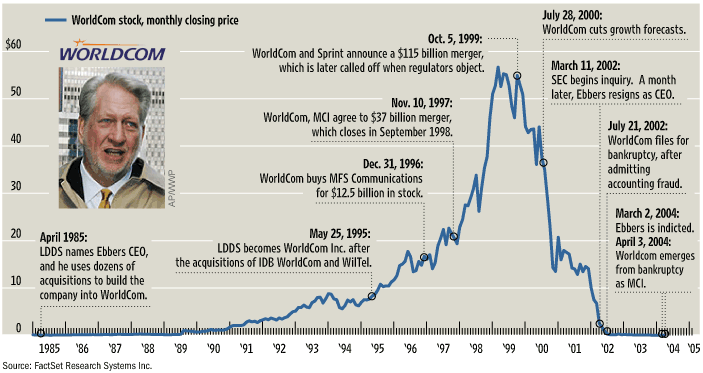
Worldcom started cooking the books in 1999. The stock didn’t break the uptrend line until August of 2000 when Worldcom lowered their growth outlook. Fraud wasn’t uncovered until Q1 2002.
Here is a chart:
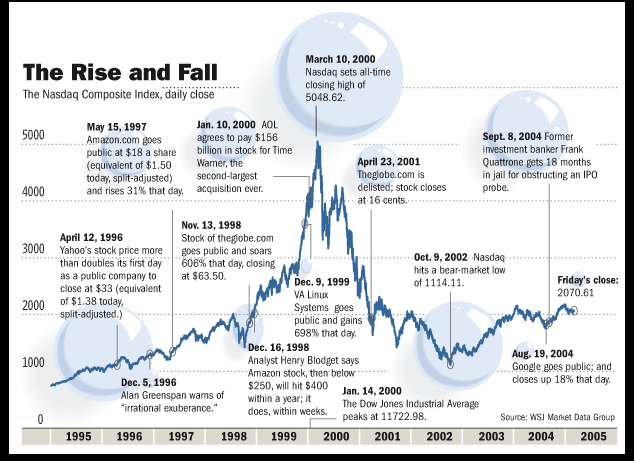
And yeah, techs might have gotten you in short around mid 2000, but take a look at this chart of the NASDAQ from 1995 to 2005:
The technical analysis that suggested to short Worldcom in mid 2000 would have had you looking to short the entire market by that point. Again… technical analysis told you nothing about the fraud. Worldcom outperformed the NASDAQ right up until the fraud was reveled in Q1 of 2002.
There is no hidden information in the chart. It is a list of prices paid. No more, no less.