
You are using an out of date browser. It may not display this or other websites correctly.
You should upgrade or use an alternative browser.
You should upgrade or use an alternative browser.
How do you avoid choppy markets?
- Thread starter Golden Retriever Trading
- Start date

I don't know what is going to happen next....if I have a signal, I take it.
What if that signal is distorted by sub-5-minute volatility? Do you scale in to a losing trade (as Brooks suggests is a workable strategy) to try to deal with chop or just take the substantial loss?
As you know I know and like Al but I don't trade like him. I am all in and all out, if it's a loss, it's a loss...no big deal. I trade my tick time frames, if there is a qualified signal, I take it.What if that signal is distorted by sub-5-minute volatility? Do you scale in to a losing trade (as Brooks suggests is a workable strategy) to try to deal with chop or just take the substantial loss?
The market moves the same on all TFs ignore TFs, its just merely the level of detail you require.
Scale in, yes you risk bigger losses, but less frequent and even bad trades get back to a small profit giving me an out, I dont take a 2nd or 3rd position if markets against me, looking for a cheap position 1 exit.
Tricky tricky game.
Scale in, yes you risk bigger losses, but less frequent and even bad trades get back to a small profit giving me an out, I dont take a 2nd or 3rd position if markets against me, looking for a cheap position 1 exit.
Tricky tricky game.

eh dah neh uh oohh ohh fook.
Quite describes.
AMEN
Quite describes.
AMEN

Here is the secret, assign a trend even when you are in chop.
How do you assign a trend (a direction) when you're in chop (a directionless market)?
Use a larger bar interval?How do you assign a trend (a direction) when you're in chop (a directionless market)?
or a smaller bar interval?

As far as know in the 1st book I read, he says the 1 min chart is noise. Also, it would be more useful to post a chart when you are discussing Wed's moves to highlight what you are talking about.
ES has fake out moves, so the best thing to do is not for example trade near the high of the day thinking it will break. In my chart we are not near the high of the day. If the high of the day breaks, you can then watch PA to see if it's a real break out or a failed breakout. For example, I would like to see full candles form above the high of the day and not a 1 tick spike above.
Obviously, my chart does not show my stops, but my stops are where the market would tell me that the trade is wrong. You don't want to just chase a move thinking you are going to miss out on profit. Even if you miss out on a swing up, you can then wait for a valid setup based on your trading plan. There are at least 1 - 2 or more setups per day. The bard wire formation is probably the only term I actually use from his book, since I use my own system. What I mean by bard wire may be different that in the book, but to me it's sideways price action that is too small to form a range that would allow a range trade setup.
ES has fake out moves, so the best thing to do is not for example trade near the high of the day thinking it will break. In my chart we are not near the high of the day. If the high of the day breaks, you can then watch PA to see if it's a real break out or a failed breakout. For example, I would like to see full candles form above the high of the day and not a 1 tick spike above.
Obviously, my chart does not show my stops, but my stops are where the market would tell me that the trade is wrong. You don't want to just chase a move thinking you are going to miss out on profit. Even if you miss out on a swing up, you can then wait for a valid setup based on your trading plan. There are at least 1 - 2 or more setups per day. The bard wire formation is probably the only term I actually use from his book, since I use my own system. What I mean by bard wire may be different that in the book, but to me it's sideways price action that is too small to form a range that would allow a range trade setup.
Barbed wire as Brooks defines it, as a tight trading range on the ES of 1-2 points, often during the noon hour, is extremely uncommon now that automated trading programs have taken over the futures markets post-2008. Sometimes the ES can start extreme HFT-based trending moves which recent price action suggests is unlikely during the 12:00 EST hour.
You can't say 1 minute charts are just noise and think 5 minute charts are meaningful. Brooks says every tick means something on the ES. 1 minute charts do have some information, but it's impossible to trade them without some form of automation, because often the big moves on the 1 minute chart are at the 1-30 second timeframe, this is where Brooks' dangerous claims of the ES being tradable for discretionary traders on such low timeframes raise alarm and concern.
For example, on Wednesday 3-23 at 10:30 EST there was a 15 minute buy signal on the ES suggesting a gap fill to 2042 or atleast a test of 2040 was a high probability. On the 1 minute chart the ES moved 5 points to make the high of the day, probably in under 30 seconds due to HFT. Any discretionary traders who bought near the highs of that HFT move would be forced to sell out at signifigant loss with a stop below that 1 minute bar or scale in even lower into what could be a new downtrend, increasing their risk:reward and risk of ruin. The market moved to 2031.50 in the next few minutes before testing 2036 and selling off to 2025. It's not noise, it just can be traded profitably and consistently by point-and-click traders while having any favorable risk:reward.
As far as know in the 1st book I read, he says the 1 min chart is noise. Also, it would be more useful to post a chart when you are discussing Wed's moves to highlight what you are talking about.
ES has fake out moves, so the best thing to do is not for example trade near the high of the day thinking it will break. In my chart we are not near the high of the day. If the high of the day breaks, you can then watch PA to see if it's a real break out or a failed breakout. For example, I would like to see full candles form above the high of the day and not a 1 tick spike above.
Obviously, my chart does not show my stops, but my stops are where the market would tell me that the trade is wrong. You don't want to just chase a move thinking you are going to miss out on profit. Even if you miss out on a swing up, you can then wait for a valid setup based on your trading plan. There are at least 1 - 2 or more setups per day. The bard wire formation is probably the only term I actually use from his book, since I use my own system. What I mean by bard wire may be different that in the book, but to me it's sideways price action that is too small to form a range that would allow a range trade setup.
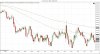
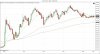
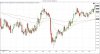
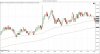
Here are some 1 minute charts of the ES including the HOD from Wednesday showing that the 1 minute charts have a very strong impact on the day's price action. The dangerous thing about this for discretionary traders, which Brooks fails to properly address, actually I think he says HFT has no impact on 1-5 minute PA, this could have been true prior to 2008.. The major moves within these 1 minute bars all happened in .01-10 seconds and would have happened faster if more discretionary traders were entering with limit or market orders, due to HFT adapting to order flow.
View attachment 163234 View attachment 163235 View attachment 163236 View attachment 163237
Here are some 1 minute charts of the ES including the HOD from Wednesday showing that the 1 minute charts have a very strong impact on the day's price action. The dangerous thing about this for discretionary traders, which Brooks fails to properly address, actually I think he says HFT has no impact on 1-5 minute PA, this could have been true prior to 2008.. The major moves within these 1 minute bars all happened in .01-10 seconds and would have happened faster if more discretionary traders were entering with limit or market orders, due to HFT adapting to order flow.
The night time ES chart you can eliminate. The resolution of price movements just wont justify the risk. Also I wonder how anyone can be fast enough to trade 1 min. Maybe with a good ui or some automation. You need to decide what setups you wanna play.
Forget about HFT. Why trade other peoples/robots trading habits within 1 min periods? Noise is to be expected.