How do I develop my day trading strategy?

Lot of interesting things in this thread, but people forget it is all about you and your psycho.
If you want to day trade and win, my advices:

1 HARD WORK
You won't get your own edge without hard work.
Imagine you are looking for a Phd in finance. Many are called, few chosen.
Write your ideas, test them. I repeat : write your ideas, test them.
Don't take things for granted. Why does it work and when ? What did I miss?
It is important to write your ideas, because sometimes you will be close to the answer, you will give up your idea, and 6 months / 1 year later, you understand you were right (or wrong) from a new perspective / angle. You would even forget you wrote these goods (or bad) ideas months ago

2 DISCIPLINE
It means you need to react accordingly to your own rules.
Same signal to enter / exit, same stops / take profits, same reaction. Be a robot (with a brain). No ego, just do what you have to do.

3 PATIENCE
Day trading is boring and repetitive. You need to increase regularly your stack, don't search for big gains. If you got an edge, probabilities are in your favor. Law of large numbers : the longer you play the same, the more you win.

Good luck by the way! The road is really long but I can confirm there is a light at the end of the tunnel. "Eureka"

CM

Cogent. Great points. Patience Stressed, Importance of Writing and Following a Trading Plan. Thanks.
 
I think teaching traders how to develop their own startegies is really hard. Everything comes from experience, traders should get to it by themselves.


Please excuse my mentioning how glad I am that nobody said that to me as an aspiring trader: at an appropriate point, I was recommended two or three of the well-established text-books offering advice on "how to develop your own trading system", without which I doubt very much whether I'd ever have got started to any appreciable extent.
 
I think teaching traders how to develop their own startegies is really hard. Everything comes from experience, traders should get to it by themselves.

Each to their own, everyone makes their own risk/reward assessment when they get into trading. For me, going it alone was the better choice because it didn't cloud my thinking while I was working things out and I knew I could come back to the books later if need be.
 
Okay, so I have been trying to figure this game out for almost 2 years. It's been a painful process. Started in stocks as investments in 2012 (which wasn't bad obviously in this bull market) then got into options selling premium (worked for awhile but found out, I'm essentially standing in front of a steamroller, the hard way. 2015 August anyone?). Finally, I decided to get into day trading futures.

As a rookie, I did try bunch of indicators, candle patterns, Fibonacci patterns, etc etc. but was never able to make consistent profits.

My issue is, after having tried this and that, I realized I need to really develop my own strategy first but I do not know exactly where to begin.

Let's say I'm looking for a strategy that trades anywhere between 3-10 times per day and would prefer a hard stop, how would you do it? What type of chart would you use? (tick? renko? minute? etc.) How many different charts would you look at? In other words, what are the variables?


I remember one guy scalped the ES 40-50 times per day for 1-3 ticks at a time with 70-90% success rate. He mentioned a lot of it were break-even trades but still. He used tick charts and might have had 1 minute chart on the side but not sure if he used them (no DOM or orderflow). How would someone develop this kind of strategy?

I'd really appreciate some guidance on this matter as I feel rather lost in how to advance from here on out.
Okay, so I have been trying to figure this game out for almost 2 years. It's been a painful process. Started in stocks as investments in 2012 (which wasn't bad obviously in this bull market) then got into options selling premium (worked for awhile but found out, I'm essentially standing in front of a steamroller, the hard way. 2015 August anyone?). Finally, I decided to get into day trading futures.

As a rookie, I did try bunch of indicators, candle patterns, Fibonacci patterns, etc etc. but was never able to make consistent profits.

My issue is, after having tried this and that, I realized I need to really develop my own strategy first but I do not know exactly where to begin.

Let's say I'm looking for a strategy that trades anywhere between 3-10 times per day and would prefer a hard stop, how would you do it? What type of chart would you use? (tick? renko? minute? etc.) How many different charts would you look at? In other words, what are the variables?


I remember one guy scalped the ES 40-50 times per day for 1-3 ticks at a time with 70-90% success rate. He mentioned a lot of it were break-even trades but still. He used tick charts and might have had 1 minute chart on the side but not sure if he used them (no DOM or orderflow). How would someone develop this kind of strategy?

I'd really appreciate some guidance on this matter as I feel rather lost in how to advance from here on out.
I would say if you are going to attempt to develop a scalping strategy, first you need to subscribe for and download good DOM software(jigsaw is sufficient). Then spend at least 15 full market sessions watching the ES in relation to the 30,10 and five years futures. Also gold is another contract you might want to add later on. The basic premise is as treasuries push session lows, equities almost always make an initial five-six tick up, and the opposite as T bills press session highs. During periods of stagnation in the T bills direction, watch for changes in behavior among the market participants on the offer compared to the participants on the bid. If you see offers quickly backing off as bids try to lift into them(drying up of liquidity on that side of the spread) it is a sign of weakness and the probability of a very short term price move is about to take place. The same pertains to bids quickly backing down lower as people try to step down into them. Take notes every 10 minutes on which side of the spread is more populated. Take note when the population differential changes. Mark that price. If the market starts to create a spread at this price(gap between bid and offer)a rejection could be about to take place. There are many nuances to observe as professionals make spreads. Markets trend through range extension generally only when the longer term time frame participants are engaged. Spotting other time frame participants besides the local and day time frame, can be a real edge if one can learn to see them among the order flow. The general rule is 20-15% of the time markets are trending. While the other 75-80% of the time markets are range bound between an upper extreme and lower extreme. So on the fairly rare occasion(20%) the long term participants enter the market, aside from adjusting inventories, they cause the longest price swings. Just download jigsaw and watch the ladders for 10 straight sessions. If you pick out various low volume areas from the profile and focus on them while observing the ladders you could catch a 35+ tick rejection. But that is market profile not scalping.
 
Last edited:
Each to their own, everyone makes their own risk/reward assessment when they get into trading. For me, going it alone was the better choice because it didn't cloud my thinking while I was working things out and I knew I could come back to the books later if need be.
It's all about finding the correct strategy for your psychology. If you excell at chess, try market profile(various openings, TPO's evolve across two sides of the distributions mean) kind of similar to a chess game. If your an architect or a mechanical inclined individual, trend following systems development or volume profile might fit your mental picture better. Once you find one you agree with, master every inch of it.
 
Cat: Where are you going?
Alice: Which way should I go?
Cat: That depends on where you are going.
Alice: I don't know.
Cat: Then it doesn't matter which way you go.

You've got to start with something you believe works (based on comments and reviews of your fellow trades). Stick with it until you learn it and understand it. If it doesn't suit you then, try going another way.
 
Hello guys.

It's been half a year since I started this thread and thought I would give some update and ask some further questions for those who are willing to offer me some advice.

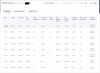
I received lots of help from folks here in ET and thanks to that I feel I have made significant progress. I managed to pass the combines and have been making decent profits in the funded account as you can see in the picture. I've been trading the funded account mostly the first 2 hours of RTH open. Trading 1 or max 2 ES contracts. So, if I count combine days + funded account days, I guess I managed to stay positive without breaking risk limits for about 2 months now. To be honest, with the type of range we have had, I don't feel it's much to brag about but to me was a significant improvement.

However, I can't help feeling that my current method only works thanks to the volatility and momentum the market has been providing. The break-outs have been awesome, pull-backs and continuations have been plenty. It's nice to be able to have big risk:reward even if I only get half my trades right.

My question is, how do you guys/gals deal with choppy days where ES does nothing literally the whole day. I ask this because past few years, ES had periods where it didn't do anything for months at a time. Getting fills at my preferred level felt impossible, finding the right condition to put on a trade felt impossible during those times. Especially if the RTH range is below 10 pts throughout the day.

My time frame involves 10,000 volume charts, 5min, and 1 min charts.

I was taught a few methods from very experienced traders here but never did really manage to duplicate the same results. Instead, what I took away from trial and error trying to apply those methods helped me improve, internalize some of the market momentum/rhythm and patterns. Yet, I have not found a proper way to trade low volatility/range choppy environment.

So, I would like to ask about what to look at to deal with those type of days. Bigger time frame? Smaller time frame? Micro support/resistance? Bigger stops?

I would really like to be able to trade all kinds of market environment, as I noticed the markets can stay choppy for a really long long time. I want to be trading full-time and I feel in order to do that, I still need a way to stay in the market (even if to scalp 3-4 ticks) watching for opportunities everyday.

I'm willing to do my research but this part still escapes me from where to start.

Anyway thanks for reading and all the help that has been given is much appreciated.
 

Attachments

  • Funded acct.jpg
    Funded acct.jpg
    131.1 KB · Views: 30
Back
Top