
You are using an out of date browser. It may not display this or other websites correctly.
You should upgrade or use an alternative browser.
You should upgrade or use an alternative browser.
Help me read a chart
- Thread starter KGTrader4
- Start date

Think of a base simply as a pre-move consolidation. It can have different shapes such as flat, a flag, a triangle, cup and handle etc. The concept is the same. A base can form at a major low or high as a head and shoulders formation or the inverse at a low. In all examples it is storing energy and matching buyers and sellers until one takes over.
Thanks. I always thought of a base as a more or less imperfect flat line, preferably a tight one, that lasts at least a few weeks. Although I realized after I posted that this is a weekly time frame so it was only two candles (meaning lines it’s not a candle chart) but that represented two weeks.
Thanks. I always thought of a base as a more or less imperfect flat line, preferably a tight one, that lasts at least a few weeks. Although I realized after I posted that this is a weekly time frame so it was only two candles (meaning lines it’s not a candle chart) but that represented two weeks.
Not sure if this way of looking at it will help or not, but you can see it had a clearly defined up move, clearly defined down move and than another clearly defined up move. So, in that sense it can be an important area / low, despite not necessarily basing out clearly visually across multiple bars.
Which book?I’m new, still learning, know the basics, but still a dummy. So ‘splain this to me..
the below chart is from the O’Neill book, HTMMIS. ITS SHOWN AS AN EXAMPLE OF A DOUBLE BASE. THE TWO BASES ARE MARKED. They don’t look like bases to me. What am I missing.
View attachment 279505
Yes helps a lot thank youNot sure if this way of looking at it will help or not, but you can see it had a clearly defined up move, clearly defined down move and than another clearly defined up move. So, in that sense it can be an important area / low, despite not necessarily basing out clearly visually across multiple bars.
Which book?
How To Make Money in Stocks.

Note that starting the learning process from a larger timesframes - 1 month / 1 week,
already places you at least few steps ahead from those begginers, who focuses on nano seconds & etc., so, good for you.
Tho, no book, nor advice, will be equal to your own experience, that will come through practice. Use demos for that.
already places you at least few steps ahead from those begginers, who focuses on nano seconds & etc., so, good for you.
Tho, no book, nor advice, will be equal to your own experience, that will come through practice. Use demos for that.

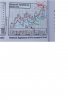
simply use a straight ruler.
buy when the lows are getting higher (see the green arrow).
notice that I crossed out the words 'BUY POINT'.
buy when it is low, not when it is so high.
Professional writers like to buy when things break record high.
after you read a book, and if you find it doesn't make sense,
go burn the book.
Yeah I have no interest in day trading, I’ve got other things I like to do, golf , Guitar, so I don’t want to be tied to a screen all day.Note that starting the learning process from a larger timesframes - 1 month / 1 week,
already places you at least few steps ahead from those begginers, who focuses on nano seconds & etc., so, good for you.
Tho, no book, nor advice, will be equal to your own experience, that will come through practice. Use demos for that.
I thought about maybe paper trading for a while first, I can do that on the TD Ameritrade trading platform. Not sure how realistic it will be though, since it’s not real money my mindset might be different, negating the benefit.