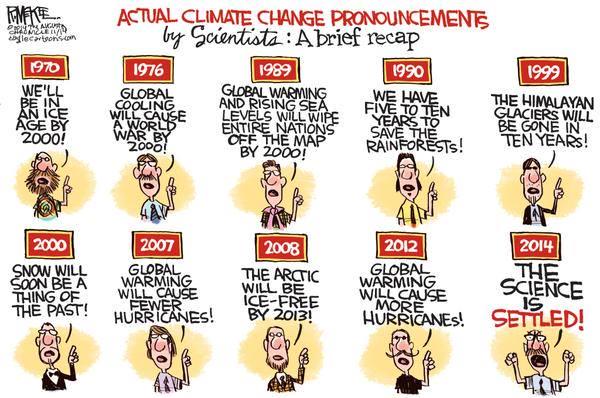
Nope. Those are not the quotes. Try again.
For one thing they never said "will".
So once again you post bullshit.
ROLF!!! Did too!

Nope. Those are not the quotes. Try again.
For one thing they never said "will".
So once again you post bullshit.
Nope. Those are not the quotes. Try again.
For one thing they never said "will".
So once again you post bullshit.

ROLF!!! Did too!
This took about 3 seconds to search Google and prove you wrong again.Nope. Those are not the quotes. Try again.
For one thing they never said "will".
So once again you post bullshit.
- There are better than even odds that anthropogenic warming over the next century will lead to an increase in the numbers of very intense hurricanes in some basins—an increase that would be substantially larger in percentage terms than the 2-11% increase in the average storm intensity. This increase in intense storm numbers is projected despite a likely decrease (or little change) in the global numbers of all tropical storms.
In this review, we address these questions in the context of published research findings. We will first present the main conclusions and then follow with some background discussion of the research that leads to these conclusions. The main conclusions are:
Hurricanes, typhoons, and cyclones have always bedeviled coasts, but global warming may be making matters worse. Sea level is rising and will continue to rise as oceans warm and glaciers melt. Rising sea level means higher storm surges, even from relatively minor storms, which increases coastal flooding and subsequent storm damage along coasts. In addition, the associated heavy rains can extend hundreds of miles inland, further increasing the risk of flooding.
Warmer water in the oceans pumps more energy into tropical storms, making them stronger and potentially more destructive. Even with storms of the same intensity, future hurricanes will cause more damage as higher sea levels exacerbate storm surges, flooding, and erosion.