
You are using an out of date browser. It may not display this or other websites correctly.
You should upgrade or use an alternative browser.
You should upgrade or use an alternative browser.
Global warming stopped 16 years ago...
- Thread starter Grandluxe
- Start date

fc - the issue fc is that you have no history to show co2 leads temps.
our long term chart show temps lead co2.
Your charts are inside the cycle. Your models are failing and your scientists admit fraud in their emails... and now some are saying co2 is still important but the sun and the ocean may be important too.
Which is the precursor to understanding your guys were bullshitting for grants.
http://www.dailymail.co.uk/sciencet...A-scientists-right-Thames-freezing-again.html
Forget global warming - it's Cycle 25 we need to worry about (and if NASA scientists are right the Thames will be freezing over again)
Met Office releases new figures which show no warming in 15 years
By DAVID ROSE
UPDATED: 00:38 EST, 29 January 2012
Comments (702)
Share
The supposed âconsensusâ on man-made global warming is facing an inconvenient challenge after the release of new temperature data showing the planet has not warmed for the past 15 years.
The figures suggest that we could even be heading for a mini ice age to rival the 70-year temperature drop that saw frost fairs held on the Thames in the 17th Century.
Based on readings from more than 30,000 measuring stations, the data was issued last week without fanfare by the Met Office and the University of East Anglia Climatic Research Unit. It confirms that the rising trend in world temperatures ended in 1997.
A painting, dated 1684, by Abraham Hondius depicts one of many frost fairs on the River Thames during the mini ice age
Meanwhile, leading climate scientists yesterday told The Mail on Sunday that, after emitting unusually high levels of energy throughout the 20th Century, the sun is now heading towards a âgrand minimumâ in its output, threatening cold summers, bitter winters and a shortening of the season available for growing food.
Solar output goes through 11-year cycles, with high numbers of sunspots seen at their peak.
We are now at what should be the peak of what scientists call âCycle 24â â which is why last weekâs solar storm resulted in sightings of the aurora borealis further south than usual. But sunspot numbers are running at less than half those seen during cycle peaks in the 20th Century.
Analysis by experts at NASA and the University of Arizona â derived from magnetic-field measurements 120,000 miles beneath the sunâs surface â suggest that Cycle 25, whose peak is due in 2022, will be a great deal weaker still.
More...
Hotter summers 'may kill 5,900 every year', warns first national risk assessment of climate change
Winter bites back: Britain braced for first cold snap of year as ice and snow transform countryside in scenes of breathtaking beauty
What are the mysterious blue balls that fell from the sky over Bournemouth?
According to a paper issued last week by the Met Office, there is a 92 per cent chance that both Cycle 25 and those taking place in the following decades will be as weak as, or weaker than, the âDalton minimumâ of 1790 to 1830. In this period, named after the meteorologist John Dalton, average temperatures in parts of Europe fell by 2C.
However, it is also possible that the new solar energy slump could be as deep as the âMaunder minimumâ (after astronomer Edward Maunder), between 1645 and 1715 in the coldest part of the âLittle Ice Ageâ when, as well as the Thames frost fairs, the canals of Holland froze solid.
Yet, in its paper, the Met Office claimed that the consequences now would be negligible â because the impact of the sun on climate is far less than man-made carbon dioxide. Although the sunâs output is likely to decrease until 2100, âThis would only cause a reduction in global temperatures of 0.08C.â Peter Stott, one of the authors, said: âOur findings suggest a reduction of solar activity to levels not seen in hundreds of years would be insufficient to offset the dominant influence of greenhouse gases.â
These findings are fiercely disputed by other solar experts.
âWorld temperatures may end up a lot cooler than now for 50 years or more,â said Henrik Svensmark, director of the Center for Sun-Climate Research at Denmarkâs National Space Institute. âIt will take a long battle to convince some climate scientists that the sun is important. It may well be that the sun is going to demonstrate this on its own, without the need for their help.â
He pointed out that, in claiming the effect of the solar minimum would be small, the Met Office was relying on the same computer models that are being undermined by the current pause in global-warming.
CO2 levels have continued to rise without interruption and, in 2007, the Met Office claimed that global warming was about to âcome roaring backâ. It said that between 2004 and 2014 there would be an overall increase of 0.3C. In 2009, it predicted that at least three of the years 2009 to 2014 would break the previous temperature record set in 1998.
So far there is no sign of any of this happening. But yesterday a Met Office spokesman insisted its models were still valid.
âThe ten-year projection remains groundbreaking science. The period for the original projection is not over yet,â he said.
Dr Nicola Scafetta, of Duke University in North Carolina, is the author of several papers that argue the Met Office climate models show there should have been âsteady warming from 2000 until nowâ.
âIf temperatures continue to stay flat or start to cool again, the divergence between the models and recorded data will eventually become so great that the whole scientific community will question the current theories,â he said.
He believes that as the Met Office model attaches much greater significance to CO2 than to the sun, it was bound to conclude that there would not be cooling. âThe real issue is whether the model itself is accurate,â Dr Scafetta said. Meanwhile, one of Americaâs most eminent climate experts, Professor Judith Curry of the Georgia Institute of Technology, said she found the Met Officeâs confident prediction of a ânegligibleâ impact difficult to understand.
âThe responsible thing to do would be to accept the fact that the models may have severe shortcomings when it comes to the influence of the sun,â said Professor Curry. As for the warming pause, she said that many scientists âare not surprisedâ.
She argued it is becoming evident that factors other than CO2 play an important role in rising or falling warmth, such as the 60-year water temperature cycles in the Pacific and Atlantic oceans.
âThey have insufficiently been appreciated in terms of global climate,â said Prof Curry. When both oceans were cold in the past, such as from 1940 to 1970, the climate cooled. The Pacific cycle âflippedâ back from warm to cold mode in 2008 and the Atlantic is also thought likely to flip in the next few years .
Read more: http://www.dailymail.co.uk/sciencet...ight-Thames-freezing-again.html#ixzz29IQeEl4Y
Follow us: @MailOnline on Twitter | DailyMail on Facebook
our long term chart show temps lead co2.
Your charts are inside the cycle. Your models are failing and your scientists admit fraud in their emails... and now some are saying co2 is still important but the sun and the ocean may be important too.
Which is the precursor to understanding your guys were bullshitting for grants.
http://www.dailymail.co.uk/sciencet...A-scientists-right-Thames-freezing-again.html
Forget global warming - it's Cycle 25 we need to worry about (and if NASA scientists are right the Thames will be freezing over again)
Met Office releases new figures which show no warming in 15 years
By DAVID ROSE
UPDATED: 00:38 EST, 29 January 2012
Comments (702)
Share
The supposed âconsensusâ on man-made global warming is facing an inconvenient challenge after the release of new temperature data showing the planet has not warmed for the past 15 years.
The figures suggest that we could even be heading for a mini ice age to rival the 70-year temperature drop that saw frost fairs held on the Thames in the 17th Century.
Based on readings from more than 30,000 measuring stations, the data was issued last week without fanfare by the Met Office and the University of East Anglia Climatic Research Unit. It confirms that the rising trend in world temperatures ended in 1997.
A painting, dated 1684, by Abraham Hondius depicts one of many frost fairs on the River Thames during the mini ice age
Meanwhile, leading climate scientists yesterday told The Mail on Sunday that, after emitting unusually high levels of energy throughout the 20th Century, the sun is now heading towards a âgrand minimumâ in its output, threatening cold summers, bitter winters and a shortening of the season available for growing food.
Solar output goes through 11-year cycles, with high numbers of sunspots seen at their peak.
We are now at what should be the peak of what scientists call âCycle 24â â which is why last weekâs solar storm resulted in sightings of the aurora borealis further south than usual. But sunspot numbers are running at less than half those seen during cycle peaks in the 20th Century.
Analysis by experts at NASA and the University of Arizona â derived from magnetic-field measurements 120,000 miles beneath the sunâs surface â suggest that Cycle 25, whose peak is due in 2022, will be a great deal weaker still.
More...
Hotter summers 'may kill 5,900 every year', warns first national risk assessment of climate change
Winter bites back: Britain braced for first cold snap of year as ice and snow transform countryside in scenes of breathtaking beauty
What are the mysterious blue balls that fell from the sky over Bournemouth?
According to a paper issued last week by the Met Office, there is a 92 per cent chance that both Cycle 25 and those taking place in the following decades will be as weak as, or weaker than, the âDalton minimumâ of 1790 to 1830. In this period, named after the meteorologist John Dalton, average temperatures in parts of Europe fell by 2C.
However, it is also possible that the new solar energy slump could be as deep as the âMaunder minimumâ (after astronomer Edward Maunder), between 1645 and 1715 in the coldest part of the âLittle Ice Ageâ when, as well as the Thames frost fairs, the canals of Holland froze solid.
Yet, in its paper, the Met Office claimed that the consequences now would be negligible â because the impact of the sun on climate is far less than man-made carbon dioxide. Although the sunâs output is likely to decrease until 2100, âThis would only cause a reduction in global temperatures of 0.08C.â Peter Stott, one of the authors, said: âOur findings suggest a reduction of solar activity to levels not seen in hundreds of years would be insufficient to offset the dominant influence of greenhouse gases.â
These findings are fiercely disputed by other solar experts.
âWorld temperatures may end up a lot cooler than now for 50 years or more,â said Henrik Svensmark, director of the Center for Sun-Climate Research at Denmarkâs National Space Institute. âIt will take a long battle to convince some climate scientists that the sun is important. It may well be that the sun is going to demonstrate this on its own, without the need for their help.â
He pointed out that, in claiming the effect of the solar minimum would be small, the Met Office was relying on the same computer models that are being undermined by the current pause in global-warming.
CO2 levels have continued to rise without interruption and, in 2007, the Met Office claimed that global warming was about to âcome roaring backâ. It said that between 2004 and 2014 there would be an overall increase of 0.3C. In 2009, it predicted that at least three of the years 2009 to 2014 would break the previous temperature record set in 1998.
So far there is no sign of any of this happening. But yesterday a Met Office spokesman insisted its models were still valid.
âThe ten-year projection remains groundbreaking science. The period for the original projection is not over yet,â he said.
Dr Nicola Scafetta, of Duke University in North Carolina, is the author of several papers that argue the Met Office climate models show there should have been âsteady warming from 2000 until nowâ.
âIf temperatures continue to stay flat or start to cool again, the divergence between the models and recorded data will eventually become so great that the whole scientific community will question the current theories,â he said.
He believes that as the Met Office model attaches much greater significance to CO2 than to the sun, it was bound to conclude that there would not be cooling. âThe real issue is whether the model itself is accurate,â Dr Scafetta said. Meanwhile, one of Americaâs most eminent climate experts, Professor Judith Curry of the Georgia Institute of Technology, said she found the Met Officeâs confident prediction of a ânegligibleâ impact difficult to understand.
âThe responsible thing to do would be to accept the fact that the models may have severe shortcomings when it comes to the influence of the sun,â said Professor Curry. As for the warming pause, she said that many scientists âare not surprisedâ.
She argued it is becoming evident that factors other than CO2 play an important role in rising or falling warmth, such as the 60-year water temperature cycles in the Pacific and Atlantic oceans.
âThey have insufficiently been appreciated in terms of global climate,â said Prof Curry. When both oceans were cold in the past, such as from 1940 to 1970, the climate cooled. The Pacific cycle âflippedâ back from warm to cold mode in 2008 and the Atlantic is also thought likely to flip in the next few years .
Read more: http://www.dailymail.co.uk/sciencet...ight-Thames-freezing-again.html#ixzz29IQeEl4Y
Follow us: @MailOnline on Twitter | DailyMail on Facebook
That's right jem. Virtually all the world's relevant scientists and all the science organizations agree. But they are wrong and you are right. Just think about that for a minute.
Not to mention that merely armed with knowledge that CO2 is greenhouse gas and there is more of it now due to us and then using logic, even a ten year old can muster the right answer. But you can't. So even by this simple measure of intelligence, you fail. It's really pretty funny..
Additionally the fact that you and fellow denier morons consider a cherry picked two points on a chart seperated by a mere 15 years to somehow indicate a trend is mind boggling and the way you all naively jumped on this "fact", salivating with joy is really embarrassing.
I suppose you also base your long-term investments by the one minute chart.
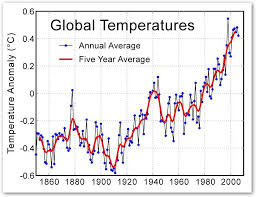
Here's a quick lesson in chart reading. One bases a trend line (you do know what a trend line is right?) on a long term basis. One does not pick the high point on this chart in 97 and this years temps to draw the trend line. That is what this "news" piece that you are guys are having an orgasm about is doing.
Not to mention that merely armed with knowledge that CO2 is greenhouse gas and there is more of it now due to us and then using logic, even a ten year old can muster the right answer. But you can't. So even by this simple measure of intelligence, you fail. It's really pretty funny..
Additionally the fact that you and fellow denier morons consider a cherry picked two points on a chart seperated by a mere 15 years to somehow indicate a trend is mind boggling and the way you all naively jumped on this "fact", salivating with joy is really embarrassing.
I suppose you also base your long-term investments by the one minute chart.
Here's a quick lesson in chart reading. One bases a trend line (you do know what a trend line is right?) on a long term basis. One does not pick the high point on this chart in 97 and this years temps to draw the trend line. That is what this "news" piece that you are guys are having an orgasm about is doing.
first of all thousands of scientist dispute your statement.
secondly go ahead... post one piece of proof that CO2 causes warming.
you have never been able to, your best shot is a study which guessed that once the warming begins the CO2 helps amplify the warming.
Now... your models say it should be getting warmer but over the last 15 years we have not.
And other models are showing the fluctions in temp and therefor CO2 may be caused by ocean cycles.
fc, You need to learn some science and replace your scientism.
Post a 400,000 year chart of temperature and you will not your little chart is the range.
secondly go ahead... post one piece of proof that CO2 causes warming.
you have never been able to, your best shot is a study which guessed that once the warming begins the CO2 helps amplify the warming.
Now... your models say it should be getting warmer but over the last 15 years we have not.
And other models are showing the fluctions in temp and therefor CO2 may be caused by ocean cycles.
fc, You need to learn some science and replace your scientism.
Post a 400,000 year chart of temperature and you will not your little chart is the range.
Quote from futurecurrents:
That's right jem. Virtually all the world's relevant scientists and all the science organizations agree. But they are wrong and you are right. Just think about that for a minute.
Not to mention that merely armed with knowledge that CO2 is greenhouse gas and there is more of it now due to us and then using logic, even a ten year old can muster the right answer. But you can't. So even by this simple measure of intelligence, you fail. It's really pretty funny..
Additionally the fact that you and fellow denier morons consider a cherry picked two points on a chart seperated by a mere 15 years to somehow indicate a trend is mind boggling and the way you all naively jumped on this "fact", salivating with joy is really embarrassing.
I suppose you also base your long-term investments by the one minute chart.
Here's a quick lesson in chart reading. One bases a trend line (you do know what a trend line is right?) on a long term basis. One does not pick the high point on this chart in 97 and this years temps to draw the trend line. That is what this "news" piece that you are guys are having an orgasm about is doing. It's called cherry picking.
Quote from jem:
first of all thousands of scientist dispute your statement.
secondly go ahead... post one piece of proof that CO2 causes warming.
you have never been able to, your best shot is a study which guessed that once the warming begins the CO2 helps amplify the warming.
Now... your models say it should be getting warmer but over the last 15 years we have not.
And other models are showing the fluctions in temp and therefor CO2 may be caused by ocean cycles.
fc, You need to learn some science and replace your scientism.
Post a 400,000 year chart of temperature and you will not your little chart is the range.
Not MY statement. The statement of virtually everyone in the world who has the education to know including the ceo of Exxon. You're a hopeless. You must be a defense attorney used to defending untenable positions and getting some perverse joy in doing so.
That you continue with this 15 year cherry-picked data business proves you are simply a clueless idiot and judging by your postings probably psychotic to boot.
The Conversion of a Climate-Change Skeptic
By RICHARD A. MULLER
Published: July 28, 2012
CALL me a converted skeptic. Three years ago I identified problems in previous climate studies that, in my mind, threw doubt on the very existence of global warming. Last year, following an intensive research effort involving a dozen scientists, I concluded that global warming was real and that the prior estimates of the rate of warming were correct. Iâm now going a step further: Humans are almost entirely the cause.
My total turnaround, in such a short time, is the result of careful and objective analysis by the Berkeley Earth Surface Temperature project, which I founded with my daughter Elizabeth. Our results show that the average temperature of the earthâs land has risen by two and a half degrees Fahrenheit over the past 250 years, including an increase of one and a half degrees over the most recent 50 years. Moreover, it appears likely that essentially all of this increase results from the human emission of greenhouse gases.
These findings are stronger than those of the Intergovernmental Panel on Climate Change, the United Nations group that defines the scientific and diplomatic consensus on global warming. In its 2007 report, the I.P.C.C. concluded only that most of the warming of the prior 50 years could be attributed to humans. It was possible, according to the I.P.C.C. consensus statement, that the warming before 1956 could be because of changes in solar activity, and that even a substantial part of the more recent warming could be natural.
Our Berkeley Earth approach used sophisticated statistical methods developed largely by our lead scientist, Robert Rohde, which allowed us to determine earth land temperature much further back in time. We carefully studied issues raised by skeptics: biases from urban heating (we duplicated our results using rural data alone), from data selection (prior groups selected fewer than 20 percent of the available temperature stations; we used virtually 100 percent), from poor station quality (we separately analyzed good stations and poor ones) and from human intervention and data adjustment (our work is completely automated and hands-off). In our papers we demonstrate that none of these potentially troublesome effects unduly biased our conclusions.
The historic temperature pattern we observed has abrupt dips that match the emissions of known explosive volcanic eruptions; the particulates from such events reflect sunlight, make for beautiful sunsets and cool the earthâs surface for a few years. There are small, rapid variations attributable to El Niño and other ocean currents such as the Gulf Stream; because of such oscillations, the âflatteningâ of the recent temperature rise that some people claim is not, in our view, statistically significant. What has caused the gradual but systematic rise of two and a half degrees? We tried fitting the shape to simple math functions (exponentials, polynomials), to solar activity and even to rising functions like world population. By far the best match was to the record of atmospheric carbon dioxide, measured from atmospheric samples and air trapped in polar ice.
Just as important, our record is long enough that we could search for the fingerprint of solar variability, based on the historical record of sunspots. That fingerprint is absent. Although the I.P.C.C. allowed for the possibility that variations in sunlight could have ended the âLittle Ice Age,â a period of cooling from the 14th century to about 1850, our data argues strongly that the temperature rise of the past 250 years cannot be attributed to solar changes. This conclusion is, in retrospect, not too surprising; weâve learned from satellite measurements that solar activity changes the brightness of the sun very little.
How definite is the attribution to humans? The carbon dioxide curve gives a better match than anything else weâve tried. Its magnitude is consistent with the calculated greenhouse effect â extra warming from trapped heat radiation. These facts donât prove causality and they shouldnât end skepticism, but they raise the bar: to be considered seriously, an alternative explanation must match the data at least as well as carbon dioxide does. Adding methane, a second greenhouse gas, to our analysis doesnât change the results. Moreover, our analysis does not depend on large, complex global climate models, the huge computer programs that are notorious for their hidden assumptions and adjustable parameters. Our result is based simply on the close agreement between the shape of the observed temperature rise and the known greenhouse gas increase.
Itâs a scientistâs duty to be properly skeptical. I still find that much, if not most, of what is attributed to climate change is speculative, exaggerated or just plain wrong. Iâve analyzed some of the most alarmist claims, and my skepticism about them hasnât changed.
Hurricane Katrina cannot be attributed to global warming. The number of hurricanes hitting the United States has been going down, not up; likewise for intense tornadoes. Polar bears arenât dying from receding ice, and the Himalayan glaciers arenât going to melt by 2035. And itâs possible that we are currently no warmer than we were a thousand years ago, during the âMedieval Warm Periodâ or âMedieval Optimum,â an interval of warm conditions known from historical records and indirect evidence like tree rings. And the recent warm spell in the United States happens to be more than offset by cooling elsewhere in the world, so its link to âglobalâ warming is weaker than tenuous.
The careful analysis by our team is laid out in five scientific papers now online at BerkeleyEarth.org. That site also shows our chart of temperature from 1753 to the present, with its clear fingerprint of volcanoes and carbon dioxide, but containing no component that matches solar activity. Four of our papers have undergone extensive scrutiny by the scientific community, and the newest, a paper with the analysis of the human component, is now posted, along with the data and computer programs used. Such transparency is the heart of the scientific method; if you find our conclusions implausible, tell us of any errors of data or analysis.
What about the future? As carbon dioxide emissions increase, the temperature should continue to rise. I expect the rate of warming to proceed at a steady pace, about one and a half degrees over land in the next 50 years, less if the oceans are included. But if China continues its rapid economic growth (it has averaged 10 percent per year over the last 20 years) and its vast use of coal (it typically adds one new gigawatt per month), then that same warming could take place in less than 20 years.
Science is that narrow realm of knowledge that, in principle, is universally accepted. I embarked on this analysis to answer questions that, to my mind, had not been answered. I hope that the Berkeley Earth analysis will help settle the scientific debate regarding global warming and its human causes. Then comes the difficult part: agreeing across the political and diplomatic spectrum about what can and should be done.
http://www.nytimes.com/2012/07/30/o...-a-climate-change-skeptic.html?pagewanted=all
By RICHARD A. MULLER
Published: July 28, 2012
CALL me a converted skeptic. Three years ago I identified problems in previous climate studies that, in my mind, threw doubt on the very existence of global warming. Last year, following an intensive research effort involving a dozen scientists, I concluded that global warming was real and that the prior estimates of the rate of warming were correct. Iâm now going a step further: Humans are almost entirely the cause.
My total turnaround, in such a short time, is the result of careful and objective analysis by the Berkeley Earth Surface Temperature project, which I founded with my daughter Elizabeth. Our results show that the average temperature of the earthâs land has risen by two and a half degrees Fahrenheit over the past 250 years, including an increase of one and a half degrees over the most recent 50 years. Moreover, it appears likely that essentially all of this increase results from the human emission of greenhouse gases.
These findings are stronger than those of the Intergovernmental Panel on Climate Change, the United Nations group that defines the scientific and diplomatic consensus on global warming. In its 2007 report, the I.P.C.C. concluded only that most of the warming of the prior 50 years could be attributed to humans. It was possible, according to the I.P.C.C. consensus statement, that the warming before 1956 could be because of changes in solar activity, and that even a substantial part of the more recent warming could be natural.
Our Berkeley Earth approach used sophisticated statistical methods developed largely by our lead scientist, Robert Rohde, which allowed us to determine earth land temperature much further back in time. We carefully studied issues raised by skeptics: biases from urban heating (we duplicated our results using rural data alone), from data selection (prior groups selected fewer than 20 percent of the available temperature stations; we used virtually 100 percent), from poor station quality (we separately analyzed good stations and poor ones) and from human intervention and data adjustment (our work is completely automated and hands-off). In our papers we demonstrate that none of these potentially troublesome effects unduly biased our conclusions.
The historic temperature pattern we observed has abrupt dips that match the emissions of known explosive volcanic eruptions; the particulates from such events reflect sunlight, make for beautiful sunsets and cool the earthâs surface for a few years. There are small, rapid variations attributable to El Niño and other ocean currents such as the Gulf Stream; because of such oscillations, the âflatteningâ of the recent temperature rise that some people claim is not, in our view, statistically significant. What has caused the gradual but systematic rise of two and a half degrees? We tried fitting the shape to simple math functions (exponentials, polynomials), to solar activity and even to rising functions like world population. By far the best match was to the record of atmospheric carbon dioxide, measured from atmospheric samples and air trapped in polar ice.
Just as important, our record is long enough that we could search for the fingerprint of solar variability, based on the historical record of sunspots. That fingerprint is absent. Although the I.P.C.C. allowed for the possibility that variations in sunlight could have ended the âLittle Ice Age,â a period of cooling from the 14th century to about 1850, our data argues strongly that the temperature rise of the past 250 years cannot be attributed to solar changes. This conclusion is, in retrospect, not too surprising; weâve learned from satellite measurements that solar activity changes the brightness of the sun very little.
How definite is the attribution to humans? The carbon dioxide curve gives a better match than anything else weâve tried. Its magnitude is consistent with the calculated greenhouse effect â extra warming from trapped heat radiation. These facts donât prove causality and they shouldnât end skepticism, but they raise the bar: to be considered seriously, an alternative explanation must match the data at least as well as carbon dioxide does. Adding methane, a second greenhouse gas, to our analysis doesnât change the results. Moreover, our analysis does not depend on large, complex global climate models, the huge computer programs that are notorious for their hidden assumptions and adjustable parameters. Our result is based simply on the close agreement between the shape of the observed temperature rise and the known greenhouse gas increase.
Itâs a scientistâs duty to be properly skeptical. I still find that much, if not most, of what is attributed to climate change is speculative, exaggerated or just plain wrong. Iâve analyzed some of the most alarmist claims, and my skepticism about them hasnât changed.
Hurricane Katrina cannot be attributed to global warming. The number of hurricanes hitting the United States has been going down, not up; likewise for intense tornadoes. Polar bears arenât dying from receding ice, and the Himalayan glaciers arenât going to melt by 2035. And itâs possible that we are currently no warmer than we were a thousand years ago, during the âMedieval Warm Periodâ or âMedieval Optimum,â an interval of warm conditions known from historical records and indirect evidence like tree rings. And the recent warm spell in the United States happens to be more than offset by cooling elsewhere in the world, so its link to âglobalâ warming is weaker than tenuous.
The careful analysis by our team is laid out in five scientific papers now online at BerkeleyEarth.org. That site also shows our chart of temperature from 1753 to the present, with its clear fingerprint of volcanoes and carbon dioxide, but containing no component that matches solar activity. Four of our papers have undergone extensive scrutiny by the scientific community, and the newest, a paper with the analysis of the human component, is now posted, along with the data and computer programs used. Such transparency is the heart of the scientific method; if you find our conclusions implausible, tell us of any errors of data or analysis.
What about the future? As carbon dioxide emissions increase, the temperature should continue to rise. I expect the rate of warming to proceed at a steady pace, about one and a half degrees over land in the next 50 years, less if the oceans are included. But if China continues its rapid economic growth (it has averaged 10 percent per year over the last 20 years) and its vast use of coal (it typically adds one new gigawatt per month), then that same warming could take place in less than 20 years.
Science is that narrow realm of knowledge that, in principle, is universally accepted. I embarked on this analysis to answer questions that, to my mind, had not been answered. I hope that the Berkeley Earth analysis will help settle the scientific debate regarding global warming and its human causes. Then comes the difficult part: agreeing across the political and diplomatic spectrum about what can and should be done.
http://www.nytimes.com/2012/07/30/o...-a-climate-change-skeptic.html?pagewanted=all