Posted on 12 March 2014 by James Wight

Figure 1: Global ocean heat content 1955-2013. (Source)
The Earth is gaining heat faster than ever
In 2013 the Earth’s oceans accumulated energy at a rate of 12 Hiroshima atomic bombs per second, according to global ocean heat content records from the US National Oceanographic Data Center (NODC). This rapid heating in 2013 compares to an average of4 Hiroshima bombs per second since 1998, and 2 bombs per second since records began in 1955.
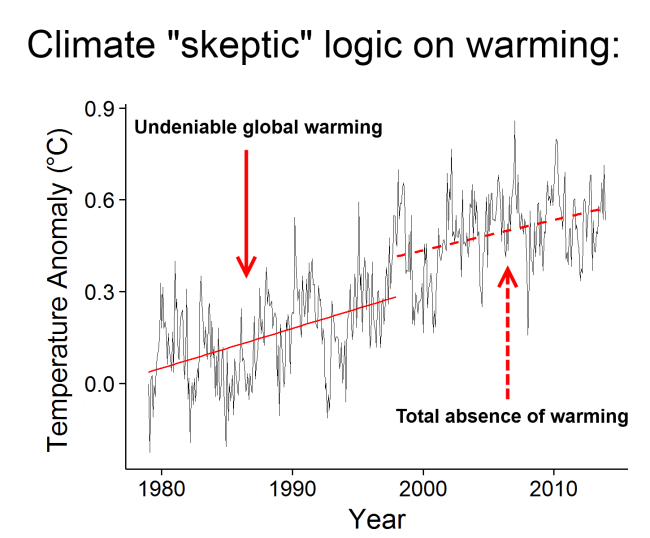
This is not the usual way to begin an article about global warming observations, but I have chosen to do so because ocean heat content is objectively the most important piece of evidence. The vast majority of heat from global warming goes into the oceans, so oceanheat content is a more reliable indicator of climate than surface or atmospheric temperature. This data shows global warming has accelerated in the last 15 years, contrary to denialist claims that global warming has “slowed”, “paused”, or “stopped” because the upper ocean,atmosphere, and surface have warmed more slowly in recent years. Warming oceans fuel hurricanes, raise sea level, melt sea ice, devastate coral reefs, and force fish to migrate to cooler waters.

Figure 2: Where global warming is going.
Satellite measurements confirm Earth is gathering heat at the rate indicated by ocean heatcontent. This can be expected to continue as atmospheric CO2 is currently at 400 ppm and rising (its highest level in at least 13 million years and well above the estimated safe level of 350 ppm).
Figure 1: Global ocean heat content 1955-2013. (Source)
The Earth is gaining heat faster than ever
In 2013 the Earth’s oceans accumulated energy at a rate of 12 Hiroshima atomic bombs per second, according to global ocean heat content records from the US National Oceanographic Data Center (NODC). This rapid heating in 2013 compares to an average of4 Hiroshima bombs per second since 1998, and 2 bombs per second since records began in 1955.
This is not the usual way to begin an article about global warming observations, but I have chosen to do so because ocean heat content is objectively the most important piece of evidence. The vast majority of heat from global warming goes into the oceans, so oceanheat content is a more reliable indicator of climate than surface or atmospheric temperature. This data shows global warming has accelerated in the last 15 years, contrary to denialist claims that global warming has “slowed”, “paused”, or “stopped” because the upper ocean,atmosphere, and surface have warmed more slowly in recent years. Warming oceans fuel hurricanes, raise sea level, melt sea ice, devastate coral reefs, and force fish to migrate to cooler waters.
Figure 2: Where global warming is going.
Satellite measurements confirm Earth is gathering heat at the rate indicated by ocean heatcontent. This can be expected to continue as atmospheric CO2 is currently at 400 ppm and rising (its highest level in at least 13 million years and well above the estimated safe level of 350 ppm).