
You are using an out of date browser. It may not display this or other websites correctly.
You should upgrade or use an alternative browser.
You should upgrade or use an alternative browser.
Global Warming Hoaxsters--The flip side of years of no hurricanes: Good luck runs out
- Thread starter wildchild
- Start date
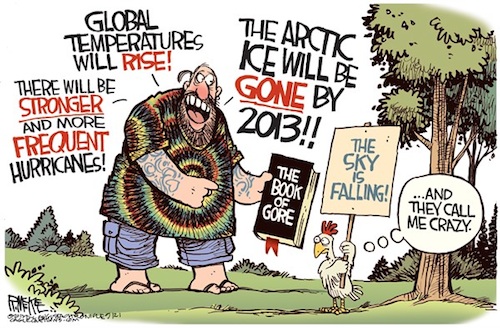

Total bullshit.They are getting stronger. Not more numerous.
Total bullshit.
If the heat was causing them to get stronger then only a total idiot would argue that the heat is causing them to be stronger but not more numrous, one automatically implies the other. This is the kind of junk science these hucksters rely on because of all of the overwhelming holes in their arguments.
Futurecurrents doesnt understand that basic mathematics makes him look like an idiot, if global warming was causing windspeeds in hurricanes to increase, then it must also be true that it causes windspeeds to increase in normal storms thus being able to label more storms as hurricanes. You cant have one without the other, unless you are a huckster pushing global warming alarmism, where actual data doesnt have to support your theories.
Last edited:
If the heat was causing them to get stronger then only a total idiot would argue that the heat is causing them to be stronger but not more numrous, one automatically implies the other. This is the kind of junk science these hucksters rely on because of all of the overwhelming holes in their arguments.
There are multiple headlines proclaiming a tie between "climate change" and increasing intensity of hurricanes. When you actually read the articles all you find is the claim that models show that hurricanes will increase X% in intensity because the ocean temperature will be Y degrees warmer due to global warming. With the additional information about the dire effects.
The reality that none of these articles address is that Atlantic hurricanes have been near record low numbers and intensity for a decade. Instead the alarmists attempt to claim that world-wide the intensity of cyclones, etc. have increased (acting like this includes the Atlantic). And they are partially correct, the intensity of Pacific storms have increased over the past 10 years, while the intensity of Atlantic storms have decreased. All of this is likely due to standard weather patterns, El Nino, etc. Keep in mind that the recent storms in the Pacific are still nowhere near as intense as many decades seen before 1950.
Thats exactly what I was saying if Wind speed was actually a function of ocean temperature, then you would also have to assume that more storms we just deem to be "tropical cylones" would also now be labelled as hurricanes due to increased wind speed. You cant say that ocean temp makes hurricane wind speed stronger, but doesnt lead to more hurricanes, it doesnt even make any sense.
There are multiple headlines proclaiming a tie between "climate change" and increasing intensity of hurricanes. When you actually read the articles all you find is the claim that models show that hurricanes will increase X% in intensity because the ocean temperature will be Y degrees warmer due to global warming. With the additional information about the dire effects.
Here,
Global warming con men raking in billions pointing at others and claiming they're on the take.
Good one, fraudboy!
http://cleantechnica.com/2009/10/14...1-billion-to-fund-climate-change-initiatives/
is perhaps a somewhat more accurate picture of what Soros has done. All except that very last line after the semicolon that begins "ensuring that...
Notice there are no quotes around that line. That's because Soros would never say that. That's something the reporter slipped in.
what deceptive bs from you again fraudcurrents. you know the data sets don't matter... the instrument data sets only vary from the satellite data sets by de minimis amounts when compared to how badly the models missed.
secondly the probability bands would not change anything. as of 2 years ago... the models were outside the 2.5% cut off. (there were only two out of over 100 models were within the 2 sigma bands and at least one of those models predicted almost no warming... so it was not really a nutter model.
Even famous agw nutter scientists admit the models are failing outside the acceptable bands.
you have read this 10 times now... stop lying your ass off you troll.
http://www.spiegel.de/international...lems-with-climate-change-models-a-906721.html
Storch: So far, no one has been able to provide a compelling answer to why climate change seems to be taking a break. We're facing a puzzle. Recent CO2 emissions have actually risen even more steeply than we feared. As a result, according to most climate models, we should have seen temperatures rise by around 0.25 degrees Celsius (0.45 degrees Fahrenheit) over the past 10 years. That hasn't happened. In fact, the increase over the last 15 years was just 0.06 degrees Celsius (0.11 degrees Fahrenheit) -- a value very close to zero. This is a serious scientific problem that the Intergovernmental Panel on Climate Change (IPCC) will have to confront when it presents its next Assessment Report late next year.
SPIEGEL: Do the computer models with which physicists simulate the future climate ever show the sort of long standstill in temperature change that we're observing right now?
Storch: Yes, but only extremely rarely. At my institute, we analyzed how often such a 15-year stagnation in global warming occurred in the simulations. The answer was: in under 2 percent of all the times we ran the simulation. In other words, over 98 percent of forecasts show CO2emissions as high as we have had in recent years leading to more of a temperature increase.
Models are doing quite well. The trend is unchanged. In fact the rate of heat gain of the earth is increasing. Hey jem, ever find even one climatologist that denies man made global warming?

If the heat was causing them to get stronger then only a total idiot would argue that the heat is causing them to be stronger but not more numrous, one automatically implies the other. This is the kind of junk science these hucksters rely on because of all of the overwhelming holes in their arguments.
Futurecurrents doesnt understand that basic mathematics makes him look like an idiot, if global warming was causing windspeeds in hurricanes to increase, then it must also be true that it causes windspeeds to increase in normal storms thus being able to label more storms as hurricanes. You cant have one without the other, unless you are a huckster pushing global warming alarmism, where actual data doesnt have to support your theories.
Yes, hurricanes are getting stronger but not more numerous. You are an idiot that doesn't know what the fuck you are talking about.
We may be witnessing the start of the long-awaited jump in global temperatures. There is “a vast and growing body of research,” as Climate Central explained in February. “Humanity is about to experience a historically unprecedented spike in temperatures.”
A March study, “Near-term acceleration in the rate of temperature change,” makes clear that an actual acceleration in the rate of global warming is imminent — with Arctic warming rising a stunning 1°F per decade by the 2020s.
Scientists note that some 90 percent of global heating goes into the oceans — and ocean warming has accelerated in recent years. Leading climatologist Kevin Trenberth of the National Center for Atmospheric Research explained here in 2013 that “a global temperature increase occurs in the latter stages of an El Niño event, as heat comes out of the ocean and warms the atmosphere.”
In March, NOAA announced the arrival of an El Niño, a multi-month weather pattern “characterized by unusually warm ocean temperatures in the Equatorial Pacific.”
How much of a temperature jump should we expect? Last month, Trenberth explained to Living on Earth:
Trenberth says it could mean a rise of two- or three-tenths-of-a-degree Celsius, or up to half a degree Fahrenheit. The change could occur “relatively abruptly,” but then stick around for five or 10 years.
I interviewed Trenberth this week, and he told me that he thinks “a jump is imminent.” When I asked whether he considers that “likely,” he answered, “I am going to say yes. Somewhat cautiously because this is sticking my neck out.”
Trenberth explained that it’s significant the Pacific Decadal Oscillation (PDO) “seems to have gone strongly positive” because that is “perhaps the best single indicator to me that a jump is imminent.” During a PDO, he explains, “the distribution of heat in the oceans changes along with some ocean currents.”
The PDO is a “pattern of Pacific climate variability similar to ENSO [El Niño Southern Oscillation] in character, but which varies over a much longer time scale.” While El Niños and La Niñas tend to last only 6 to 18 months, the PDO can remain primarily in one phase for a decade or even longer, as this figure from NOAA’s March “Global Ocean Monitoring” report shows:

http://thinkprogress.org/climate/2015/04/02/3640842/global-warming-jump-imminent/
A March study, “Near-term acceleration in the rate of temperature change,” makes clear that an actual acceleration in the rate of global warming is imminent — with Arctic warming rising a stunning 1°F per decade by the 2020s.
Scientists note that some 90 percent of global heating goes into the oceans — and ocean warming has accelerated in recent years. Leading climatologist Kevin Trenberth of the National Center for Atmospheric Research explained here in 2013 that “a global temperature increase occurs in the latter stages of an El Niño event, as heat comes out of the ocean and warms the atmosphere.”
In March, NOAA announced the arrival of an El Niño, a multi-month weather pattern “characterized by unusually warm ocean temperatures in the Equatorial Pacific.”
How much of a temperature jump should we expect? Last month, Trenberth explained to Living on Earth:
Trenberth says it could mean a rise of two- or three-tenths-of-a-degree Celsius, or up to half a degree Fahrenheit. The change could occur “relatively abruptly,” but then stick around for five or 10 years.
I interviewed Trenberth this week, and he told me that he thinks “a jump is imminent.” When I asked whether he considers that “likely,” he answered, “I am going to say yes. Somewhat cautiously because this is sticking my neck out.”
Trenberth explained that it’s significant the Pacific Decadal Oscillation (PDO) “seems to have gone strongly positive” because that is “perhaps the best single indicator to me that a jump is imminent.” During a PDO, he explains, “the distribution of heat in the oceans changes along with some ocean currents.”
The PDO is a “pattern of Pacific climate variability similar to ENSO [El Niño Southern Oscillation] in character, but which varies over a much longer time scale.” While El Niños and La Niñas tend to last only 6 to 18 months, the PDO can remain primarily in one phase for a decade or even longer, as this figure from NOAA’s March “Global Ocean Monitoring” report shows:
http://thinkprogress.org/climate/2015/04/02/3640842/global-warming-jump-imminent/

Yes, hurricanes are getting stronger but not more numerous. You are an idiot that doesn't know what the fuck you are talking about.
Idiot, that makes no sense. There are a bunch of tropical storms that never become strong enough to be classified as hurricanes. If the storms were becoming stronger, then more storms would pass the hurricane threshold. The end result is there would be more hurricanes. Simple logic. Why don't you try thinking for yourself for a change?