
So these are the formulas I was able to come up with using 1926-2016 monthly data
Optimal portfolio:
For the US:
3.5 units of 10y bonds
1 unit of stocks
0.5 unit of gold
With 2-1 30y to 10y bond duration difference
46% 30y Bonds
26% stocks
15% intermediate bonds
13% gold
How to convert this to an emerging market is more complicated. Especially given the limitation of asset classes (sometimes there is no duration or duration is a risk asset) and additional risks those countries have. That's the next part of my project
The risks to such allocation are the US risks that folks like Jim Rogers have been talking about for a long time. In Market Wizards he talks about the UK experience where they ceased to have a long-term bond market and, IIRC, their long-term bonds fell 70%.
Now, that portfolio is VERY resilient. Even in a UK type scenario one will still be ok as gold has a BIG positive skewness and kurtosis, its an insurance asset and its in cases like that (the UK experience) that it pays off hugely
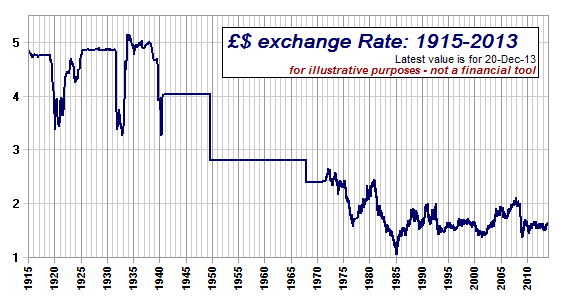
https://www.creditwritedowns.com/2014/02/long-decline-great-british-pound.html
That's the chart against the USD but since gold is arbitraged globally, UK residents had huge gains to compensate for losses on the bond-side (Its no wonder Jim Rogers owns some gold "as an insurance policy").
Also, stocks will readjust and eventually return their losses from fiscal/inflation problems. Long-term they are good inflation hedges.
So overall, the portfolio will be alright.
However, if one is worried about that, what the investor could do is to sell 30y bonds, stocks and gold (at the 1.75-1-0.5 ratio) and buy short-term maturities at an allocation higher than 15%. Perhaps 20%,25%. Whatever is more comfortable. The portfolio will give up returns (and probably, give back some Sortino/Sharpe Ratio due lower excess returns over the risk free rate) but whatever gets one to sleep at night
