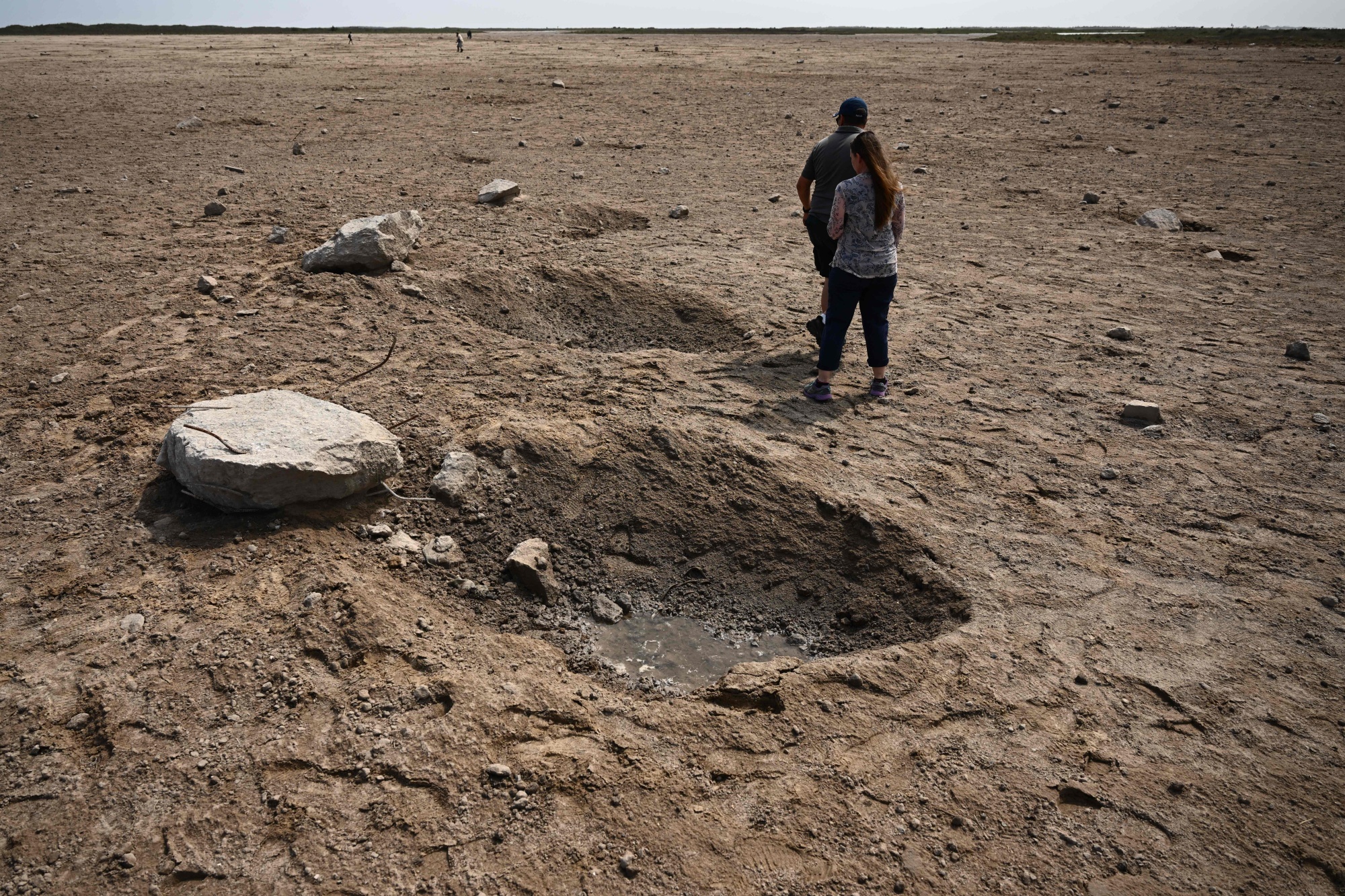
Debris field at the launchpad after the SpaceX Starship explosion in Boca Chica, Texas.
IndustriesTransportation
SpaceX Blast Left Officials in Disbelief Over Environmental Damage
Fish and Wildlife Service biologists expressed frustrations in emails obtained by Bloomberg.
August 25, 2023 at 2:38 PM EDT
In April, US wildlife officials visited the site of a SpaceX rocket that exploded
shortly after takeoff and took in the damage: Concrete chunks had left craters a foot deep and were strewn across tidal flats, almost four acres of state park
were burned, and seven bobwhite quail eggs and a collection of blue land crabs had been incinerated.
The officials, biologists working with the Fish and Wildlife Service, privately expressed disbelief at the extent of the scene, records obtained by Bloomberg News show. “The explosion was so extensive it sent concrete chunks flying into the surf,” said one email from Chris Perez of the FWS to colleagues. The environmental damage was due to the tremendous amount of force required to get the world's largest rocket off the ground.
The wildlife agency couldn’t begin its review until 48 hours after the failed launch. Some of their observations show that behind the scenes, officials at times questioned whether they were blocked from accessing the site. And they puzzled over why SpaceX had opted not to use flame-suppression technology long considered the gold standard in the launch industry. Not doing so appeared to be a costly error, allowing what Elon Musk called a “rock tornado” of power, heat and gas to blow a hole into the ground under Starship, the SpaceX rocket, during the April 20 incident — a problem the company is still trying to resolve.
SpaceX's “pad site was totally destroyed and will likely force them to re-design the whole thing,” Perez wrote to Joan Marsan, an attorney with the US Department of Interior. “Probably won't see another launch for awhile.”
SpaceX didn’t respond to emailed questions about the documents and a spokesperson couldn’t be reached by phone.