
Pre-2008/ZIRP, trendies could include T-bill interest in their returns (since futures use little margin), which contributed a "free" ~⅓ Sharpe, and created an optical illusion of good returns. Plus, post- 2008 markets have become more difficult all around, more competitive (think HFT) and more crowded (there weren't multiple trendies with 10s of $billions pre-2008).I'm aware of the financial crisis. Just wondering if there is some fundamental reason as to why things have permanently changed.

You are using an out of date browser. It may not display this or other websites correctly.
You should upgrade or use an alternative browser.
You should upgrade or use an alternative browser.
Fully automated futures trading
- Thread starter globalarbtrader
- Start date

They've had a break out system for at least 15 years
GAT
Volatility based systems. Seems like a switch was flipped.
Attachments
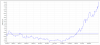
Volatility based systems. Seems like a switch was flipped.
I looked through factors, looks like QT was the switch that was flipped on.
www.schroders.com/en/us/insights/multi-asset/how-frightening-is-quantitative-tightening/
I looked through factors, looks like QT was the switch that was flipped on.
www.schroders.com/en/us/insights/multi-asset/how-frightening-is-quantitative-tightening/
What's a volatility based system? Is it a breakout system?
What's a volatility based system? Is it a breakout system?
Yes, in terms of daily ranges.
I did an investigation into trend following on UK LSE stocks with market caps of < £1bn.
The feature was defined as a moving average crossover (of % returns) with lookback of 6mo/2years, and the target was to predict the 12 month return.
It seems like in this scenario, trends had almost no predictive power whatsover.

The feature was defined as a moving average crossover (of % returns) with lookback of 6mo/2years, and the target was to predict the 12 month return.
It seems like in this scenario, trends had almost no predictive power whatsover.

Thanks for posting. This bit of self-described luck certainly vitiates any comparison with industry benchmarks:
Then in February there was a pronounced spike in vol that took a lot of people by surprise. Because I prefer to stay at least two months out in the contract space I didn't see such a sharp rise in price levels as in 'spot' implied vol, but it's also clear that I didn't have any position on between October and March, and thus avoided the spike entirely. What gives? Well basically I ran out of margin head room, and because VIX and V2X were very margin hungry I closed my positions in them. So a bit of luck there.
Thanks for posting. This bit of self-described luck certainly vitiates any comparison with industry benchmarks:
Then in February there was a pronounced spike in vol that took a lot of people by surprise. Because I prefer to stay at least two months out in the contract space I didn't see such a sharp rise in price levels as in 'spot' implied vol, but it's also clear that I didn't have any position on between October and March, and thus avoided the spike entirely. What gives? Well basically I ran out of margin head room, and because VIX and V2X were very margin hungry I closed my positions in them. So a bit of luck there.
It's difficult to say exactly how much difference this made, but it probably added about 2% overall. So not a game changer, but clearly helped.
GAT
Thanks, GAT, for a great read. I have been trading a version of your strategy for a year now, and I am obviously underwhelmed by my performance. Obviously a year is far too short a timeframe to make a claim like "trendfollowing is dead". However, over what timeframe could I have sufficient evidence that I had "missed the party", and I should go back to my previous life as a strictly buy/hold index fund guy? Thanks.