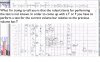
I translate "failsafe", in this case, as "the 2 two-bar cases that don't need squishing", as per Jack's post you just quoted above:
Jack Hershey: Two Cases of the market make money and all ther cases are squished to have the two cases that make m0oney. You have all the pieces and as they form you squish them into the "long" or the "short" case.
When a squishable case straddles a "right" boundary you decelerate the money velocity of the RTL by geometrically fanning the RTL. When the price exceds the LTL, you accelerate the boundary by redrawing the new steeper container.
"Squishing" is still something unclear to me. It could mean assembling all the inside bars with their respective legs, adding like legs to like. It could also mean the process by which a 30min bar is composed of 6 5min bars. It could also mean the "exposed" ends of bars that do not have a common leg. Still working on that one.
In addition perhaps as a reference to volume suppression, the term failsafe as I know it best was frequently used for two End Effects based off geometry to limit losses. At the start of every new trend segment a horizontal bookmark goes out from the opposite extreme of the bar and if there is a close below that line it's an automatic sentiment switch. That End Effect is called BM Reversal.
BO T1 is where the drawn-in right trend line has a close outside of it. This considerably shortens the length of a lot of trend segments with the RDBMS. In the chart you posted, if you do have Ab - Long sentiment on the 1525 bar as indicated, 1530 bar is going to be a BM REV - Short, and then 1535 will be a double BM REV - Long back into a PP4 - Short from the OB. And so on.
But again, my examples aren't significant in themselves. Even if there happens to be an error, there are other charts with the same occurrences that will not have errors. It's simple a by-product of using a rigid mechanical system to classify sentiment.
Not trying to knock the system by any means but for me it's been proven time and again that success with it isnt as simple as just mastering all of the EE's and the syntax; there's an additional step after that, be it more rules, intuition, etc. required to consistently profit.
These days that extra step and how different individuals accomplish it in varied ways is where my interest lies. I've known a few individuals who have developed lasting success with foundational P/V principles but none from pure application of the RDBMS. So if you start to make headway there please keep us posted; you've seemed to make a lot of progress in a short amount of time and I can't imagine it will be too much longer before you start getting into the D of MADA.
Thank you for the clarity on the BO T1 and the BM REV as End Effects. As for your specific example, I see both BM REV, both of which would signal end of segment and start of new trend. PP4 (from my current understanding) can only present within an OB after the requirement of 2 successive P1's. The OB containing a P1 and T1.
Jury's still out on the missing element. After I do 50 logs, there might be a different thing to report. Even though, I came across Spydertrader's Future Journal first, I spend my first year on digging up links and studying that first page. I did what was advocated and started with PVT. I've attempted to trade equites the same as futures. Quickly, I learned about PACE and liquidity and it's relationship to trading. Lot's of other insights and my desire to id turns earlier led me to Jack's RDBMS. From my view, everything interlocks, logically, consistently, profitably but the most important - my state.
The state of my well being includes but is not limited to my physical, emotional, mental and spiritual bodies. The state of my well being does require continued stimuli for growth, the alternative is fossilization. Whenever I experience a block in one area, I shift to another. As a trader, our service is to offer liquidity to others. As a human being, our service is to others and the upliftment of humanity. As a spiritual being, our service is to all beings.
Be Do Have.
Be liquid.
In the meantime, debriefing the Volume Procedure Sequence tool produced this clarity for me.
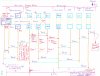
Now, to understand REV CHRON. Anyone have any thoughts or links on this?