Fractal Theory: Redux

My recollection about degapping:
- first time I heard the term from spydertrader, on ET, referring to day-to-day; much later he introduced the bar-to-bar degapping too
- initially Jack was trading after the first 3 bars of the day, ignoring any carryover; later he bought into degapping everything

I manually degap the opening by translating up or down only the previous day's price pane annotations, which seems to be all that's needed. Occasionally I re-draw up to a handful of bars I consider important, and change the color of the first bar of the day (price and volume).
 
My recollection about degapping:
- first time I heard the term from spydertrader, on ET, referring to day-to-day;

ET search on spydertrader + degapping produce no results :)

Your post emphasize my believes that every JHM practitioner has his/her own version of JHM.

Did you been at Las Vegas meeting? Or NYC year before? Or NYC another year before?

I hope I am mistaken, but out of people who made to Vegas or NYC events, nobody are active on ET anymore. :)
 
Last edited:
Any Python, SQLite programmers out there?

It is not clear what your intent is, but it is likely that at some point you will need access to a price\volume chart. If so, rather than creating patch work of multiple applications, consider using NT 8 for all of your needs.

You will probably not need a vast (100k or 1M rows) amount of data. For such relatively light loads, a text file will do just fine. Using LINQ within NT, you will have access to a powerful query language that may be more powerful than SQL.

If you are still convinced that Python and SQLite combination is your best solution, then consider using Jupyter:

http://jupyter.org/
 
Hey hey,

Thanks everyone for providing some context. Here are some artifacts of my recent explorations.

It is not clear what your intent is, but it is likely that at some point you will need access to a price\volume chart. If so, rather than creating patch work of multiple applications, consider using NT 8 for all of your needs.

You will probably not need a vast (100k or 1M rows) amount of data. For such relatively light loads, a text file will do just fine. Using LINQ within NT, you will have access to a powerful query language that may be more powerful than SQL.

If you are still convinced that Python and SQLite combination is your best solution, then consider using Jupyter:

http://jupyter.org/

svrz, your ideas are sound. In my research with Jack's method, I see having a growing db of examples supports knowing that you know. With this is having a searchable list of all the EE's, giving Signals of Continue or Change. VSA has software that provides contextual analysis bar-to-bar and it wouldn't be too hard to code the volume formations in a similar manner. An error table, would also be helpful in logging changing market dynamics.

My computer days were a couple of careers ago so the idea of python and sql is a natural extension of my knowledge and skill base. I walked out of a kush consultancy to travel with my sweetheart and be bohemian. Tired of talking to machines, growing food and medicine became much more rewarding.

Times, they are a changing !!

Long story short, I would prefer not to do the actual coding, but will if necessary. In the spirit of Jack's pay it forward, I see it more open source than closed - PEP to solve problems on Main St. vibe.

Given the current political climate, the idea of trading from a cloud platform has it's advantages for an aspiring world traveler.

My intent is to translate Jack's ideas into a usable dashboard for extracting the market's full offer and to help anyone I can along the way.

With that said, I'm far from expert and I have hand drawn thousands of charts. My sticking point is consistent logging to have this EOD view during RTH.


Haven't annotated EE's for quite a while; think this is correct but there's a few obscure EE's and caveats that sometimes come into play. Don't think I missed anything but take it with a grain of salt.

However, my intended point wasn't to dig into this particular example, but rather to demonstrate the fact that these occurrences happen somewhat often. The fact that this system hinges on a single tick or +/- few dozen contracts at times to specify it's output, means that there will always be some less accurate readings from time to time imo.

P/V is paradigm and we are trying to look at arbitrarily spliced data slugs and read between the lines to see the sequences unfolding. Rigidity is a hindrance in an enterprise like that. So although the RDBMS is a more mechanical construct than any of the previous iterations of Jack's system, I still think the best it can ever do is to provide a framework within which to trade successfully and discern market sentiment. But no matter what version of this stuff or if Spyder or Jack was teaching it; that leap from framework to fluid execution time and again was the area that just couldn't seem to be consistently transferred despite their best efforts.


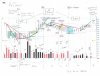
Heroic, this is my interpretation of the day you posted as per my current understanding of Jack's material.

Messy RDBMS debrief v170527.jpeg

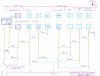
Here are some supporting tools I used to derive my conclusions:

Volume Test Procedure SeqDLogic v170527.jpg

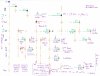
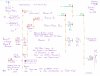
My current understanding of the Bands and EE's:

Band A
Bands A Sequence Tree Map v170519.jpg

Band B- K
Bands B-K Sequence Tree Map v170522.jpg

fwiw, JHM 2.0 from my current understanding REQUIRES degapping - mentally or with software.

HTH
 
Last edited:
There's a few issues I listed. Here's one for example yesterday morning. Sometimes price moves are clean and you get some reliable EE's, but other times the market just doesn't form full sequences of volume events to EE and you get a mess of failsafes. Automatic entries on every End Effect is going to result in a huge string of small losses. A day like this alone should lay to rest the prospect of blindly trying to follow EE's. If it was that easy we'd have seen success with this system. You need to use either discretion or additional rules to take a step back and trade the slower fractal.

---

Also see the images of how things unfold in RT at times. I just replayed the first day of the month at random for some examples.

#1 We're carrying over an up-trend and we get PP1 first bar. So we have EE to short and the bar is red.

#2 But look, a convincing red +PRV turns IBGS by End of Bar.

#3 It even breaks the Bookmark so we're looking at a loss. You can either exit intra-bar when price violates BM, or hold until EOB, and if you're going to do the latter sometimes it will come back but sooner or later you will be taking a big loss on a high range bar going against your trade.

#4 Shows that even if we held to the actual EE up it's still going to be a loss, and that the End effect outputs are often divorced from the actual turning points of the trend segments. Even if we wanted to go long here the up-segment is well underway from it's actual geometric FTT on Bar 5.

---

These are just a few examples I dug up quickly. The RDBMS is just too blocky and mechanical to blindly obey its "rules". I think that either some degree of intuition is required to screen out bad market conditions, cherry pick the better spots, or trade slower fractals is required. Some days it really shines when you get a single 5+ point trend segment in high pace, but a bunch of tough spots like these examples exist most other days and the system doesn't really address how to navigate them.

Thank you for your examples. I don't understand your bar color coding.
RT#4 - Bar 9:45, 9:50. They have closes opposite their open and yet are colored the same.

As for your examples, I don't have an answer to your dilemma. It's outside my current scope and awareness.
 
My recollection about degapping:
- first time I heard the term from spydertrader, on ET, referring to day-to-day; much later he introduced the bar-to-bar degapping too
- initially Jack was trading after the first 3 bars of the day, ignoring any carryover; later he bought into degapping everything

I manually degap the opening by translating up or down only the previous day's price pane annotations, which seems to be all that's needed. Occasionally I re-draw up to a handful of bars I consider important, and change the color of the first bar of the day (price and volume).

Searching in old threads yielded this:

That is not a de-gapped chart, isn't it?

https://www.elitetrader.com/et/threads/questions-to-jack-hershey.229669/page-41#post-3367613

A couple of posts down Jack discusses differentiating the mind.

My sample of people is over 10,000, I would guess.

By watching and listening to this non stratified random sample, I would say three things are involved:

1. Knowing how learning works.

2. Knowing how the mind works.

3. And knowing the sequence of drills to build the mind.

Sub sets of this endeavor include:

1. Understanding your heritage and character.

2. Being trained in Science.

3. Knowing how to build walls around inference that is associated with any myths or false beliefs. The mind cannot erase without supreme difficulty. Examine this erasing process and appreciate that building the walls is a more satisfactory process.

Also there are some pragmatic considerations.

1. Self teaching has major pitfall: it is very difficult to always manage the process of proving to yourself that you are learning correctly. When you learn a concept incorrectly, then you mind cannot subconsciously reorganize your knowledge and skills as you sleep.

2. At some point you can recognize that your mind is sufacing questions consciously for you to get answers to so you can "fill in" weaker spots in the spectrum of your differentiation.

3. It is always wise to listen to and evaluate the systems you observe in others growth and differentiating processes. This keeps you on the main trunk of the tree and you can determine when a person is going out on a limb that is going to break and when he will fall off and end the process.

Notice there is another thread on the supposed "evolution" of systems. What has eliminated the growth process on that thread?

The whole basis of differentiating the mind (building a mental ATS) is the partnership of the trader and the market. Read the partnership contract frequently. Neither partner is allowed to do the other's role and eahc partner must contribute his full services.

The result of the partnership is that each knows he knows all the time.

Granularity creates the ability to know ahead of the present.

Over the last 53 years I have ststed the details of everything mentioned in this post. I collected the commentary and put it into five outlines as file folders. then I began dictating the essential aspects as a way to cull and edit all of my responses to the questions of others. I organized everthing in an order for larning and differentiating the mind. Technically, among those I work for, it is called "tranferring". I use four categories of documentation as everyone knows: Text, Market Charts, Logic diagrams and flow sheets, and Excel logic organization levels of logic snippets. It was a way of emptying my mind and making a record in electonic filing.

So all the snippets of trading functions are now on warious web sites and many many presentations are archived that show the aspects of PEP and its applications. I also reduced the applications to one pagers that can easily be coded and traded as ATS's if the person is skilled enough. Most aren't. Those that did it have performance data for their periods of operation.

So everything a person hs to do to become fully differentiated is available and in use.

PEP was deduced using the Scientific Method. The Pool Extraction Paradigm is a Hypothesis Set (HS) (taken from the early history of markets) The Parametric Measure (PM) is more novel and almost never used by any other practitioner, logian, or theorist.

I will explain specifically how to fast track to expect in one more post. This and the next post will make it possible for anyone to compare their viewpoint to my viewpoint in a very short time (minutes).

As redneck thinks, it is anyone's right; as I view it, it is anyone's priviledge. LOL.

Rights are exrcised by personal initiative.

Priviledges come about as a consequence of an externality. I provide that externality.


How to differentiate the mind fully in the parametric system of the market's offering.

The hypotheses set forth the Vand P relationship over events. The parametric measures are four gerunds ('ing's). For a paradigm to work all Hypotheses must be "in kind".

Markets turn out to be cyclic; therefore two opposite trends determine a cycle. This announces the fractal nature of the markets and how fractal interlock. A parallelogram (or trapezoid) is the nonstationarity based container. Opposite sides are parallel.

The gerunds dictate the Parametric Measures as ratios of variables. I use a denominator of 1 which stands for one event. The numerators are for the IF'S and for the THEN's. Volume leads price.

HOW to build the mind is a process of creating long term memory for two sets that have a one to one corrspondence.

There is elasticity in the container and it is caused by two things: the units of measure of volume and price. Each one is a non continuous function.

This dictates the mathematics of the market operation. It is an algebra and the base is two. Thus, form the 1840's the mathematics became available. Boolean Algebra has many applications.

Use some ticks to make some bars. Use some instrument units to make some volume bars.

The first task is to ID all the identifiable constructs and combinations of these variables and to deduce the Hypothsis Set that comes from the relation of the two variables. In the language of Science and Mathematics, these are called Cases.

Your mind has to have these cases in long term memory. So discover them; prove they are the set; and arrange them in a continuum.

You have finite sets, and the elements are complete and the elements have an order of events and they form a simple container which cycles and which in terms of fractals are interlocking in a specific unchanging ratio.

This is knowledge and the amount of knowledge for a system is very small and very complete.

Before the PC and when the world began to use electricity, Market information was transmitted over wires and a series of events was made public to all that were equipped. When I canoed from Whitehorse to Dawson, I got to see the wires along the rivers and the battery operated relay stations along the way. I collected broken battery parts and tin cans as souveniers.

From the ticker tapes of the past, the HS and PM came about. Nothing has changed.

The HS and the Cases interrelate and complete the picture of building the mind. I call it "Putting the Pieces Together". This is how "tape reading" turns out to work.

All you do is use binary switches in the form of vectors to make money. There is no probability when it comes the the setting of a switch.

Two Cases of the market make money and all ther cases are squished to have the two cases that make m0oney. You have all the pieces and as they form you squish them into the "long" or the "short" case.

When a squishable case straddles a "right" boundary you decelerate the money velocity of the RTL by geometrically fanning the RTL. When the price exceds the LTL, you accelerate the boundary by redrawing the new steeper container.

So now you have your training encompassed and you use a display to show three interlocking levels of the market containers.

The schema for fully differentiating the mind, to read the market, is to drill on annotating a display which shows the cases as boxes. Fighting the battle to have displays show the cases is long over and was hard fought simply because perveyors were so simple minded. It was as difficult as have a two colored ribbon on a ticker tape. You can remember that that didn't happen except on typewriters.

What is it that slows this process of ganing inference in the mind?

1. Working in an ineffective way that lacks purpose.

2. Being prevented from doing anything because prior beliefs prevent it.

3. Fear that comes from the mind/body self protection system. See Lizard Syndrome.

4. A paralysis that comes from oxygen deprivation and CO 2 surpluses (Bohr Syndrome).

5. Having an orientation to making money following the CW.

6. Using the CW tools to examine the market.

What are the simplest small things that can help overcome the above?

1. Find out that two bars with HH's and HL's causes a long trend by price change.

2. Find out that two bars with LL's and LH's causes a short trend by price change.

3. Notice that volume peaks coincide with price extremes and that occasionally volume shows as leading price. (LTL's)

4.
Notice that volume troughs coincide with price retrace endings and that occasionally volume shows as leading price. (LTL's)

So with this approach underway and succeeeding, when does the mind create the ends of trends?

Also examine why Covel and those he writes about could not get any of this?

Look at the problems people who use PA only encounter. See if you can reason out how to help them and them how to let them accept being trained.

Lastly, look at how others judge trader peformance and find out how they got to use the term "unbelievable" in their vocabulary.

Annotate and use MADA instead of OODA and betting.


Great stuff !!
 
Last edited:
https://www.elitetrader.com/et/thre...-on-a-daily-basis.275733/page-33#post-3830716

Volume is the independent variable. It sends signals for making money whereby money is made on a trading platform using the dependent variable, Price.

Only one pattern exists in the combo of the two variables of the market. (See The Pattern).

Volume leads price as in all independent/dependent mathemtical relationships (We use RDBMS).

Trading is a vector science. Making money is done in a vector context.

P1 is assigned.

For band A, P1 is coincident with the trend ending bar. for all failsafe (two contexts) a P! is coincident with the trend ending bar.

For all other contexts, P1 is assigned to the first non suppressed bar available.

Wost people will screw this up since they do not know the price permission and the negative logic consequence called suppression.

All common CW approaches wax and wane because no consistent market measure (called suppression ) is being deployed.

The failsafe system attached to this system OVERRIDES suppression since failsafe is a self correcting system that restores any mistakes traders inadvertantly make.

All common CW approaches wax and wane because no consistent market FAILSAFE is being deployed.

Heroic, I suspect there is insight to be had here. Failsafe is next for me to understand.
 
https://www.elitetrader.com/et/thre...-on-a-daily-basis.275733/page-33#post-3830716


Heroic, I suspect there is insight to be had here. Failsafe is next for me to understand.
I translate "failsafe", in this case, as "the 2 two-bar cases that don't need squishing", as per Jack's post you just quoted above:

Jack Hershey: Two Cases of the market make money and all ther cases are squished to have the two cases that make m0oney. You have all the pieces and as they form you squish them into the "long" or the "short" case.

When a squishable case straddles a "right" boundary you decelerate the money velocity of the RTL by geometrically fanning the RTL. When the price exceds the LTL, you accelerate the boundary by redrawing the new steeper container.
 
In addition perhaps as a reference to volume suppression, the term failsafe as I know it best was frequently used for two End Effects based off geometry to limit losses. At the start of every new trend segment a horizontal bookmark goes out from the opposite extreme of the bar and if there is a close below that line it's an automatic sentiment switch. That End Effect is called BM Reversal.

BO T1 is where the drawn-in right trend line has a close outside of it. This considerably shortens the length of a lot of trend segments with the RDBMS. In the chart you posted, if you do have Ab - Long sentiment on the 1525 bar as indicated, 1530 bar is going to be a BM REV - Short, and then 1535 will be a double BM REV - Long back into a PP4 - Short from the OB. And so on.

But again, my examples aren't significant in themselves. Even if there happens to be an error, there are other charts with the same occurrences that will not have errors. It's simple a by-product of using a rigid mechanical system to classify sentiment.

Not trying to knock the system by any means but for me it's been proven time and again that success with it isnt as simple as just mastering all of the EE's and the syntax; there's an additional step after that, be it more rules, intuition, etc. required to consistently profit.

These days that extra step and how different individuals accomplish it in varied ways is where my interest lies. I've known a few individuals who have developed lasting success with foundational P/V principles but none from pure application of the RDBMS. So if you start to make headway there please keep us posted; you've seemed to make a lot of progress in a short amount of time and I can't imagine it will be too much longer before you start getting into the D of MADA.
 
Back
Top