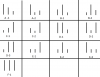
Here's my view of the day.
View attachment 173233
A lot of your channels I would say are not. But it's IMHO - disregard

This is what I am using. EOD.

Here's my view of the day.
View attachment 173233
Here's my view of the day.
View attachment 173233
Write PM to Baron and politely ask to fix attachments. Or start new thread in feedback section. He fixed a lot of Jacks treads from the past.Is there a protocol in place in ET to request link fixes? Looks like a good thread but a lot of Jack's attachments are broken links.
A lot of your channels I would say are not. But it's IMHO - disregard
And BTW Jack did not annotate channels.
Let's focus on the topic - JHM 2.0
What would be next step to implement in your opinion?
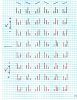
...
The list of 11-12 volume elements and their definitions would be useful.
...
View attachment 173237
This is what I have. The actual volume formations, afaik, were never officially named.
Hope this helps.
Also, elsewhere in this thread, someone asked for modrian table info. I know I have a some stuff. The question is can I find it. I also know I have details on each of the EEs (PPx,Bx,Cx, etc etc), beyond just the EE sheets. Again, can I find it.
To be specific I’m interested in logic behind Modrian table, how it was created. Jack introduced it once but never explained how he created it…
WHY some pairs of EEs in context of certain trend type (A,B,C or D) means the change in dominance and WHY some others not.
I’m waiting for this info in breathless anticipation
Jack Hershey said:The Modrian table has a skeleton or framework. I combined two derived premises to build it.
1. I included each type of trend as Sets A through D.
2. separately, I included routine turns of the system AND the failsafe instrument system for preventing any losses.
Crossing 4 with 2 yields 8 panels. This is an invincable and powerful protective device.
Next I applied the OOE principle to achieve "knowing that I know" in advance as NOW is monitored and analyzed. I believe "anticipation" is the best tool for instilling the replacements for the CW based emotions of fear, anxiety and anger. Here you see the use of n-1 and n columns in each trend type. you also see within the trend type the n-1 and n of the turns in that type of trend.
Because a trend ends with a "c" turn for all types of trends, you deduce the four types of trends:
1. c to c,
2. c to a to c,
3 the normal trend: C to a to b to c, and
4. the drift trend: c to (a to b) to (a to b) to c.
By putting an n-1 column in the map, it is possible to achieve a form of differentiation by having a kind of "context". Lo, Brandt and Aronson ommitted context in their work so the work failed.
In effect, I spread out c turns over the types of trends and I also rigidly set in place a context for differentiating types of c turns.
What is true about End Effects is that any End Effect can play any role, i.e., any turn type.
So I set up the table and then I filled in the table's ingredients.
Does anyone have the definitions for trend types and turn types?
The question is can I find it. I also know I have details on each of the EEs (PPx,Bx,Cx, etc etc), beyond just the EE sheets. Again, can I find it.
Post it here.give me some time. I had digest of everething but it's lost due to HDD crash. I will gather information from several threads and PM you.