
You are using an out of date browser. It may not display this or other websites correctly.
You should upgrade or use an alternative browser.
You should upgrade or use an alternative browser.
For anyone attempting OneUpTrader/TopStepTrader
- Thread starter Wisdom
- Start date
I have been funded (and made significant withdrawls) with both TST and OneUp and they both are legit companies and each has their respective pros and cons.
The pros and cons will depend on your unique situation and trading experience but with either one if you are serious and diligent, you will grow and progress as a trader.
Are you still with them? How long did you trade there and do you think it's worth it to stay long term?
Every time I see a post about one of these funding resources, it looks like no one understands how their trailing draw down works. Unless I'm misreading their website, at TST once your trailing draw down reaches the starting balance, it stays there. The way you portray it, the trailing draw down would increase every day regardless what your starting balance was.
You used a $100,000 account as an example. The initial trailing draw down is $3,000. If you net $1,000 per day for 3 days, your trailing draw down would be at your starting balance and the trailing draw down would remain there. In the funded account, if you go below the trailing draw down during the session, you lose the account. What am I missing?
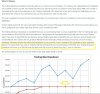
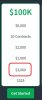
You used a $100,000 account as an example. The initial trailing draw down is $3,000. If you net $1,000 per day for 3 days, your trailing draw down would be at your starting balance and the trailing draw down would remain there. In the funded account, if you go below the trailing draw down during the session, you lose the account. What am I missing?
Every time I see a post about one of these funding resources, it looks like no one understands how their trailing draw down works. Unless I'm misreading their website, at TST once your trailing draw down reaches the starting balance, it stays there. The way you portray it, the trailing draw down would increase every day regardless what your starting balance was.
You used a $100,000 account as an example. The initial trailing draw down is $3,000. If you net $1,000 per day for 3 days, your trailing draw down would be at your starting balance and the trailing draw down would remain there. In the funded account, if you go below the trailing draw down during the session, you lose the account. What am I missing?
View attachment 223189 View attachment 223190
You're not missing anything. I think it's the inexperienced traders who see it as some kind of a problem. You really should not even be -1000 at any point if you do know what you're doing with futures.
I have been funded (and made significant withdrawls) with both TST and OneUp and they both are legit companies and each has their respective pros and cons.
The pros and cons will depend on your unique situation and trading experience but with either one if you are serious and diligent, you will grow and progress as a trader.
@SelfMadeDude
which firm do you prefer between the two? I like how OneUp has no charge for data. Unfortunately, they have a profit threshold and a minimum $1K withdrawal. TST has no threshold but they charge for data. They both seem to have trailing DDs that stay put once they reach the initial account balance.
what has your experience been with the two firms in respect to customer service and the timeliness of getting your funds?
They are both superb firms and I had no problem with profit withdrawal.
Can't go wrong with either one - it's a personal choice
Good luck
Can't go wrong with either one - it's a personal choice
Good luck

My opinion is any funding company that uses “trailing max drawdown” puts the trader in a bad position
it’s just as easy to instead try a challenge with other companies that offer “fixed max drawdown” instead which is just like it would be with a funded acct with your own money
most of the trailing max drawdown companies also calculate the trailing max drawdown from your unrealized P&L high As well and do not limit it to just being calculated from your actual realized high.
Example $3,500 max trailing drawdown
You are up $4,000 on your positions (But have not closed them out as you think it is going more in your favor) and your balance went from starting balance $100,000 to $104,000
the market moves against you and you close out trades with a $2,900 Realized profit instead of the high of $4,000 (unrealized). So your account is now $102,900
With many funding companies—-The trailing max drawdown of $3500 is calculated from the $104,000 figure—NOT The $102,900
which means that you would fail at $100,500 ($104,000 minus $3500)
not $102,900 minus $3500
it’s just as easy to instead try a challenge with other companies that offer “fixed max drawdown” instead which is just like it would be with a funded acct with your own money
most of the trailing max drawdown companies also calculate the trailing max drawdown from your unrealized P&L high As well and do not limit it to just being calculated from your actual realized high.
Example $3,500 max trailing drawdown
You are up $4,000 on your positions (But have not closed them out as you think it is going more in your favor) and your balance went from starting balance $100,000 to $104,000
the market moves against you and you close out trades with a $2,900 Realized profit instead of the high of $4,000 (unrealized). So your account is now $102,900
With many funding companies—-The trailing max drawdown of $3500 is calculated from the $104,000 figure—NOT The $102,900
which means that you would fail at $100,500 ($104,000 minus $3500)
not $102,900 minus $3500
Before anything else I'll say that I have tried both of them, and they are very similar in many ways.
I personally think the OUT setup is a little bit better, but it may be personal preference. I heard that OUT tends to leave traders alone a little more, and that may be a positive or negative depending on your habits.
I have found that TST customer support is a little more reliable, but OUT seems to have taken steps to improve theirs.
As a futures daytrader, I have noticed some posts online where people saying they are struggling to pass their evaluation due to a rule being unreasonable or maybe their trading style. If you are in this boat, I want to hear about your experience and what you think is holding you back. I think it is a great opportunity for under-funded traders to find a path to success, provided that they do the homework and learn how the markets work first.
If you are unable to pass the evaluation, it's a good sign that you don't really know what you are doing yet as a daytrader. The rules are quite easy if you do know how to daytrade properly.
Please feel free to share your opinions and experiences below. I unfortunately cannot say much about SMB or other firms, though I think they are way too expensive and unnecessarily so. If you can pass the evaluation on TST/OUT, you would not need another firm.
If I can help, I'll try to.

the way it works at TST with a Funded Acct is once your profits exceed the trailing max drawdown then it goes away. That is why you cannot withdraw all your profits as your account would be closed
compare that to companies that offer a fixed drawdown in a funded account where you can withdraw all profits to zero every week and still have your drawdown (i.e. you can still trade with their full funding after you withdraw to zero) whereas with TST you cannot do that because your funding is pulled once your generate profits equal to drawdown and then you are just trading with your own money at TST from that point forward.......and paying them 20% of the profits with your money!
compare that to companies that offer a fixed drawdown in a funded account where you can withdraw all profits to zero every week and still have your drawdown (i.e. you can still trade with their full funding after you withdraw to zero) whereas with TST you cannot do that because your funding is pulled once your generate profits equal to drawdown and then you are just trading with your own money at TST from that point forward.......and paying them 20% of the profits with your money!
Every time I see a post about one of these funding resources, it looks like no one understands how their trailing draw down works. Unless I'm misreading their website, at TST once your trailing draw down reaches the starting balance, it stays there. The way you portray it, the trailing draw down would increase every day regardless what your starting balance was.
You used a $100,000 account as an example. The initial trailing draw down is $3,000. If you net $1,000 per day for 3 days, your trailing draw down would be at your starting balance and the trailing draw down would remain there. In the funded account, if you go below the trailing draw down during the session, you lose the account. What am I missing?
View attachment 223189 View attachment 223190
When you realize that all of these firms' business models have zero reliance on traders profitably trading their capital, things will become much clearer.
Word. I have been 'funded' by One Up twice now. Have yet to trade a live feed. Always demo. Oddly enough, things get so much more difficult once you 'get funded.' Day trading futures is very difficult, and most people can't do it sustainably. Furthermore, you begin to understand this once you realize that you need to make something like 3.5 percent before you are at zero, as that is the 'threshold of capital you need to maintain in order to keep the account safe.' LOL.
Oh well, lesson learned. STAY AWAY.
You misspelled micro futures and CFDs.
If we in the land of the free and the home of the brave had to freedom to trade CFDs......