
Ok sorry I assumed you were quoting someone else. In that case point me to where you learned this?
"It is managed domestically with the intention that over time its domestic purchase power per unit will decline at a targeted rate, against a background of aggregate incomes rising over time at a similar rate."
And why you think it is the case.
Please note my qualifier: "with the intention that"
https://www.federalreserve.gov/faqs/economy_14400.htm relates to the Fed's rationale to target 2% inflation over time.
https://www.federalreserve.gov/mone...longer-run-goals-monetary-policy-strategy.htm relates to the same topic from the viewpoint of the FOMC in 2020 --- this viewpoint can change from time to time. By going to the Fed's website you might find a more up to date FOMC statement.
https://www.aei.org/articles/have-wages-stagnated-for-decades-in-the-us/
relates to my statement "...against a background of aggregate incomes rising over time at a similar rate. What I'm claiming is that over time rising wages more or less keep up with higher prices. (This depends somewhat on which particular deflator you use to convert nominal wage to real wage.) You can easily pick out shorter periods where the tracking isn't so close.)
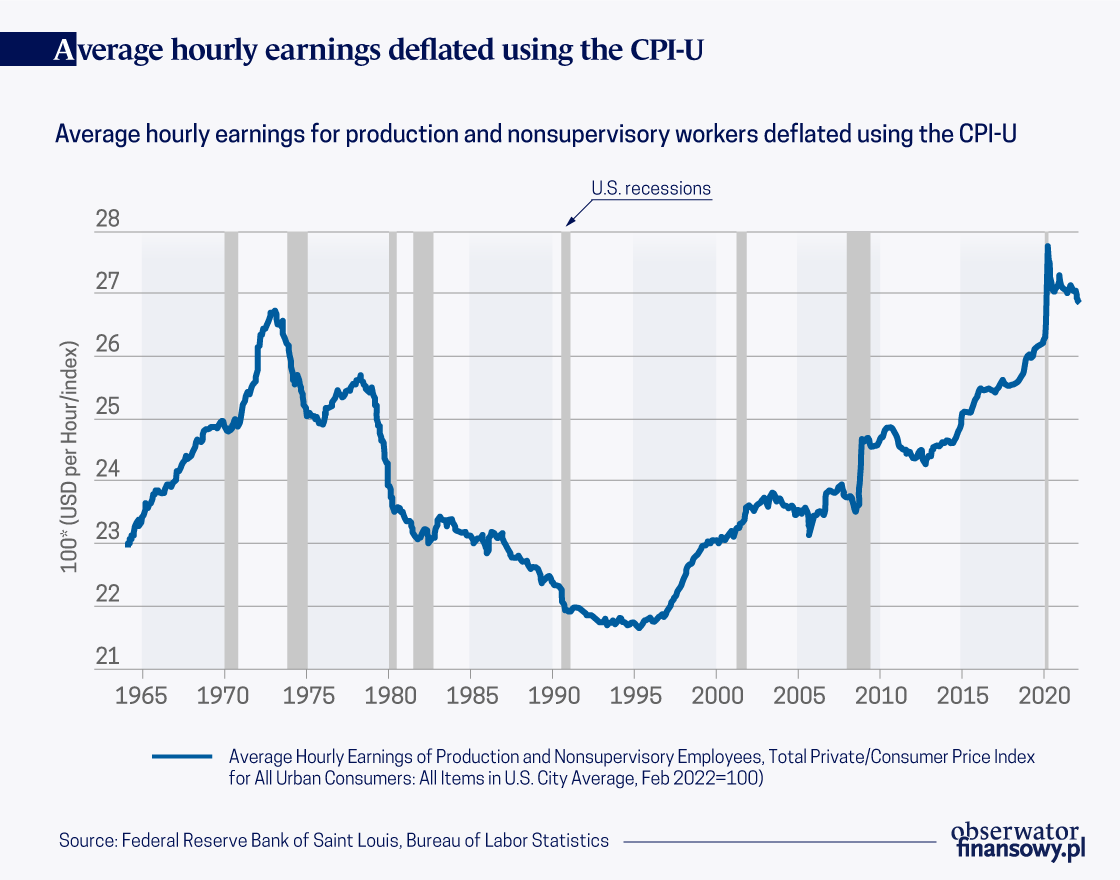
If real wages perfectly tracked inflation there would be no change in aggregate real wages over time. The actual figures show a real gain in wages of 18 cents an hour over fifty years which is pretty close tracking over that long time period, but of course the month to month and year to year tracking is not going to be so close.
What we want to look at here is real wages and salaries over a long period. Why over a long period? It's because over shorter periods real wages fluctuate quite a bit and they tend to lag changes in inflation both when inflation is rising and when it is falling. For example in 1970 ave real hourly wage was ~26.75 this dipped to a low of ~21.75 in 1995 and back up to ~26.98 in 2022. Over fifty years, however, average real wages have netted just 0.18$ per hour difference.. (see the chart below)
I have always considered that overtime wage increases keep up more or less with inflation with a lag of course. However the AEI article I linked to argues that if you use a more appropriate deflator, real wages have actually been more or less steadily rising over time. Either way we should look at inflation against a background of rising wages and not just inflation alone, as if wages never changed.
Finally, I leave you with a wonderful link from BLS https://www.bls.gov/spotlight/2022/...r-lower-and-higher-income-households/home.htm
This nice article explains why what we always thought was true is true. Low income folks are hit a little harder by inflation that those at the top. They've computed different inflation rates depending on what people buy!
Below is a chart found at //www.aei.org/articles/have-wages-stagnated-for-decades-in-the-us/
Last edited:
 . I guess that would explain why you didn't understand them.
