"Trading an Engulfing Candle at Support & Resistance provides greater conviction."Zooming in to a daily chart below
https://elitetrader.com/et/threads/...t-right-here-baby.335635/page-10#post-5014575

"Trading an Engulfing Candle at Support & Resistance provides greater conviction."Zooming in to a daily chart below
\\For many years I'd disregarded Fibs believing they were nonsense.
We
Also I'm intrigued when they say 50% is not a Fib number but it appears so in the table?
Maybe what they mean, is 50% etc are not predominant repeating Fib numbers, would that be the correct interpretation?

I'm still in the early stages of attempting to make sense of Fibs (if possible) but looking at the below chart, how does Fibs calculate the last recent bottom which is a gnats below $124.00?
Anyone?
View attachment 313512
For many years I'd disregarded Fibs believing they were nonsense.
Well lately I've noticed some strange price action behaviour which had me wondering if traders using Fibs were behind the moves and my initial suspicion seems to confirm it as these moves seem to coincide with Fib numbers, I've knocked up a spreadsheet and doing my own testing.
I was reading up in Investopedia about it and it explains how the ratios etc are contrived.
It appears the main ratios traders use are: 61.80% 38.20% 23.61%.
They also say 50% is not a Fib ratio.
I created a table of numbers as below.
The ratios are constructed by dividing for example 13/8, 13/5, 13/3, 13/2, 13/1 etc.
View attachment 313397
I noticed that near the top of the table 50% is a Fib number.
What also noticed is near the top of the table the ratios change from those further down.
Eg row 20-34 in the first column is 61.80% but rows 9-19 there are different % ratios.
Question: are numbers like 7.69%, 9.52%, 8.82%...etc Fib numbers but not recognized as such?
Also I'm intrigued when they say 50% is not a Fib number but it appears so in the table?
Maybe what they mean, is 50% etc are not predominant repeating Fib numbers, would that be the correct interpretation?
Thanks for that, I'll have a read.I will guess that the reason we are not able to understand Fibonacci is that there are secrets about the use of Fibonacci. Fortunately I I have obtained an ebook of Fibonacci secrets that I can share them with you and now that you have them & there will be no more secrets.
Thanks for that, I'll have a read.
So far haven't found any edge to using Fibs. Yesterday basically spent most of the day looking at charts to see if I could detect any meaningful sequence using trend lengths, all I could come up with is what appears to be coincidences at this stage. It's attempting to find tops and bottoms is what the goal is, using numbers.
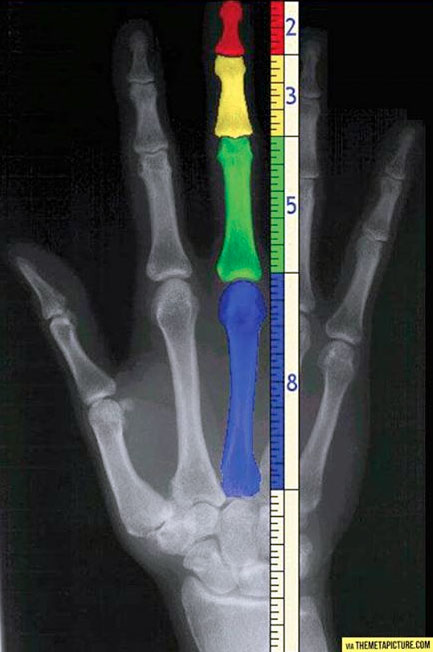
%%Those who have Fibonacci numbers on their charts usually have so many levels plotted it's bound to bounce or reject one just by chance.
