Feedback appreciated. My Journal Begins...

I understand. Thanks jas. If a pb fails to continue there's a reason...who cares why...but signal no longer valid.

-JS

That's not exactly what I meant. If in a trend and a PB entry fails to continue then it may turn into a complex PB and there may be a re-entry signal. That may also fail and then turn in to a range.

However here's my main point; suppose you see a trend, maybe a few bars, that then pulls back and you believe it to be a PB entry , if you see that this is all occurring within a range then the context is such that you do not take the signal.

It's a simple idea but we can apply some type of context filter to all our set ups. And yet knowing this I still make mistakes 'cause I think I can anticipate that price will break out THIS time. Well, I can't.

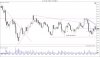
Here's a chart of what I'm talking about. PB occurs within a range, pass.

Hopefully I'm not confusing you and maybe what I'm saying is so obvious that it's of no help. Hell, I know I confuse myself enough.
 

Attachments

  • PB context.jpg
    PB context.jpg
    160.4 KB · Views: 55
Hi JAS, I still have to read your journal, and i landed up on this journal through RN.

With this picture , i believe what repetitive steps we have to take as trader..

"Draw trend line, let price break it, wait for pull back, and go for ride"
Dont take the PB if goes inside range (trend line again) wait for it to come out...

I hope trading is that simple...I will try and create my journal..if i get time...
 
I can tra

Not sure what this is


question:
When you say context was light, do you mean I didn't have enough to go off of it in current PA?

Or are you saying I need to learn more about identifying context - trendlines, ranges, support/resistance?

Price is worked both horizontally..., and diagonally

Need context for both..., need to be aware of both..., need to trade either / sometimes both


Indlines, ranges, support/resistance?

Trade the supporting PA.


That sounds elementary, and yet I see I'm not doing that. I do trade context. I'll have to learn more here.


It is elementary.., but it isn't

it a matter of taking multiple inputs and assimilating them into an action (trading) plan (btw - sitting on hands is an action)


Like driving;

Look out windshield / scan gauges/ adjust radio / look out rear view mirror(s) / scan speed / observe traffic / text / talk on phone / factor in weather/ road conditions - all while driving down the road - and hopefully not wrecking / getting a ticket

We do this regularly - and with trading..., it just a matter of learning to apply the same technique


The first trade? I saw price break premarket range, and it pulled back. I didn't yet "see" the range developing. I should have after the stop out and a higher low bar right?

Factoring in premkt is fine - for the open... and a few minutes in - but as they say - when the first shot fired - the battle plan goes right out the window

Meaning - let the mkt reveal itself / intentions - pre mkt may..., or may not - even factor in


I didn't yet "see" the range developing. I should have after the stop out and a higher low bar right?

Getting stopped out can tell you something about current behavior - but to do so - one needs to set up the trade properly

Your stop placement was incorrect

So the answer is No


What should have clued you in were the equal..., and or close to equal H / L's forming by that cluster of bars

2 bars in - I'd have been thinking - this could be a range - albeit in the form of a pullback


I was definitely a ping pong ball.


I'll have to learn how to spot range faster/more efficiently.


Yes..., and Yes


"Trade referencing the closing of a given bar"


Let's be clear..., not "the" closing


You're on the current bar - so it's forming

Reference the closed bars


H to L

O to C


Pay attention as one bar closes and the next opens - and where its closing and the next opening in relation to each..., AND..., in relation to what ever previous bars are in play (similar H's..., or similar L's - just depending on where price is opening up)


Diagonally;

Moves are typically present when price making HL.., or LH


Horizontally;

Ranges are typically present when price making equal..., or close to equal H's.., and equal L's

Support typically present when price making equal..., or close to equal Ls

Resistance typically present when price making equal..., or close to equal H's

Often, I trade referencing the current bar while it's forming.


So then what the hell are you trading - a bar yet formed


How does one set a stop for that


These two are rhetorical - as I assume you can figure out why referencing the current bar - unless it a higher TF bar - is not the preferred approach

Unless trading momo - which I never recommend for an aspiring trader.., nor were you


Trade the current / reference the previous


RN
 
A bar (call it bar X)

No matter it the first of the day…, one in the middle of a session.., or one near the close


Make a H and a L

Next bar – makes a H at / near the H of this bar

This a start of a range?


Next bar – moves down and makes a low near / at the low of bar X

This the start of a range?


Next bar

Makes a low at / near the low bar X…, then moves up to make a H at near the high of bar X

This a start of a range?


A DT/ DB

This a start of a range?


Answer is – yes it could be..., to every one of the above scenarios


There are variations of the above – but they all play out the same

Begin looking for ranges – you will see them forming – as they form (real time)


And this one reason focusing on bars closing (and not just where they close.., but also their H / L / open) is more advantageous than looking at bars in the middle of their formation

Read bars in context to each other.., and in groups


btw; momo = momentum

I'll respond to your other questions this evening

RN
I have never been doing this. Obviously. Thanks for sharing. I mean I have been, but while I'm watching PA, I'm continually watching the bar form to see which direction it heads.

It's more advantageous focusing on the close, also the H/L/open, in context to each other, than the middle of a bar or while a bar is forming. I understand. I'm going to begin viewing the bars this way.

Thanks
JS
 
That's not exactly what I meant. If in a trend and a PB entry fails to continue then it may turn into a complex PB and there may be a re-entry signal. That may also fail and then turn in to a range.

However here's my main point; suppose you see a trend, maybe a few bars, that then pulls back and you believe it to be a PB entry , if you see that this is all occurring within a range then the context is such that you do not take the signal.

It's a simple idea but we can apply some type of context filter to all our set ups. And yet knowing this I still make mistakes 'cause I think I can anticipate that price will break out THIS time. Well, I can't.

Here's a chart of what I'm talking about. PB occurs within a range, pass.

Hopefully I'm not confusing you and maybe what I'm saying is so obvious that it's of no help. Hell, I know I confuse myself enough.
I REALLY appreciate you showing me some ideas in your charts. I follow you journal and look at them all the time. I'm really impressed with how well you are able to articulate the context. Something I have yet to learn to do well. You also manage to keep it quite clean, if that's a good word.

I'd like to one day create context like that.

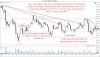
If you don't mind, I annotated your chart and added some questions.

thanks jas

-js
 

Attachments

  • PB contextcomments.jpg
    PB contextcomments.jpg
    403.2 KB · Views: 61
Hi JAS, I still have to read your journal, and i landed up on this journal through RN.

With this picture , i believe what repetitive steps we have to take as trader..

"Draw trend line, let price break it, wait for pull back, and go for ride"
Dont take the PB if goes inside range (trend line again) wait for it to come out...

I hope trading is that simple...I will try and create my journal..if i get time...
High note, good to have you here. Sounds like a plan to me. However, I'm still learning "context", and I definitely have to define the parameters and context around this signal that I'll take.

BTW - I'm JS. JAS is JAS. If it's confusing you can always call me J-dawg. :cool:

-JS
 
factoring in premkt is fine - for the open... and a few minutes in - but as they say - when the first shot fired - the battle plan goes right out the window

Meaning - let the mkt reveal itself / intentions - pre mkt may..., or may not - even factor in
RN

I'm learning to be more and more patient at the open, so that I can wait for the market to reveal itself.


So the answer is No
What should have clued you in were the equal..., and or close to equal H / L's forming by that cluster of bars

2 bars in - I'd have been thinking - this could be a range - albeit in the form of a pullback


Meaning, in this circumstance, if my stop were placed higher, right above newly made resistance, I wouldn't have been stopped out, and I would have seen the range forming. If that were part of the trading plan.

I pulled up the chart again. I can completely see that range forming, especially after the 3rd bar "almost" DB'ed. I have to learn to spot range faster. This needs to be part of my methodology. I've got work to do.

Starting to wonder if I should even be in SIM yet. Maybe i should focus my time on defining the characteristics/parameters of the context around this signal I chose. I've been simply trying to "mechanically" trade every occurrence. That's obviously not working.


Let's be clear..., not "the" closing


You're on the current bar - so it's forming

Reference the closed bars


H to L

O to C


Pay attention as one bar closes and the next opens - and where its closing and the next opening in relation to each..., AND..., in relation to what ever previous bars are in play (similar H's..., or similar L's - just depending on where price is opening up)


Diagonally;

Moves are typically present when price making HL.., or LH


Horizontally;

Ranges are typically present when price making equal..., or close to equal H's.., and equal L's

Support typically present when price making equal..., or close to equal Ls

Resistance typically present when price making equal..., or close to equal H's

It's clear. Reference the bars that have already been closed. Also include H/L O/C of these closed bars.

As simple as it sounds, thanks for clarifying the range, support, resistance, trend. I'm more fascinated how you relate it all to "price". You don't mention behavior. How you are articulating this really shows it's all in the minute details of the ticks.

So then what the hell are you trading - a bar yet formed


How does one set a stop for that

I always though it best to "let price move you into a trade". Therefore, I would set a buy stop a little away from the bar that's forming.

I don't know how one set's a stop for that because I've been failing to do so. I agree with you.

Thanks RN

-JS
 
I'm learning to be more and more patient at the open, so that I can wait for the market to reveal itself.

Cool

Meaning, in this circumstance, if my stop were placed higher, right above newly made resistance, I wouldn't have been stopped out, and I would have seen the range forming. If that were part of the trading plan.


Even if you were stopped out - no matter it part of the plan or not

Seeing the range could / should still have happened

Called being objective & reading PA


I pulled up the chart again.


(1) I can completely see that range forming, especially after the 3rd bar "almost" DB'ed.

(2) I have to learn to spot range faster.

(3) This needs to be part of my methodology.

(4) I've got work to do.


(1) Not disagreeing about seeing it after the 3rd bar - but realize - it very easy to hindsight a chart / our actions

Doing it real time - is hard..., and takes concerted practice / fucking up many times - before it becomes second nature

And even then..., fucking up still happens - as does losing trades - but as long as they're planned losing trades (acceptable risk)

Never consider a losing trade as anything but a normal part of trading

Fucking up on the other hand - happens at all levels of trading skill - we're human


(2) One really needs to incorporate MTFA (Multi Time Frame Analysis) - to build context / look for it all across all the TFs (ranges / moves/ PA

Whatever you look for on your trading TF - observing a larger TF.., or a couple - helps keep one in sync with price on their trading TF

(3) Yup..., including MTFA (too many ignore this aspect completely)

(4) Yup

(1) Starting to wonder if I should even be in SIM yet.


(2( Maybe i should focus my time on defining the characteristics/parameters of the context around this signal I chose.


(3) I've been simply trying to "mechanically" trade every occurrence. That's obviously not working.


(1) Ammo - a member who has stopped posting unfortunately - has recommended hand charting to other members

I think this an excellent exercise for helping one become familiar with PA / Context

Yes it takes work - as does trading every day

The next option - print out a gazillion charts and mark them up (this works)

(2) see 1

(3) Agreed


(1) It's clear. Reference the bars that have already been closed.

(2) Also include H/L O/C of these closed bars.

(3) As simple as it sounds, thanks for clarifying the range, support, resistance, trend.


(1) Yup

(2) Yup

(3) You betcha


(1) I'm more fascinated how you relate it all to "price".

(2) You don't mention behavior.

(3) How you are articulating this really shows it's all in the minute details of the ticks.


(1) Price is what (and on what) we trade

(2) There are many things I have not mentioned

Fact is..., we do trade behavior - but - and I'll set up a scenario to make my point


I'm standing on a sidewalk - you come walking toward me - I wave

Am I saying hi

Am I warning you about the manhole you're about to step in

Am I trying to get your attention

Am I airing out my armpits

Am I saying hi to my wife walking behind you


Without context - you don't know / can't say

Same with PA behavior - with out the proper context - built on price - you will never be able to identify it (behavior) ..., let alone trade it

crawl..., walk..., run..., then do a marathon.., or if you prefer - never the cart before the horse


(3) Minute details..., over all picture..., interim picture - it all matters..., and it necessary to factor all of it in - to come up with an accurate picture of price..., to be able to trade price affectively


(1) I always though it best to "let price move you into a trade".

Therefore, I would set a buy stop a little away from the bar that's forming.


(2) I don't know how one set's a stop for that because I've been failing to do so.

(3) I agree with you.

Thanks RN


(1) Yes..., but if you don't completely factor in what price has been / is doing - then how can you make a reasonable assessment of what price may do

Akin to standing in a totally dark doom..., blindfolded - and try to shoot a moving target - pretty near impossible


(2) Yup


(3) Not looking for you to agree or disagree - looking for you to think through every aspect of this..., then make decisions and changes where necessary..., and based on you're thinking through it

step 1 - you must make your approach / methodology..., identify your setup(s) signals

step 2 - you must forge your self into a trader


I trade for a living..., and I'm pretty good at it (if I dare say so) - not looking for affirmation from anyone


Thanks RN


You're Very Welcome Sir


btw

I really want J and Slugar to add their input - both are very competent (more so than either think right now - but I know differently :) )


RN
 
Last edited:
I inadvertently omitted a step (like I said..., we all fuck up..., I certainly fuck up..., and..., I have losing trades)

step 1 - you must build your technical skills - of reading price..., building proper context upon price..., identifying the current behavior of price

step 2 - you must make your approach / methodology..., identify your setup(s) (signals)

step 3 - you must forge your self into a trader


So where ever you are along this process.., is where you are - start there - master it - then move to the next step


From my observation - aspiring traders try to blend..., or minimize / even skip one or more of these steps (thinking they can reduce the time it takes to become a trader I suppose)

Those who do - don't make it


And the smarter one thinks they are - it takes them longer - as they fight them selves over dumbing down


mkt doesn't give one shit how smart we are

mkt rewards those of us who listen..., correctly interprets..., then dutifully follows - it

mkt unmercifully punishes all others - hell sometimes it'll punish by rewarding - then stripping away the reward..., and a whole lot more (now how fucked up is that)

And folks with ego - mkt devours them for desert (mkt do love its desert)


=====================

Aside;

Trading never ceases to;

amaze me..., educate me..., humble me..., reaffirm how utterly insignificant I am..., open my mind..., force me to grow..., force me to be totally honest with myself..., harden me..., better me..., force me to challenge my self..., and..., reward me in a multitude of ways


The flip side to all this

The mkt will fuck you up beyond repair.., recognition..., and redemption - if you attempt to fight it in the least little way


================


Trading is certainly a journey - of self more than anything else really

May you find that which you seek...., like what you find..., and experience much success - along your path..., and over your travel Sir

And may the wind of frustration and toil be always at yer back


================

I should be sleeping..., instead here I sit waxing philosophically - a dumbass redneck no less

Now that..., is really fuuuucked uuuuup :cool: :D

Happy Weekend All

RN
 
Last edited:
I REALLY appreciate you showing me some ideas in your charts. I follow you journal and look at them all the time. I'm really impressed with how well you are able to articulate the context. Something I have yet to learn to do well. You also manage to keep it quite clean, if that's a good word.

I'd like to one day create context like that.

If you don't mind, I annotated your chart and added some questions.

thanks jas

-js

JS,

Keep in mind I'm still learning this all myself. There are much more knowledgeable traders than me so whatever I say or any one says be sure you test it out and understand it so it makes sense to you. Also a more experienced trader may see things completely opposite to what I do.

Re: Fanning the TL. I was likely looking at more horizontal S/R at that point . Also I use a 5 minute TF so I may have had the TL drawn there. I don't recall.

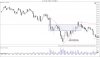
Attached is chart how I actually traded it, mistakes and all.

I first took a short off that resistance area. It quickly was rejected so I exit and reverse long. That also is rejected however a better stop placement could have kept me in trade. I chose to exit. 3rd trade long again.

Your entry in this case would have been the best however the context of the resistance does not make it my first choice at this time.

JS, what sources, books, websites, are you/have you used to develop your trading ideas ?
 

Attachments

  • CL 01-15 JS 12_12_2014.jpg
    CL 01-15 JS 12_12_2014.jpg
    144.8 KB · Views: 49
Back
Top